A group of four students will take a house they have never stood in. Their parents, who are usually paying or guaranteeing, will agree to it having seen six photographs on a phone. And in between those two facts sits you, running group viewings around existing tenants who did not sign up to have strangers walking through their kitchen every Tuesday.
Virtual tours solve the awkward middle of the HMO letting cycle. Applicants get to see the room properly, which means the ones who apply are the ones who actually want it, and you stop showing the same house eleven times to fill three rooms.
01Why HMOs Are a Better Fit for This Than Almost Any Rental
Your applicants are frequently not in the city. First years arrive from all over the country, and postgraduates and international students often commit to a room from another continent. For an overseas applicant a tour is not a convenience, it is the only realistic way to assess a room before paying a deposit. Bristol and Bath both draw heavily from outside the region, and a listing with a walkthrough consistently gets stronger enquiries than one without.
Group viewings are disruptive and slow. Existing tenants have a legal right to quiet enjoyment, and marching prospective tenants through their home during term time is the fastest way to sour that relationship. A tour lets you cut the number of physical viewings sharply, which is better for your current tenants and better for your diary.
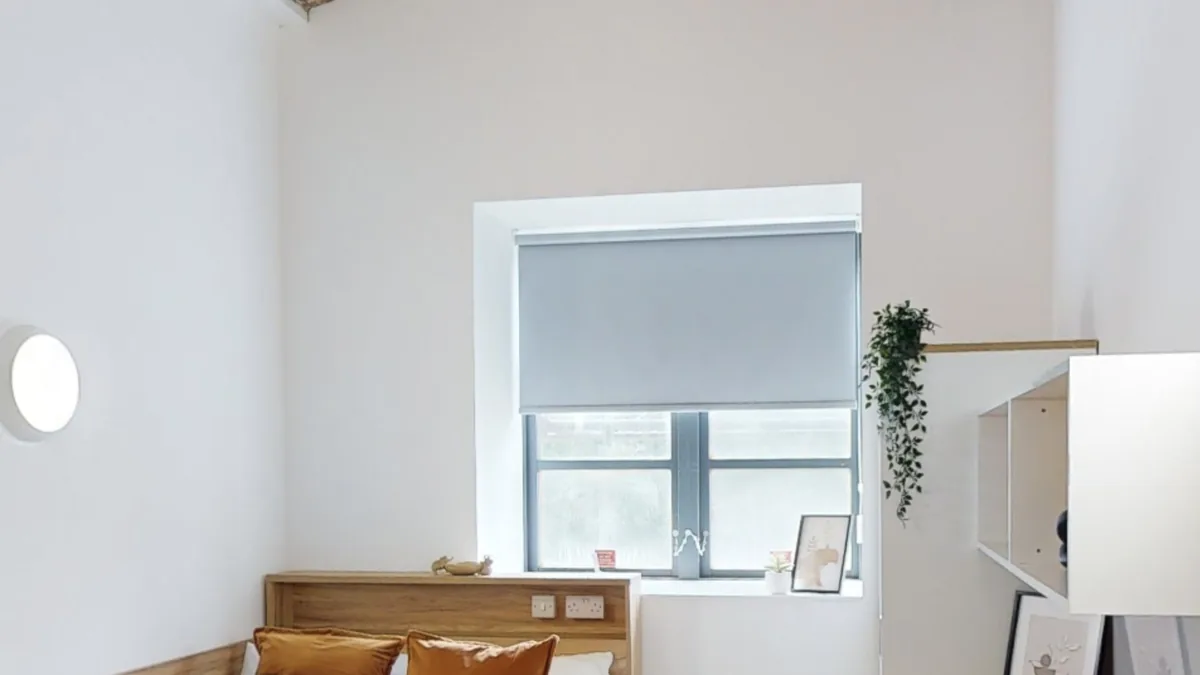
Room-by-room letting is hard to explain in photos. In a shared house the applicant is choosing a specific room within a shared property, and they need to understand both. Which room is which, how big it actually is compared to the others, where it sits relative to the bathroom, whether the shared kitchen is genuinely usable by five people. A walkthrough answers all of that at once, and it justifies why the big room at the front costs more than the small one at the back.
One shoot serves the whole cycle, and often several cycles. Unlike a house for sale, your HMO will be relet every year with much the same layout and furniture. A 3D walkthrough of the whole house shot once, when the property is at its best, can carry you through multiple letting cycles. That changes the economics considerably compared with a single-sale property.
02The Timing Trick That Makes This Work
This is the part most landlords get wrong. The instinct is to photograph the house when you need to let it, which is usually mid-tenancy with someone's washing on a radiator and a bin bag by the door.
The right time to shoot is the void, straight after a professional clean and any redecoration, before the next tenants move in. The rooms are empty of clutter, the beds can be made up properly, and the house looks the way it looked on the day you finished refurbishing it. That imagery is then honest, because it is the same house, and it is reusable for years.
If you have a portfolio of similar houses, shooting them all in the same summer window is far more efficient than calling someone out each time a room falls empty. It also means your listings look consistent, which quietly signals a professional operation rather than an accidental landlord. My HMO photography in Bridgwater is a good example of what a void-period shoot delivers, and it pairs with HMO photography for the stills. For purpose-built or larger schemes, student accommodation photography covers the same ground with communal spaces in mind.
03What Needs Capturing
Every bedroom, individually and honestly, including the small one. Landlords sometimes want to skip the least attractive room, and that is a mistake: applicants assume the worst about anything hidden, and someone has to take that room. Showing it plainly gets it let, often to a student who cares more about the rent than the square footage.
Beyond bedrooms: the kitchen, every bathroom and shower room, any shared living space, the entrance and hallway, outside space and bin storage, and parking or bike storage if you have it. Utility details matter more than you would think, because the questions that eat your time are practical ones. Where is the washing machine. Is there a lock on the bedroom door. How many showers are there really.
A tour that answers those questions before an applicant contacts you is a tour that pays for itself in messages you do not have to answer.
04Format, Briefly
For HMOs a scanned 3D walkthrough is usually the right answer, because the floor plan that comes with it is genuinely useful. Applicants can see how the rooms relate to each other and how the house is arranged, which is the thing that photographs never convey. It also means one continuous asset covering the whole property rather than a set of disconnected panoramas.
If you want to compare that against the other options properly, the tour format comparison sets them side by side, and you can see the full range on the virtual tours page. On price, a whole-house scan for a typical six-bed HMO is a modest cost spread over several letting cycles, and the detail is in the cost guide rather than repeated here.
05Where to Put It
On your own listing page if you have a website, which is increasingly common for landlords with several houses. In your Rightmove, SpareRoom or OpenRent listing wherever a link is permitted. In your first reply to every enquiry, which is where it saves you the most time. On a university accommodation portal if your properties are listed there. And in the group chat, because students share these between themselves, and a house that is easy to show to housemates gets chosen over one that is not.
One more use worth mentioning: an inventory. A dated walkthrough of the property at the start of a tenancy is a remarkably useful record of condition. It is not a formal inventory and I would not present it as one, but when a deposit dispute comes down to whether a mark on the wall was already there, having a walkthrough from move-in day is a strong position to argue from.
06Being Honest About Compliance and Privacy
Two things to plan for. First, never capture a property with a tenant's belongings visible unless you have their explicit permission, and even then it is usually better not to. Aside from the privacy issue, personal clutter dates the tour and puts applicants off. Second, if you shoot during a tenancy you need proper notice and genuine agreement, not just a text the night before. Working in the void avoids both problems entirely, which is another reason it is the slot I recommend.
I photograph HMOs and student properties across Bristol, Bath, Somerset and the surrounding area, and travel UK-wide for portfolio work. If you would like to talk through a tour of your property or a batch of houses, get in touch or call me on 07545 450543.