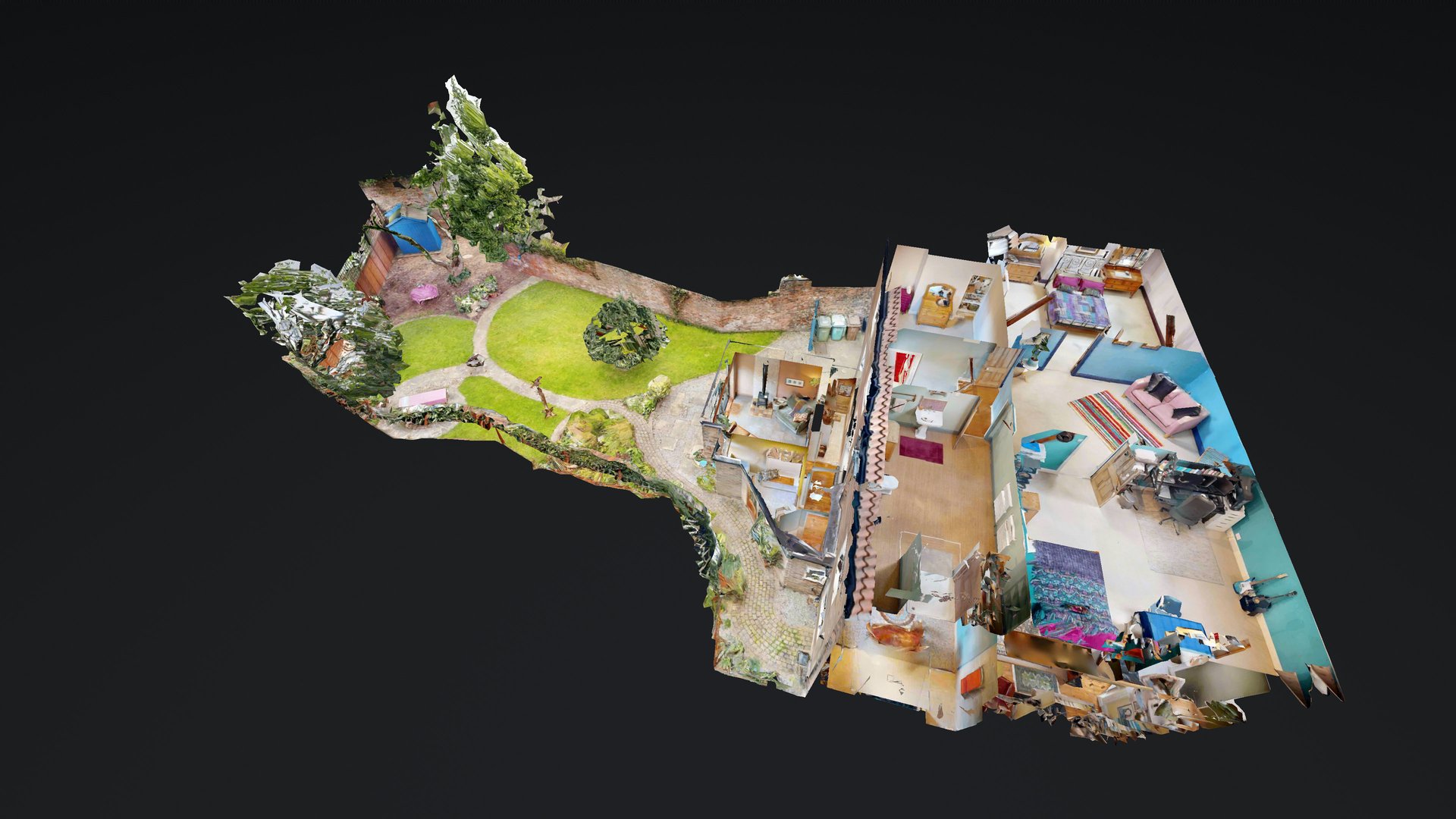
Garden photography case study for Fennington House near Bridgwater, Somerset. The brief was to capture the Victorian country house garden during its best summer season, as both a keepsake for the owners and a marketing asset for a future sale. The shoot covered the formal walled garden with clipped hedges and summer borders, the ornate iron arches, the orchard, the bistro seating area under silver birch trees, the armillary sphere sculpture on the main lawn, the walled kitchen garden, the outbuildings with grapevine, and an aerial drone view showing the full property and the Quantock Hills beyond. Garden photography for Somerset country houses is available from The Property Photo Guy, including drone photography, with 48-hour delivery.
Fennington House sits on the edge of a small Somerset village a few miles from Bridgwater, tucked behind a stone wall with the Quantock Hills rising in the distance. It is the kind of property that rewards a slow walk around the grounds: a Victorian house with a sage green conservatory, a formal walled garden, an orchard, a kitchen garden, and a collection of outbuildings that speak to decades of careful stewardship. The owners got in touch because they wanted to capture the garden during its best season, partly as a record for themselves and partly to have a set of photographs ready for when the time came to sell.
That dual brief, keepsake and marketing asset, shapes how I approach a shoot like this. The images need to be beautiful enough to hang on a wall, and practical enough to make a buyer stop scrolling. This case study walks through the different areas of the garden, the approach I took, and why garden photography for country houses in Somerset is worth doing before the season passes.
01The House and Conservatory
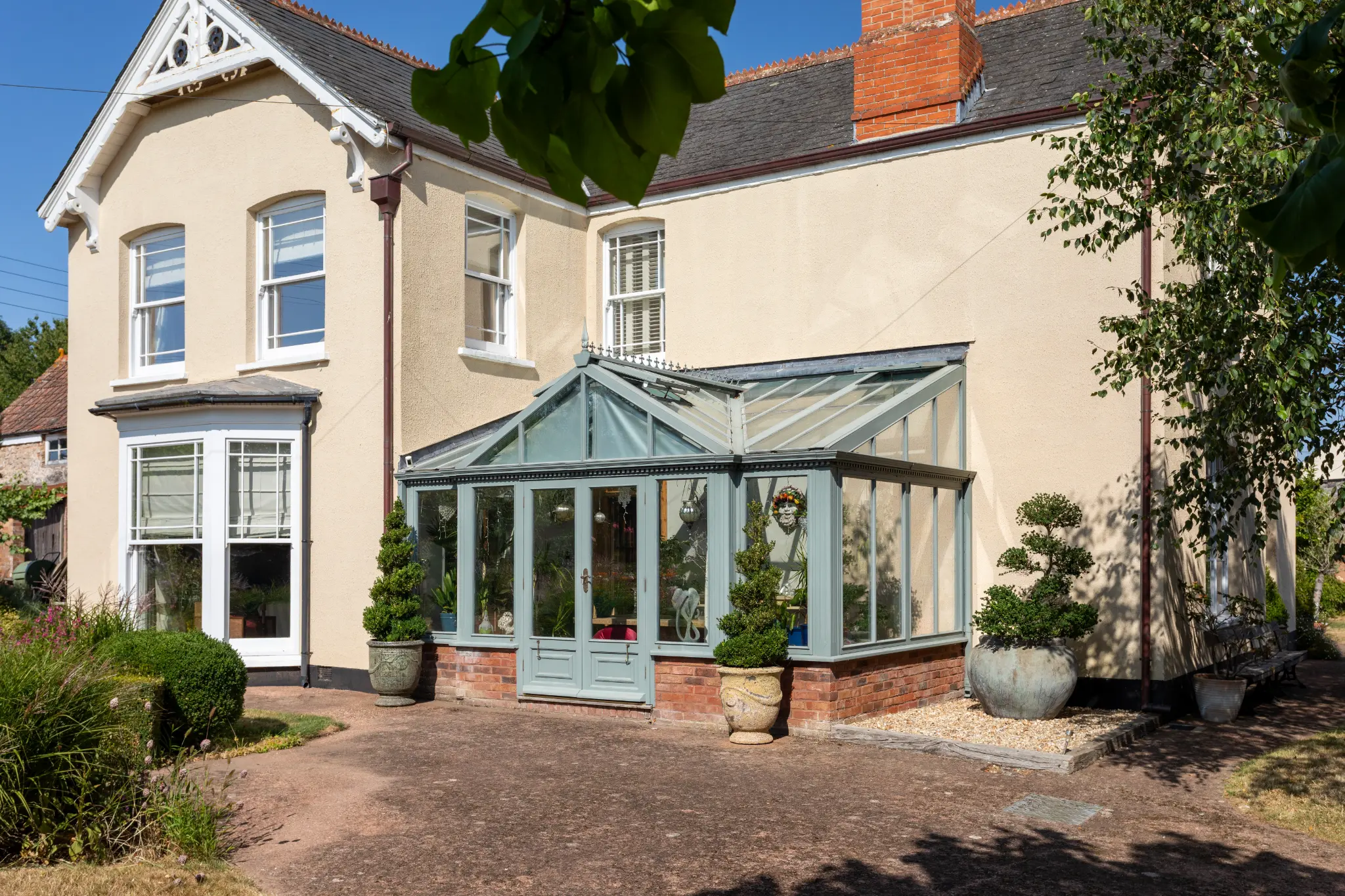
The conservatory is the first thing you notice when you arrive at Fennington House. Painted in a soft sage green with decorative ironwork details, it sits against the cream render of the main house in a way that feels entirely deliberate. The topiary in stone pots either side of the door, the hanging wreath, the glimpse of plants inside: it is a composed scene that required very little from me beyond finding the right angle and waiting for the light to settle.
I shot this close-up early in the session, before the sun moved too far around. The shadow from the conservatory roof creates a natural frame, and the brick step in the foreground anchors the composition without competing with the architecture.
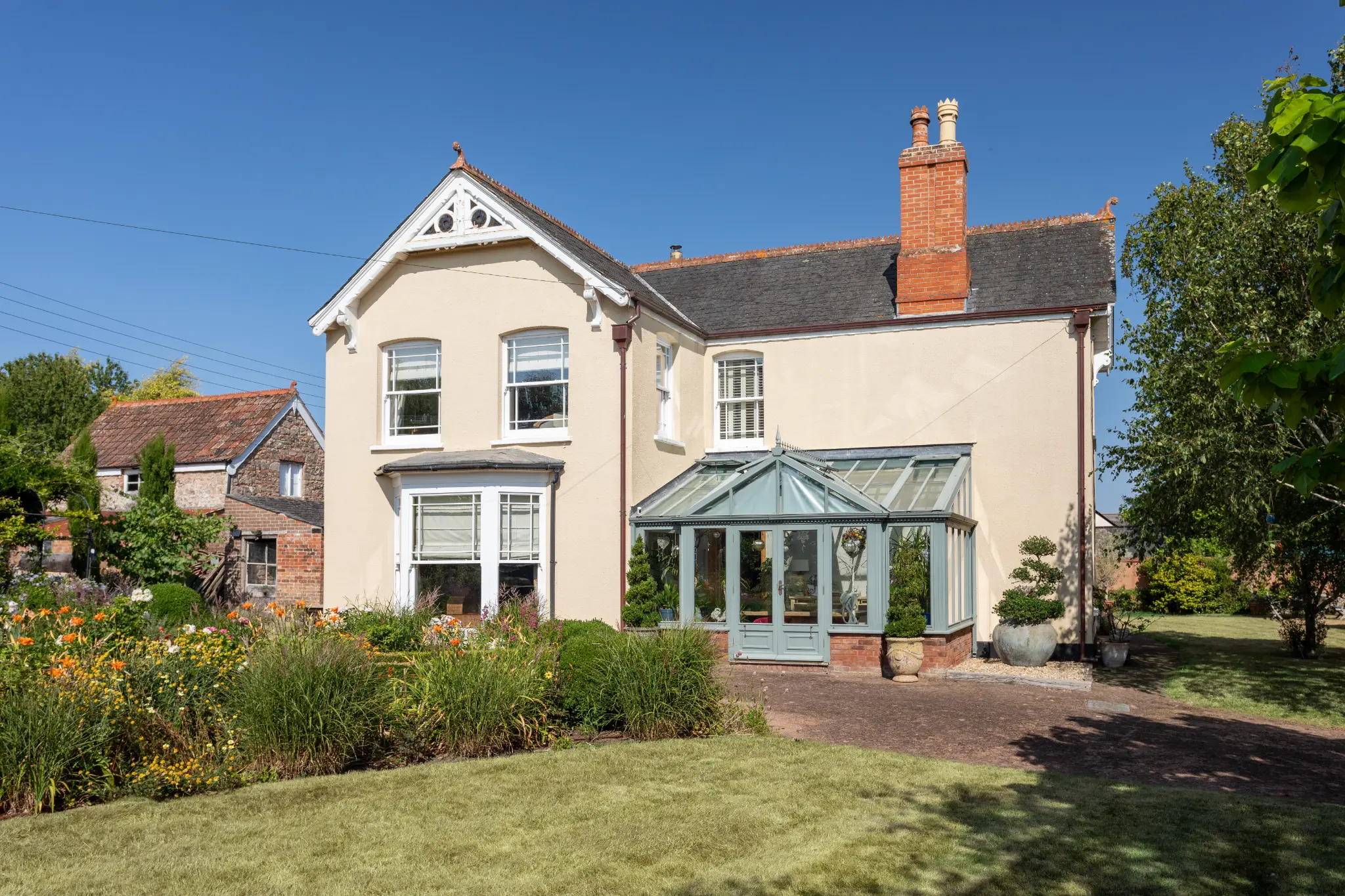
Stepping back into the formal garden gives a wider view of the house. The orange and pink flowers in the foreground, daylilies and roses in full summer bloom, create a natural frame for the facade. The blue sky and the clipped hedges behind the flower borders give the image a structure that reads well both as a standalone photograph and as a hero image for a property listing.
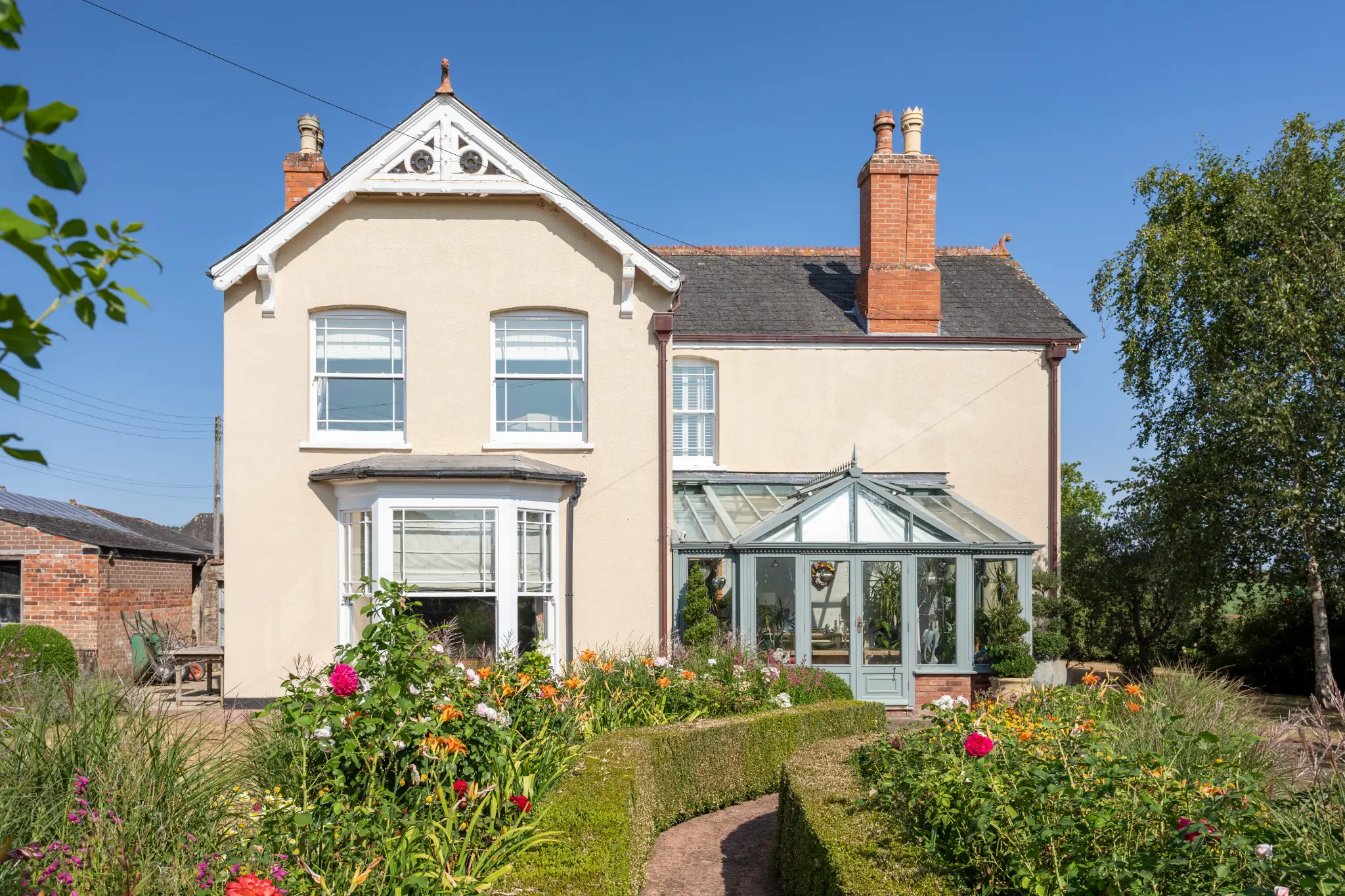
A third composition from a slightly different position in the garden shows the full depth of the flower borders: roses, daylilies, and cottage garden perennials in a long run that leads the eye toward the house. This is the kind of image that communicates the scale of the garden to a prospective buyer, and the kind that an owner wants to keep as a record of the garden at its peak.
02The Formal Garden and Archways
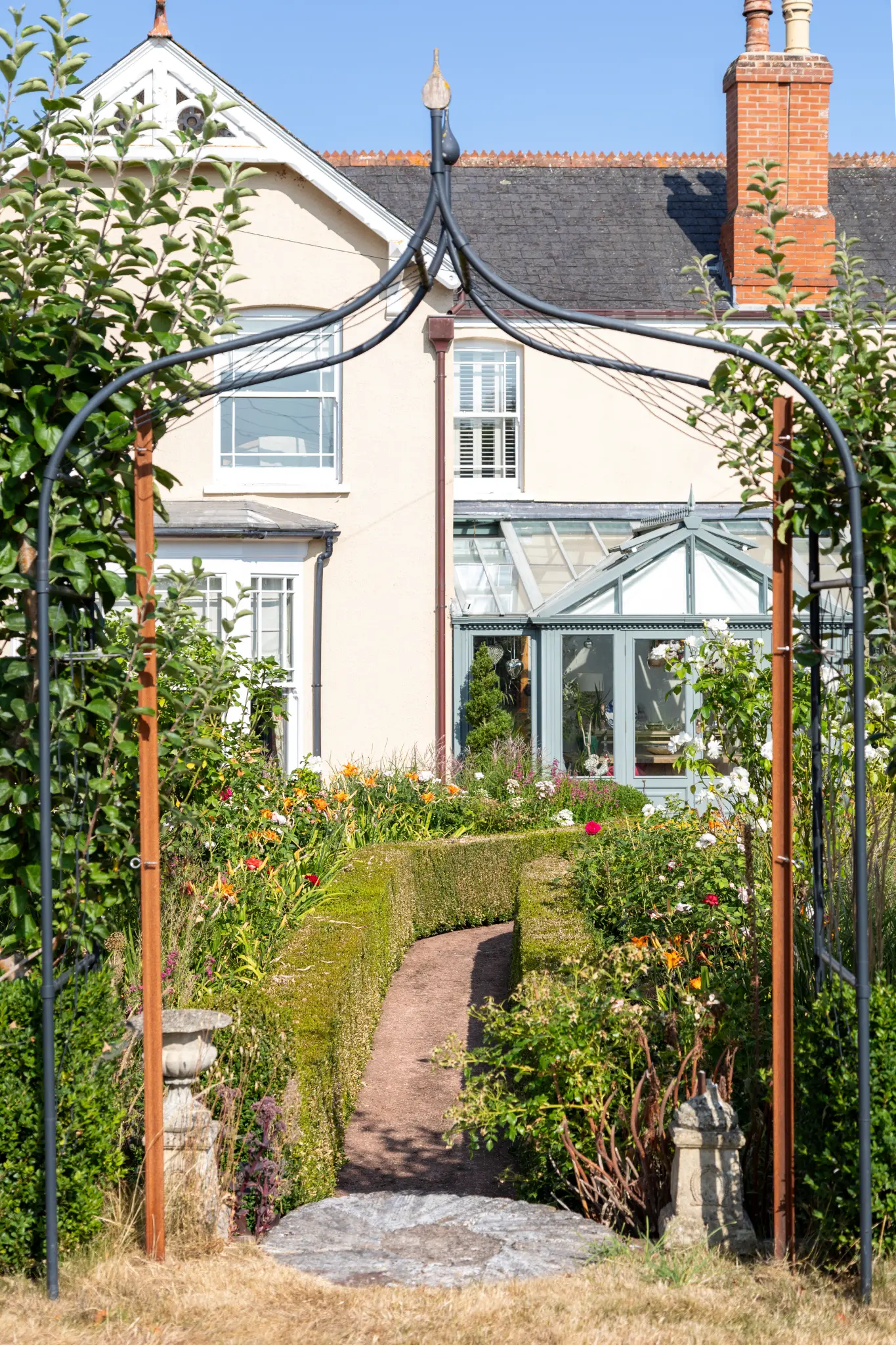
The formal garden is structured around a central path flanked by low clipped hedges, with flower borders on either side and a pair of ornate iron arches at the far end. Shooting through an arch is one of the most effective compositional tools available in garden photography: the arch creates a natural frame, draws the eye along the path, and places the house in context at the end of the view.
This portrait composition shows the full length of the formal garden in a single image. The hedges, the flowers, the path, the arch, and the conservatory beyond: everything that makes this garden distinctive is visible in one frame.
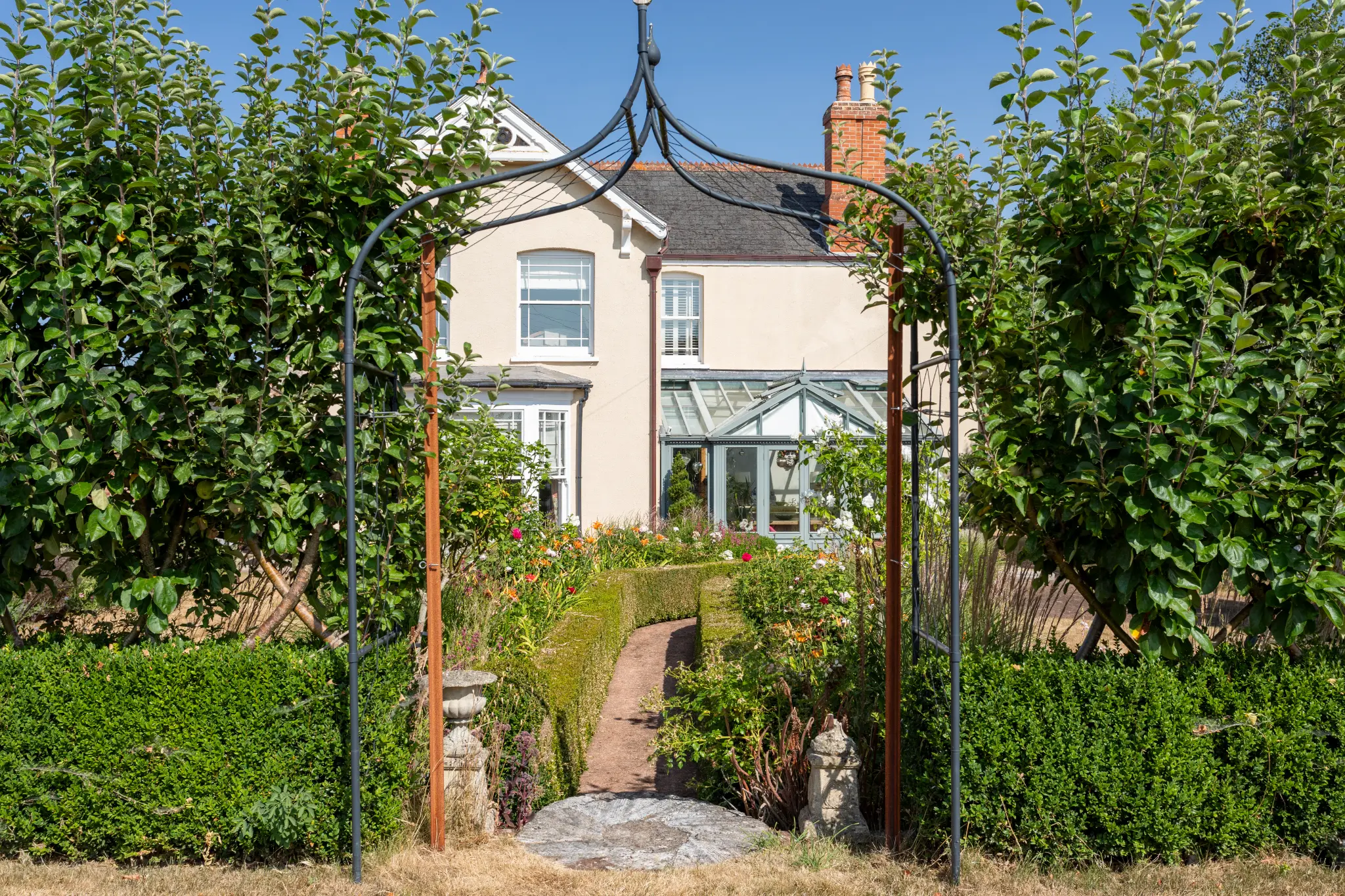
Shooting through the same arch from the orchard side gives a completely different image. The apple trees in full leaf frame the arch, the path leads through to the formal garden, and the house sits at the far end of the composition. This image communicates the layered structure of the garden: orchard, formal garden, house, all visible in sequence.
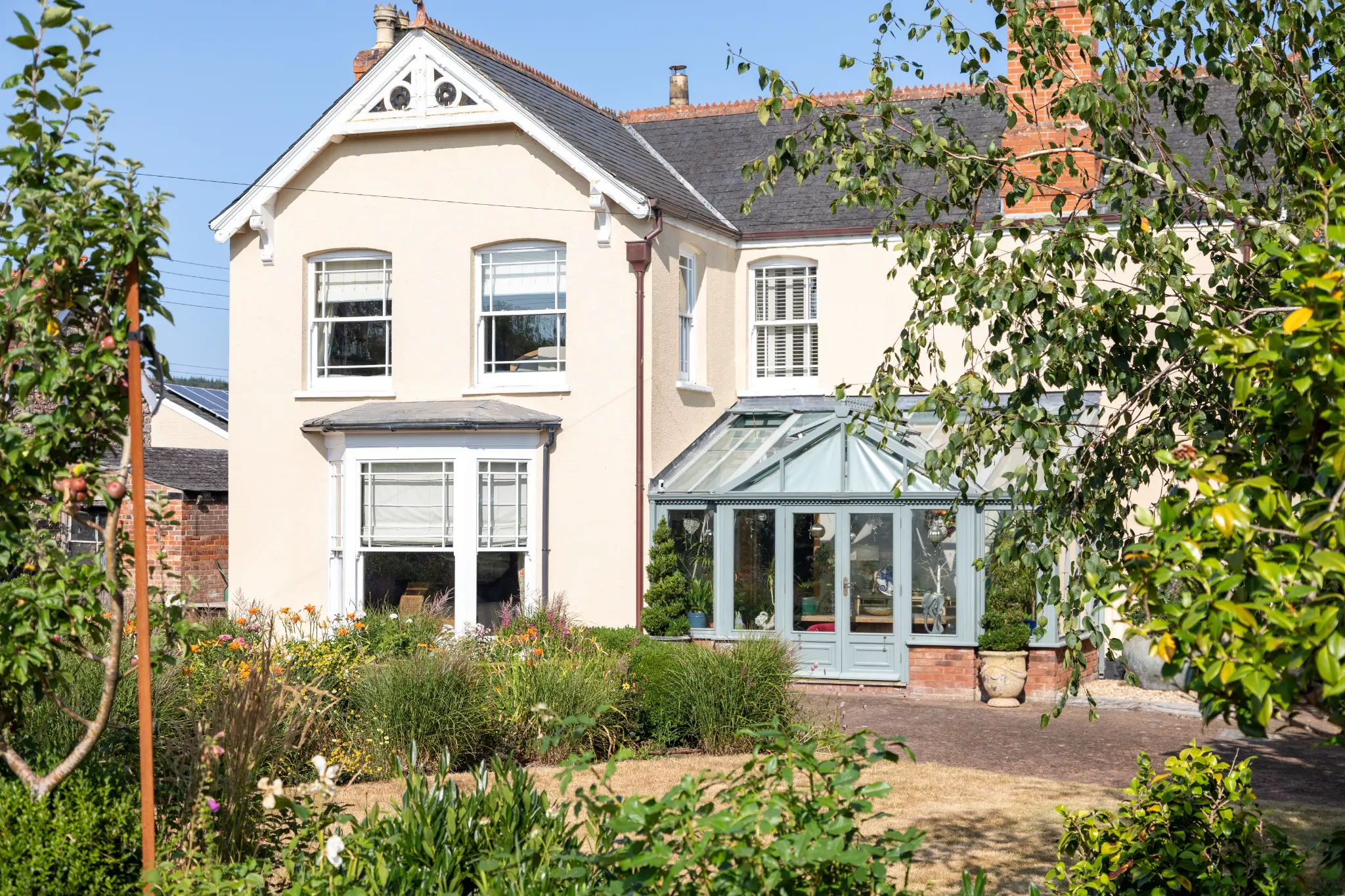
A third arch composition, taken from a lower angle through the birch branches, shows the house from the orchard with the flower borders and conservatory in the middle ground. The dappled light through the tree canopy gives this image a softer, more impressionistic quality than the direct arch shots, and it works well as a contrast within the gallery.
03The Lawn and Garden Sculpture
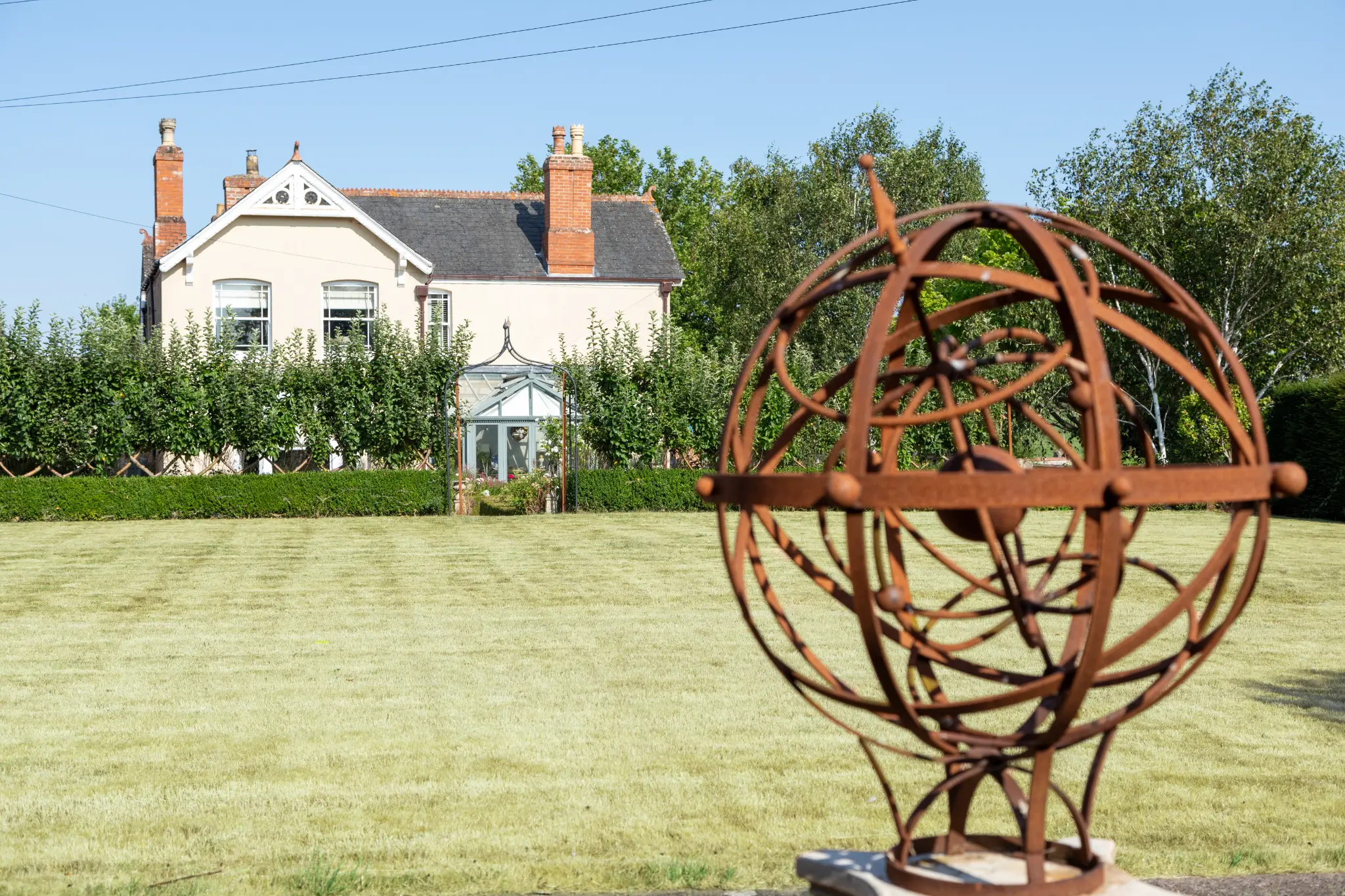
The armillary sphere on the main lawn is one of the garden's defining features. Placed at the centre of the lawn with the house behind it, it anchors the composition and gives the image a focal point that draws the eye before the viewer notices the house. I used a shallow depth of field to keep the sphere sharp while the house and arch settle into a soft background, which gives the image a quality closer to a magazine feature than a property listing.
For the owners, this is the kind of image that captures what the garden means to them. For a buyer, it communicates that this is a garden with personality and intention, not just a lawn with some borders.
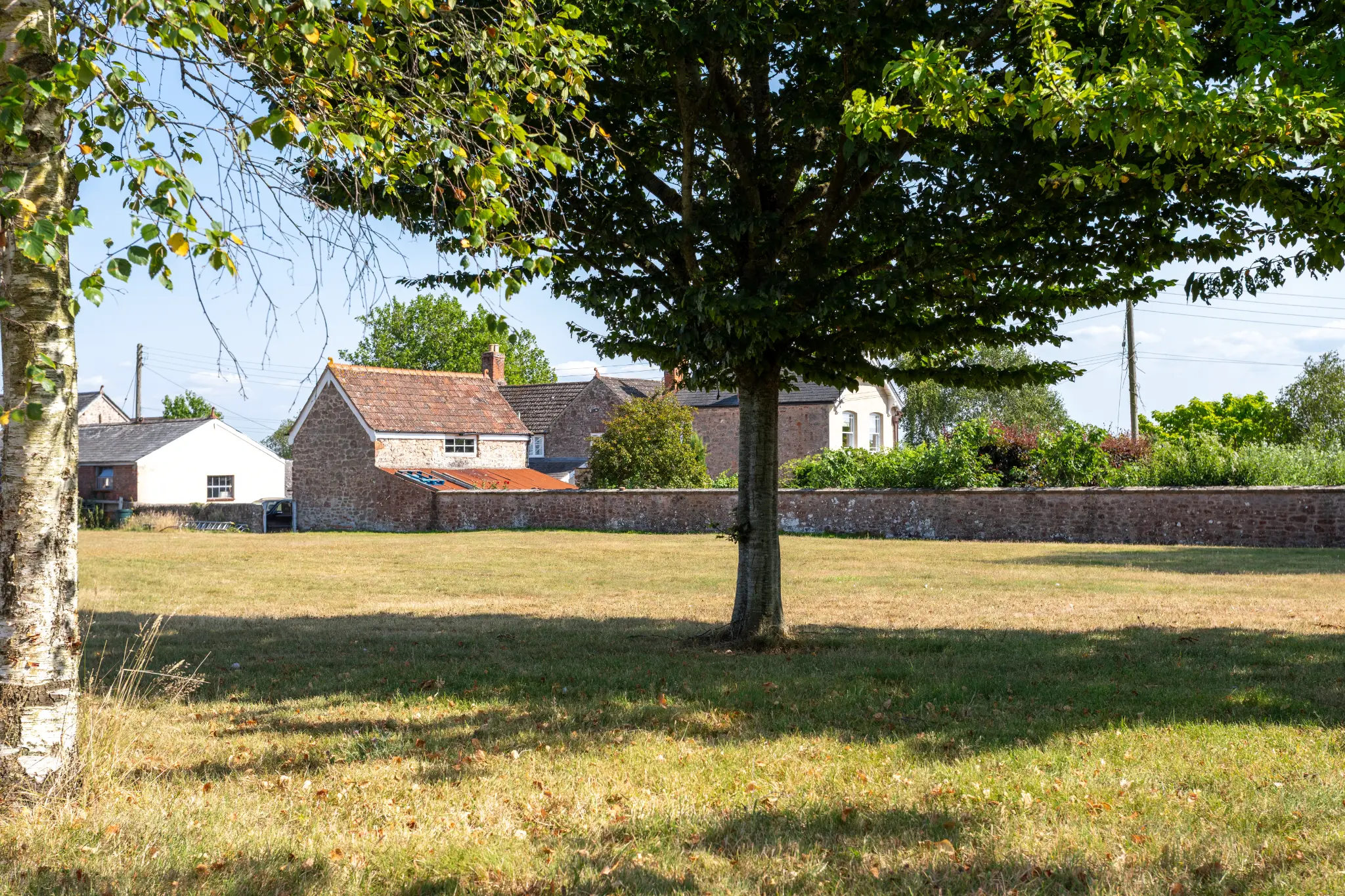
The main lawn is large enough to feel genuinely spacious, and the mature tree at its centre is one of the garden's most significant features. I composed this shot to show the full width of the lawn, the stone boundary wall, and the village buildings and countryside beyond. The scale of the space is something that photographs need to communicate clearly, because it is one of the things buyers at this level are specifically looking for.
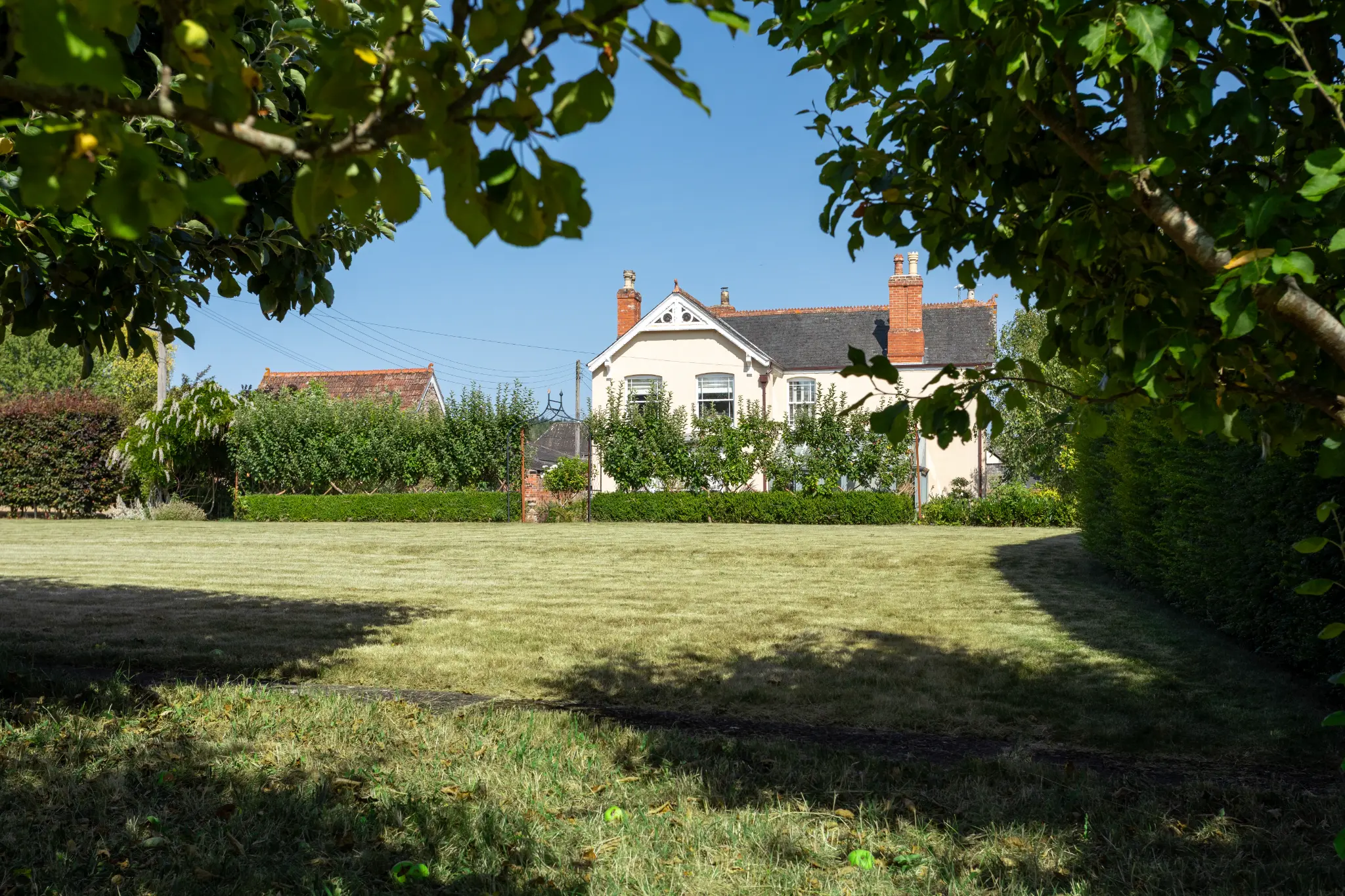
Shooting from the far end of the lawn with fruit tree branches in the foreground creates a natural frame and gives the image a sense of depth. The mown stripes on the lawn are visible in this composition, which adds a detail that communicates the level of care the garden receives.
04The Walled Garden and Orchard
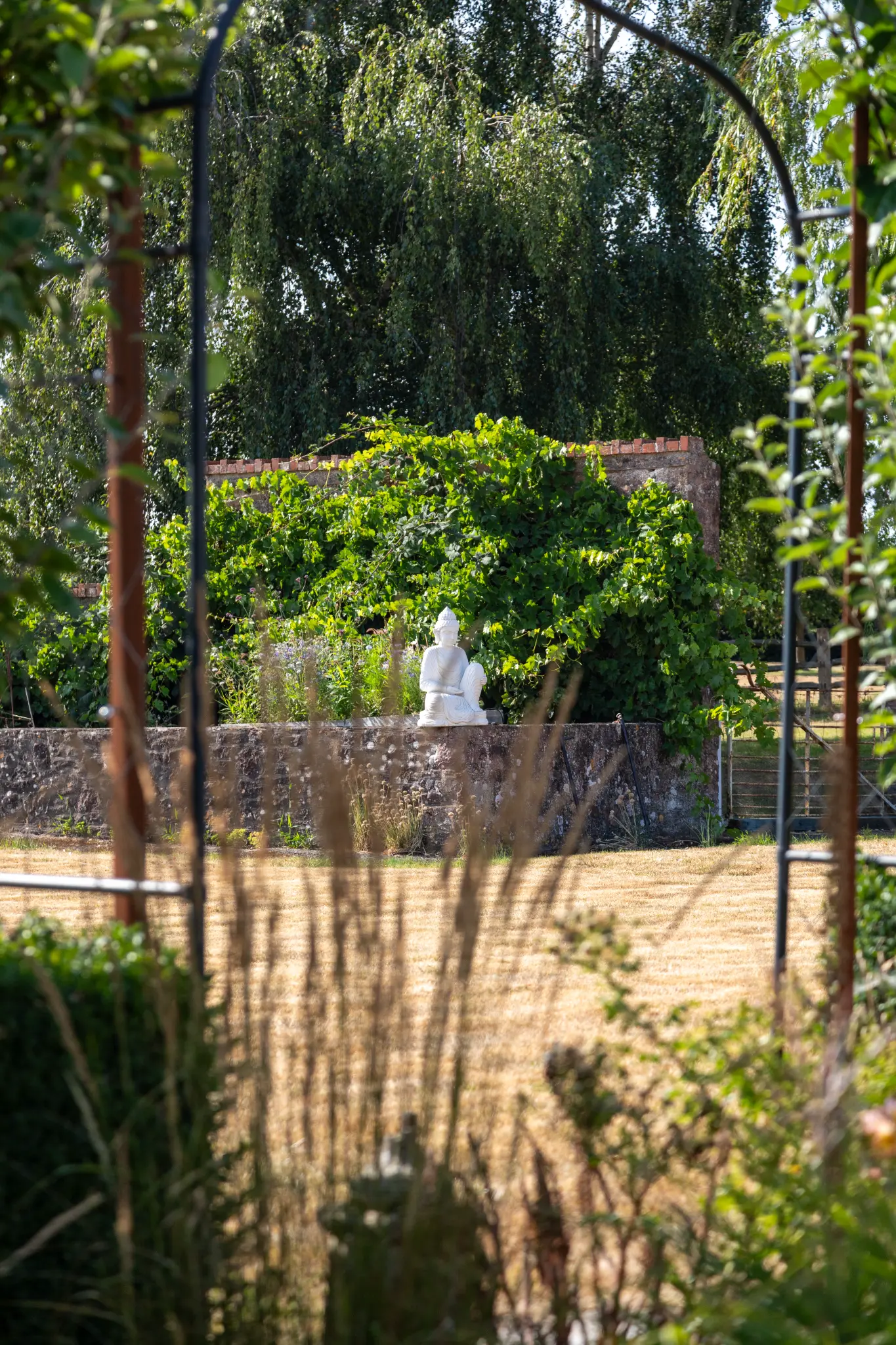
The walled kitchen garden is accessed through an iron arch at the far end of the formal garden. This portrait composition, shot from outside the arch, shows the Buddha statue on the wall, the golden summer grass, and the weeping willow beyond the boundary. The layers of the composition, arch, grass, wall, statue, tree, sky, give the image a depth and stillness that suits the character of the space.
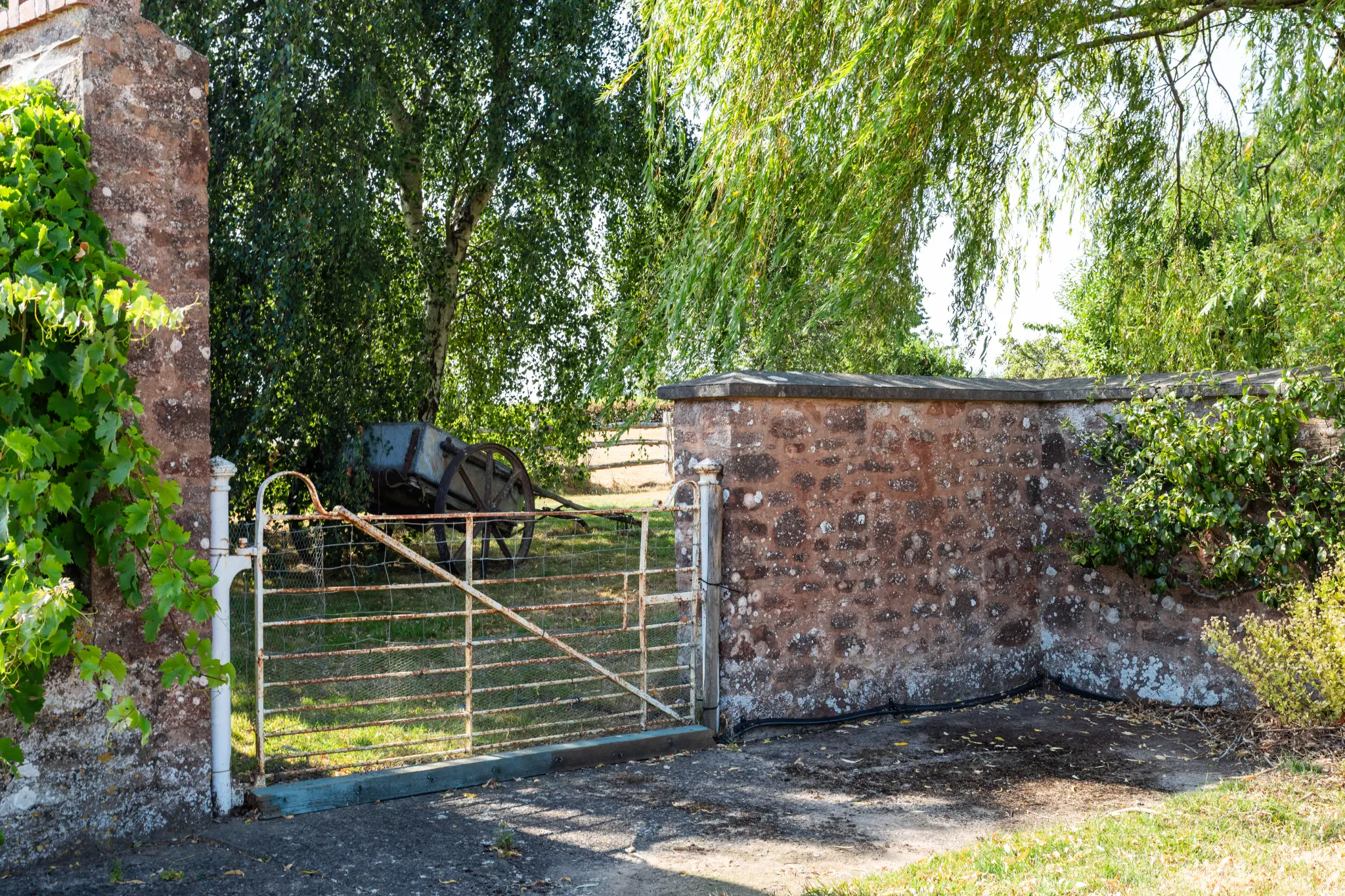
A gate in the stone boundary wall leads to the paddock beyond. The weathered iron gate, the lichen-covered stone, the weeping willow, and the old farm cart in the field behind: this image captures the agricultural history of the property and the sense that the garden connects to a wider landscape. It is the kind of detail that a keepsake set of photographs should include.
05The Bistro Garden and Entertaining Space
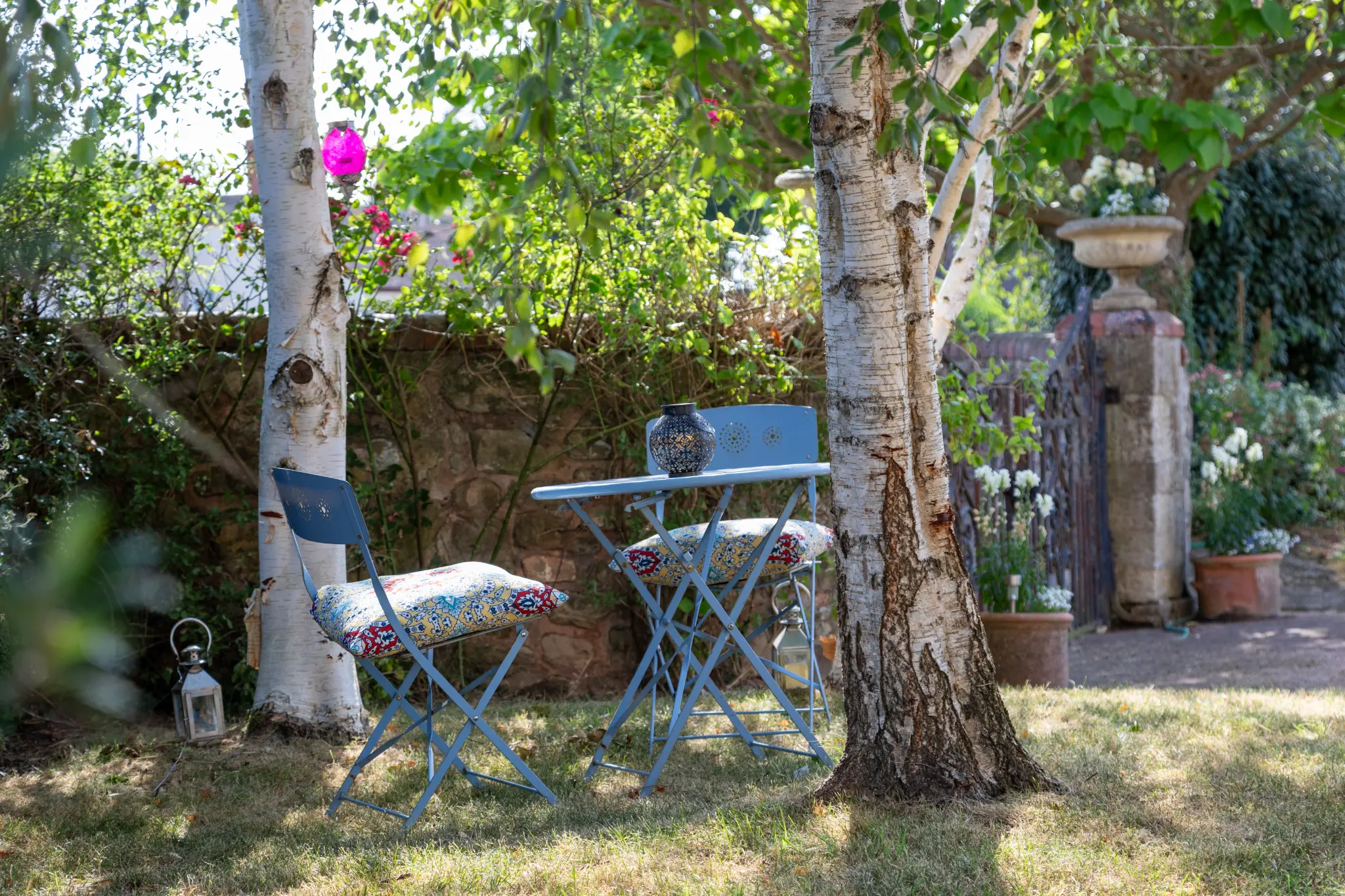
One of the most charming corners of the garden is the bistro area beneath the silver birch trees. The blue metal table and chairs, the patterned cushions, the lantern on the ground, the pink rose in the background: it is a scene that needs almost no styling. I composed the shot to include the stone gate pillar and the wrought iron gate beyond, which frames the view and hints at the garden areas that lie further on.
For a buyer, this image answers a question they may not have thought to ask: is there a place to sit outside that feels sheltered and private? For the owners, it captures a corner of the garden they clearly love.
06The Outbuildings and Working Garden
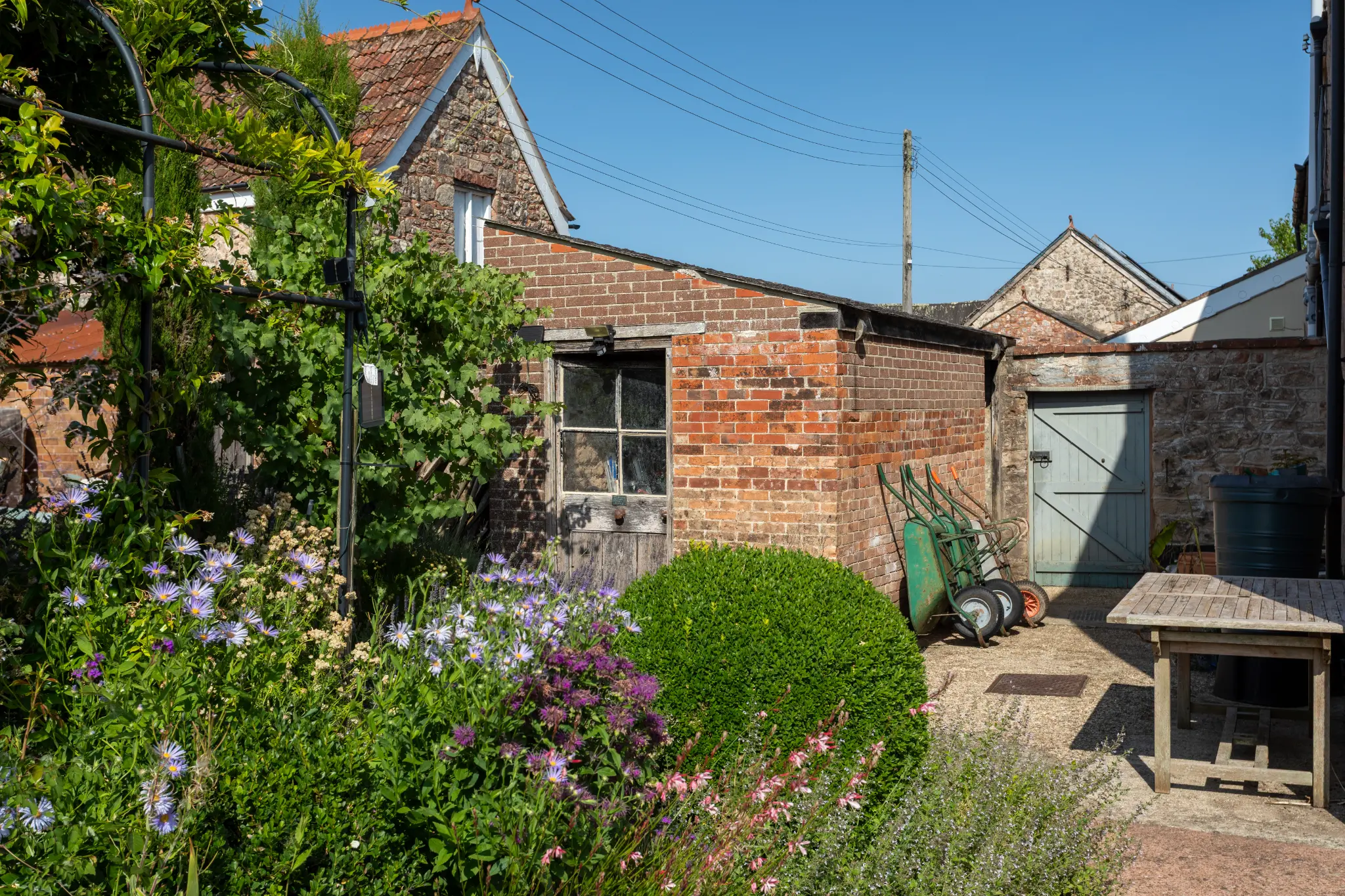
The outbuildings at Fennington House are a significant part of the property's character. Old brick walls, weathered timber doors, a grapevine trained across the facade, green wheelbarrows leaning against the wall: these are the details that tell the story of a working country garden. I included the asters and box topiary in the foreground to soften the composition and connect the working area to the ornamental garden.
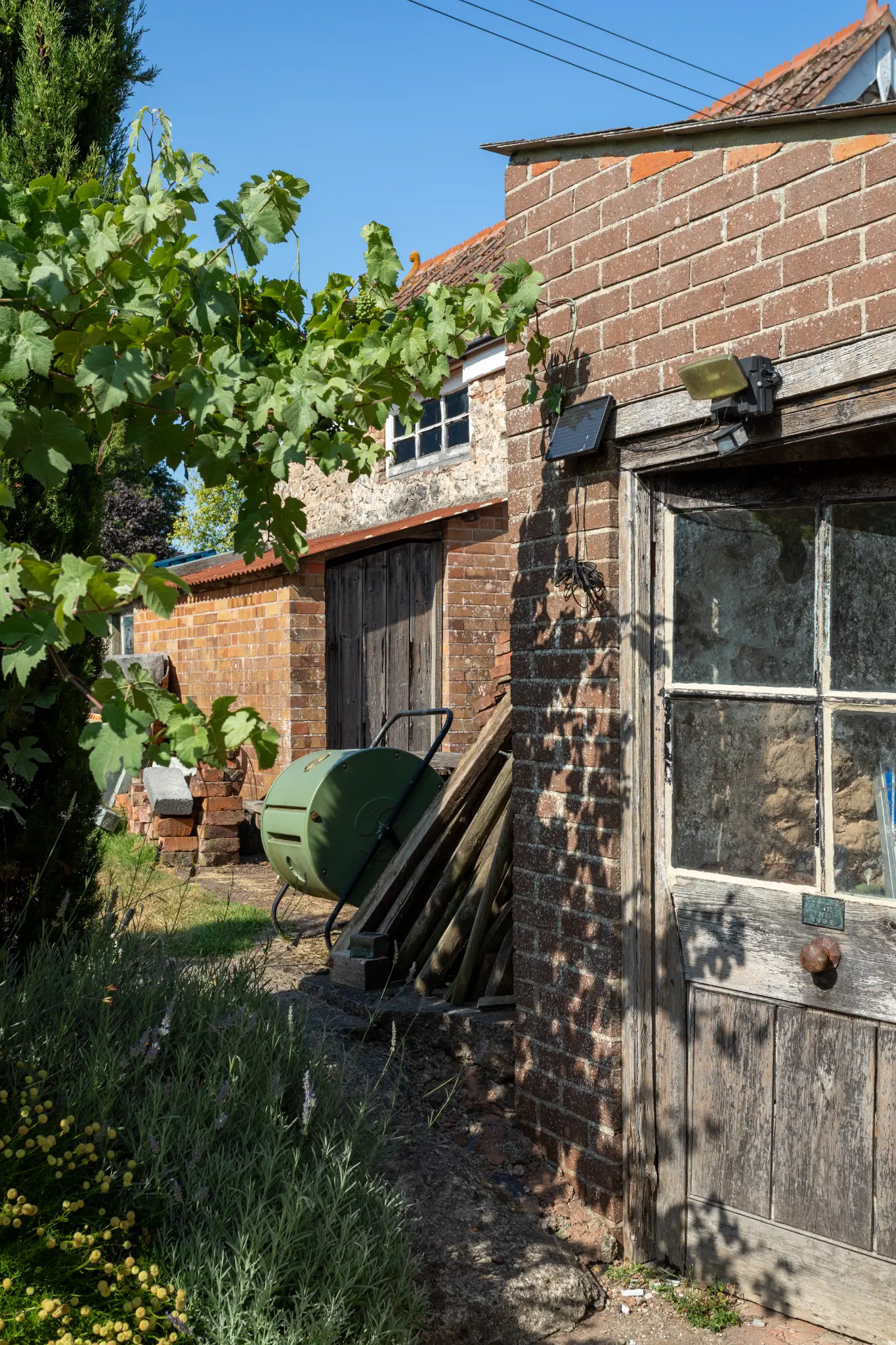
A second composition from further along the yard shows the full run of the outbuildings, the grapevine heavy with young fruit, and the lavender at the base of the wall. This image has a quality that is harder to define than the formal garden shots: it feels lived-in and genuine, and it communicates that this is a property with history.
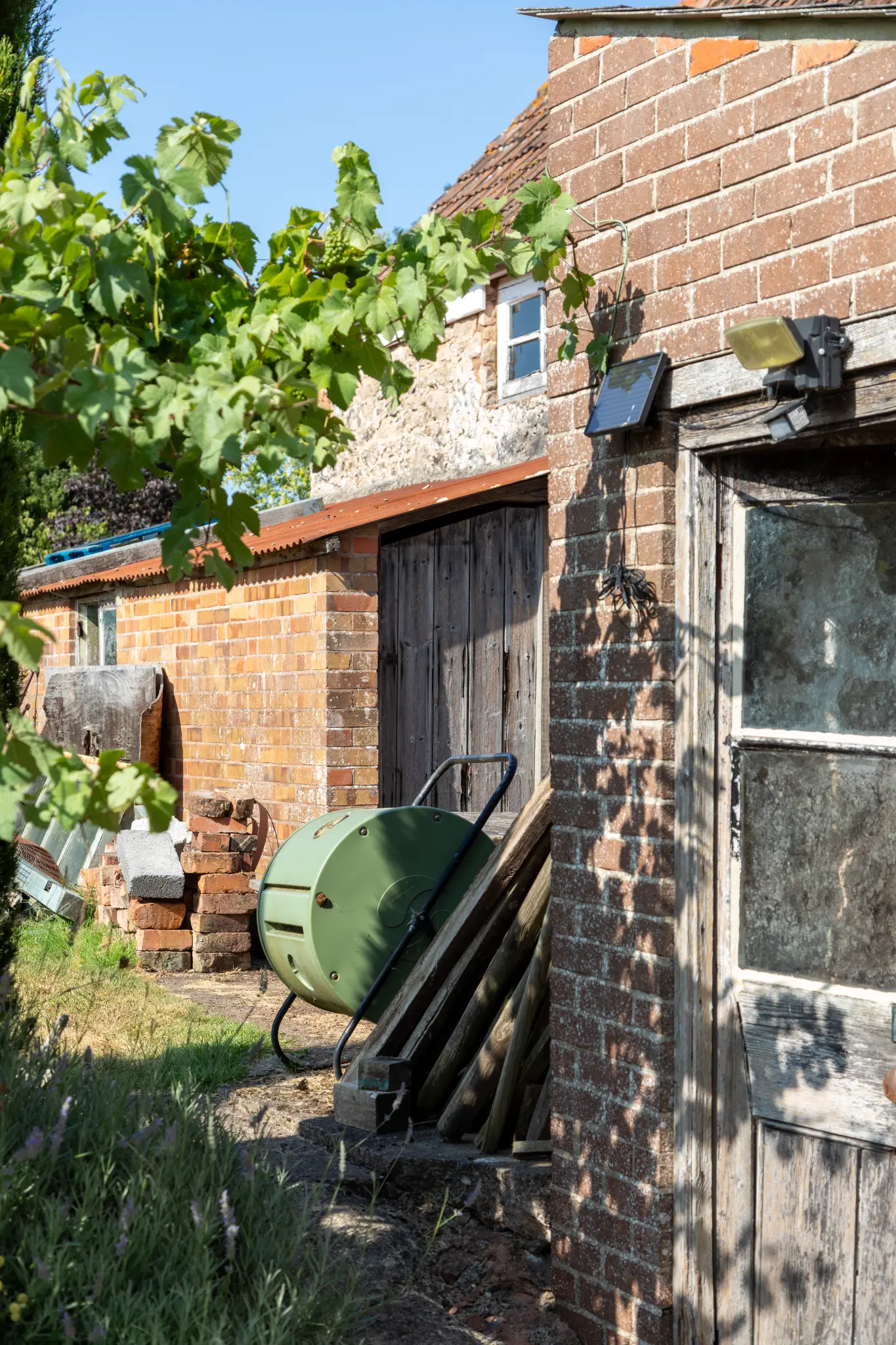
A portrait composition of the main outbuilding door, with the grapevine arching overhead and the wheelbarrow in the foreground, gives this corner of the garden its own dedicated image. For a buyer who gardens seriously, the outbuildings are as important as the house, and they deserve to be shown properly.
07The Aerial View
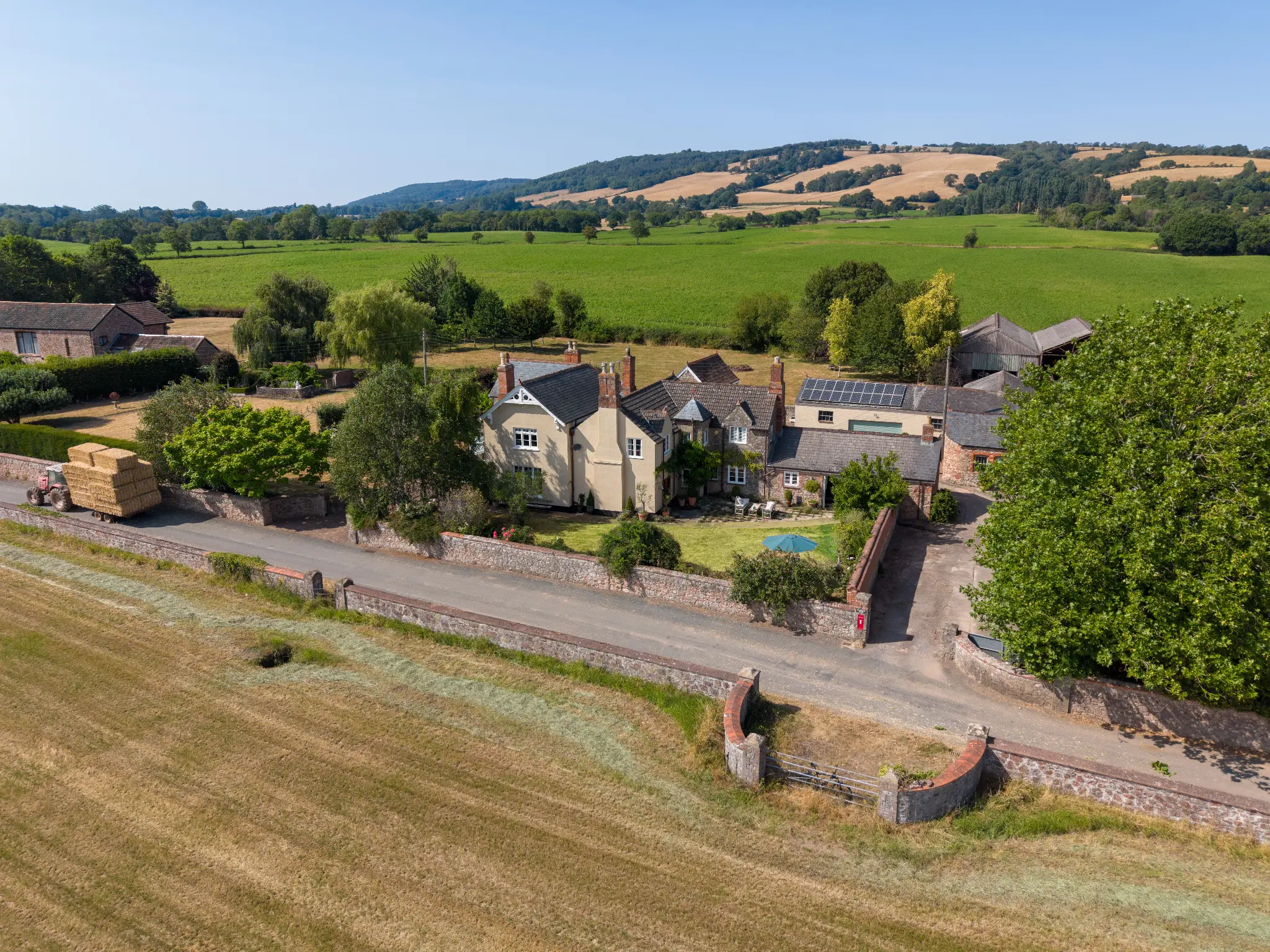
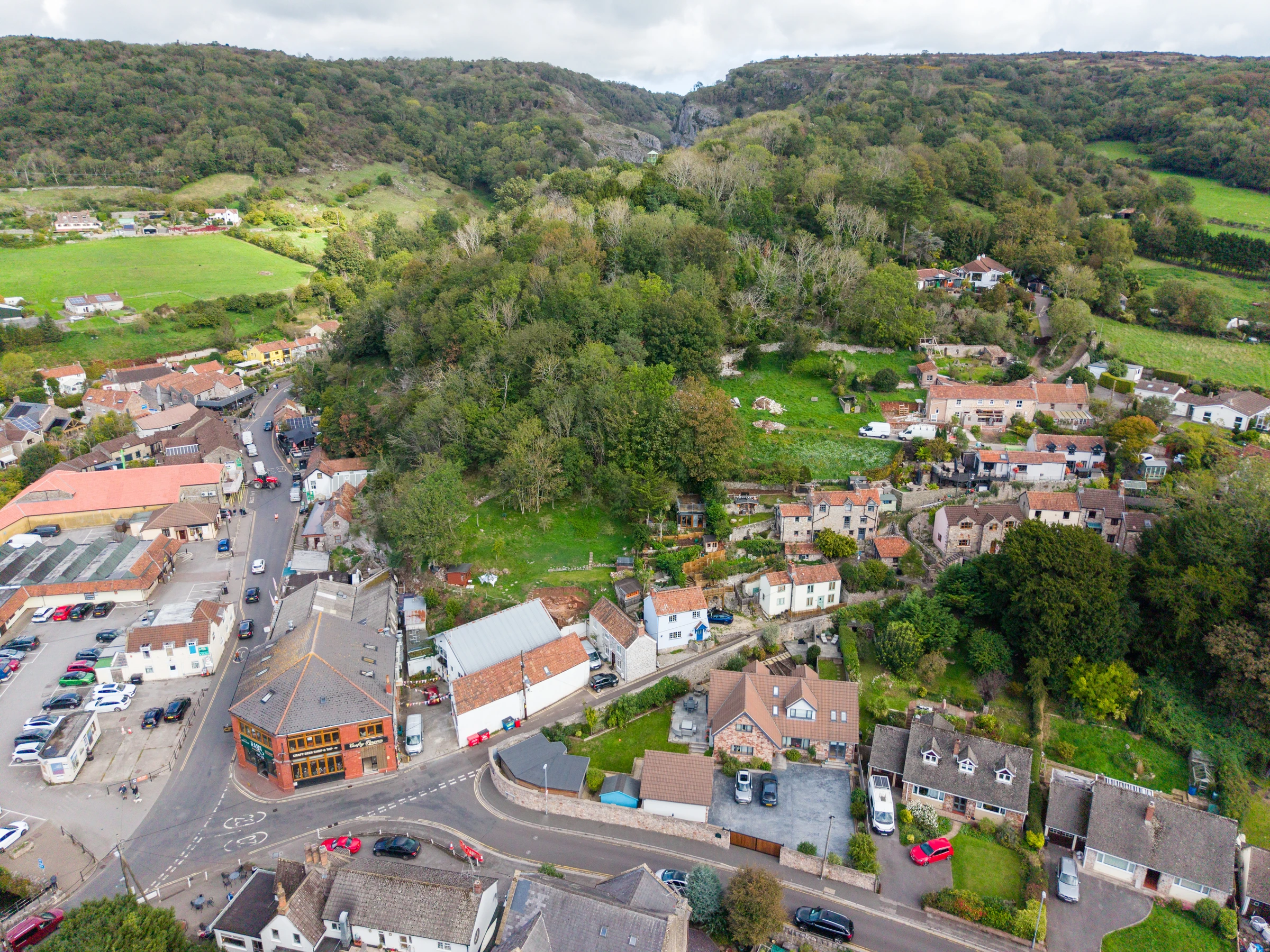
The drone photograph brings everything together. From above, you can see the full extent of the property: the house, the conservatory, the formal garden, the orchard, the walled kitchen garden, the outbuildings, and the paddock beyond the boundary wall. The Somerset farmland stretches away in every direction, with the Quantock Hills visible on the horizon.
This is the image that answers the question every buyer asks first: what is the setting? For a property like Fennington House, the setting is as much a part of the value as the house itself, and the aerial photograph communicates it in a way that no ground-level image can.
08Why Timing Matters for Garden Photography
The brief for this shoot was to capture the garden during its best season. That is a more specific instruction than it might sound. A garden like this one at Fennington House has a peak window of perhaps four to six weeks in high summer when the roses, daylilies, and cottage garden perennials are all in bloom simultaneously, the hedges are freshly clipped, and the light has the warmth and length that makes outdoor photography work.
Miss that window and the images tell a different story. Shoot too early and the borders are sparse. Shoot too late and the flowers are past their best. Shoot on a cloudy day and the colours flatten. The owners understood this, which is why they got in touch when they did.
| Factor | Why it matters for garden photography |
|---|---|
| Peak bloom timing | Roses, daylilies, and perennials have a short simultaneous flowering window |
| Light quality | Long summer days give warm, directional light that suits outdoor photography |
| Hedge condition | Freshly clipped hedges photograph sharply and communicate care |
| Weather | Blue sky and sunshine are not guaranteed in Somerset, so timing around the forecast matters |
| Drone availability | Aerial photography requires good visibility and calm conditions |
For the owners of Fennington House, the timing was right. The garden was at its best, the weather was exceptional, and the resulting images capture the property in a way that will serve them well whether they use them for a future sale or simply as a record of what they have created.
09Ready to Photograph Your Somerset Garden?
If you have a property in Somerset with a garden worth capturing, whether you are planning a sale or simply want a set of photographs that do justice to what you have built, get in touch for a free quote. I cover all of Somerset including Bridgwater, Taunton, Wells, and the surrounding villages, and I can usually schedule a shoot within a few days of booking. Drone photography can be included for properties where an aerial perspective adds value.
Related: Luxury property photography in Somerset | Areas I cover in Somerset | How to prepare your property for a photography shoot