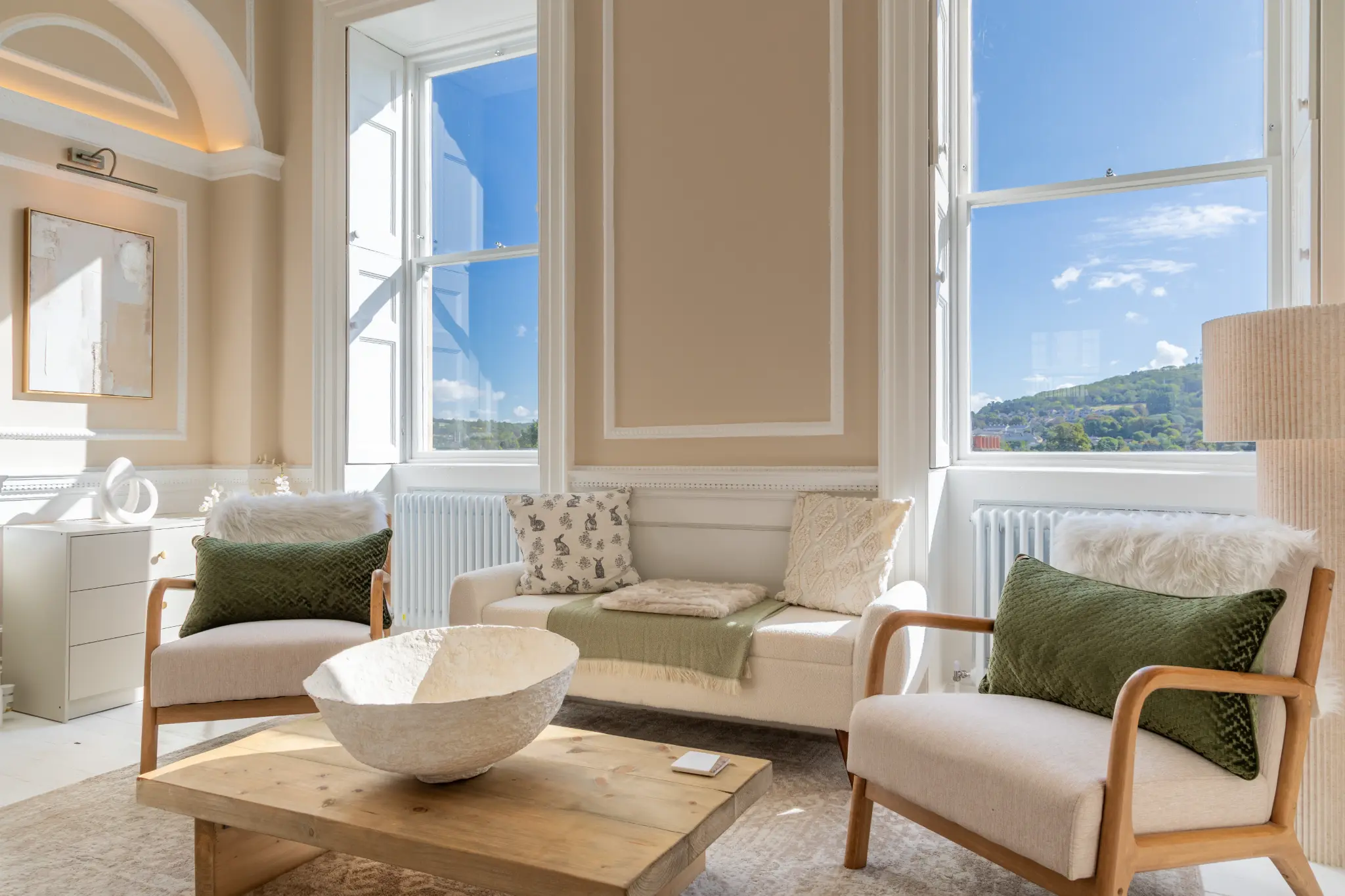
Photography case study for a luxury manor near Bath managed for large group stays. The management company needed high-end imagery to match the calibre of the property. The shoot covered the stone exterior and formal topiary gardens, aerial drone establishing shots, the entrance hall and staircase, multiple dining rooms laid for guests, drawing rooms and sitting rooms, a games room, the principal bedroom suite with freestanding bath and exposed beams, additional bedrooms including twin rooms, and period bathrooms with countryside views. Luxury managed property photography from The Property Photo Guy covers Bath, Bristol, Somerset, and the South West, including drone, with 48-hour delivery.
There is a particular challenge in photographing a property that exists to host other people's best moments. A luxury manor hired for large group stays, celebrations, and gatherings has to look like the venue the management company knows it is, not just a large house with nice rooms. The photography has to carry the weight of a booking decision made by someone who has never visited, often from hundreds of miles away, and who is spending a significant amount of money on a single occasion.
This manor sits on the edge of Bath, a city where the bar for period architecture is already high. The brief from the management company was direct: the imagery needed to match the calibre of the stays the property hosts. Nothing generic, nothing that could belong to any large house. The set had to show the specific character of this building, the scale of its entertaining spaces, the quality of its bedrooms, and the grounds that frame the whole experience.
01The Exterior: Setting the Tone Before Anyone Steps Inside
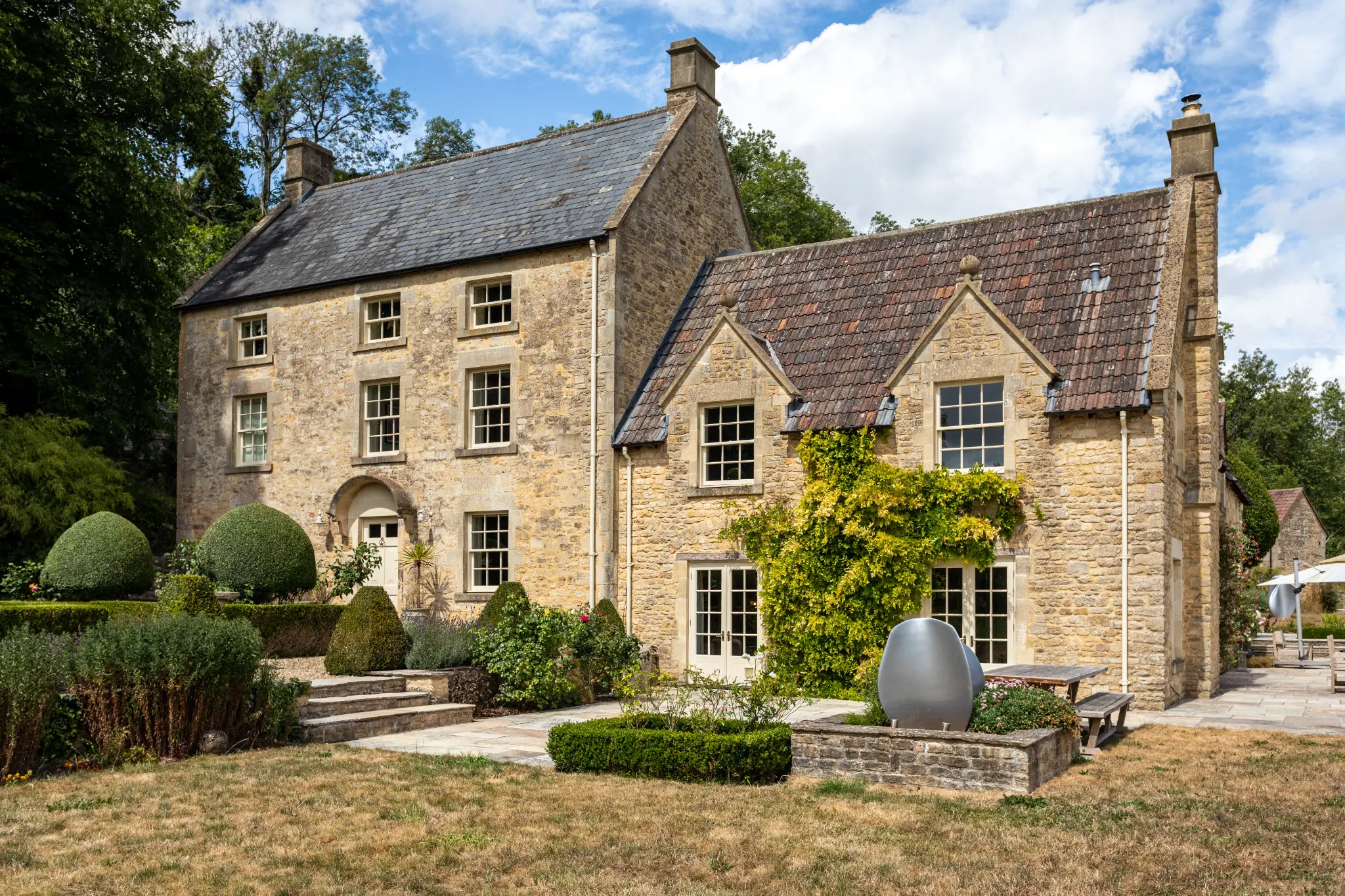
For a managed property of this kind, the exterior is not just a photograph of a building. It is the first frame a prospective guest sees, and it has to do the work of communicating the scale, the character, and the quality of what is inside before a single interior image loads. The stone facade, the climbing ivy, the manicured topiary, and the traditional sash windows all needed to read together as a coherent whole.
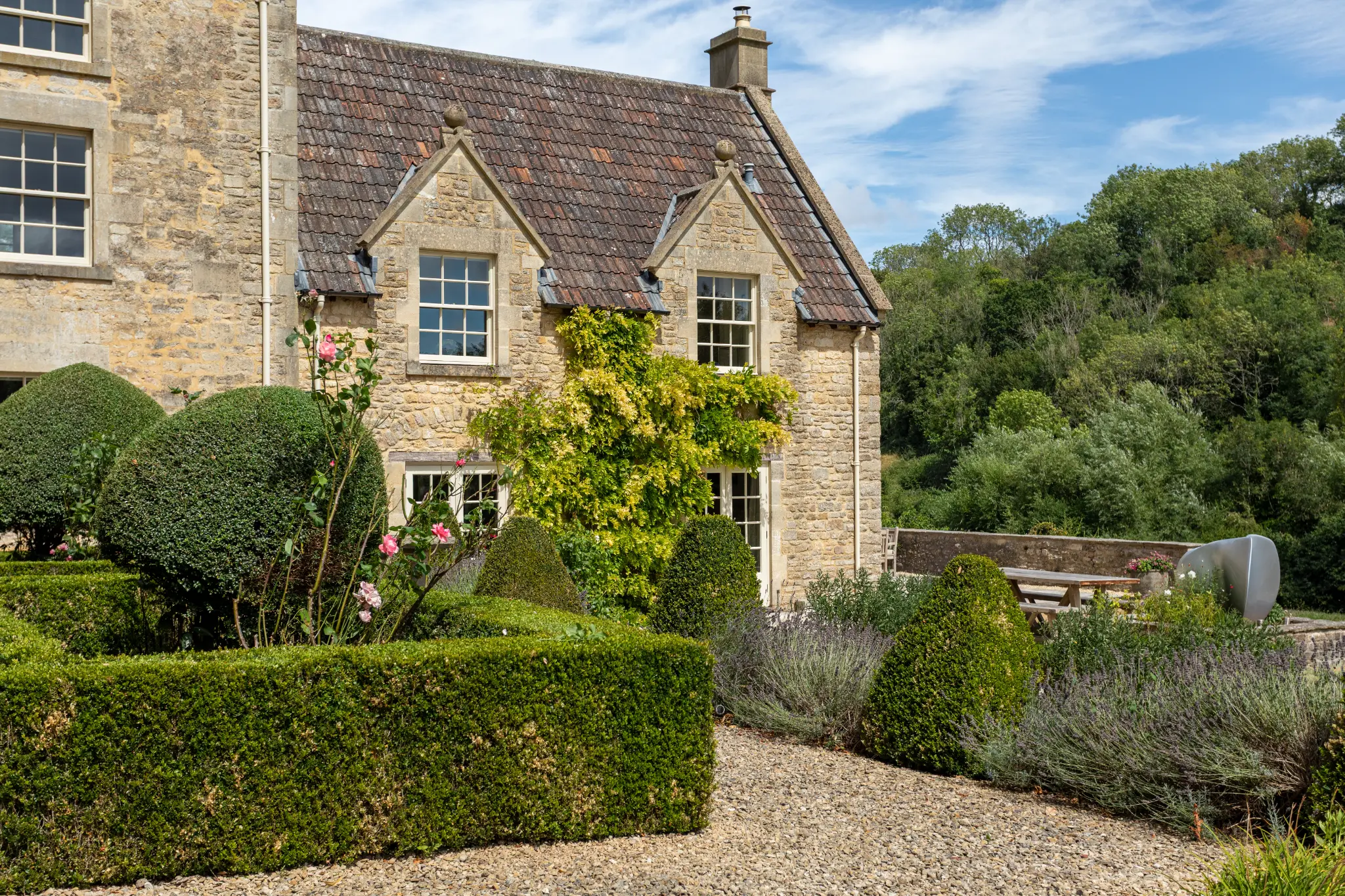
A tighter composition on the formal garden side of the building. The clipped hedges and topiary spheres are not incidental detail, they are part of what the management company is selling. A property that maintains its grounds to this standard is signalling the same attention to detail inside.
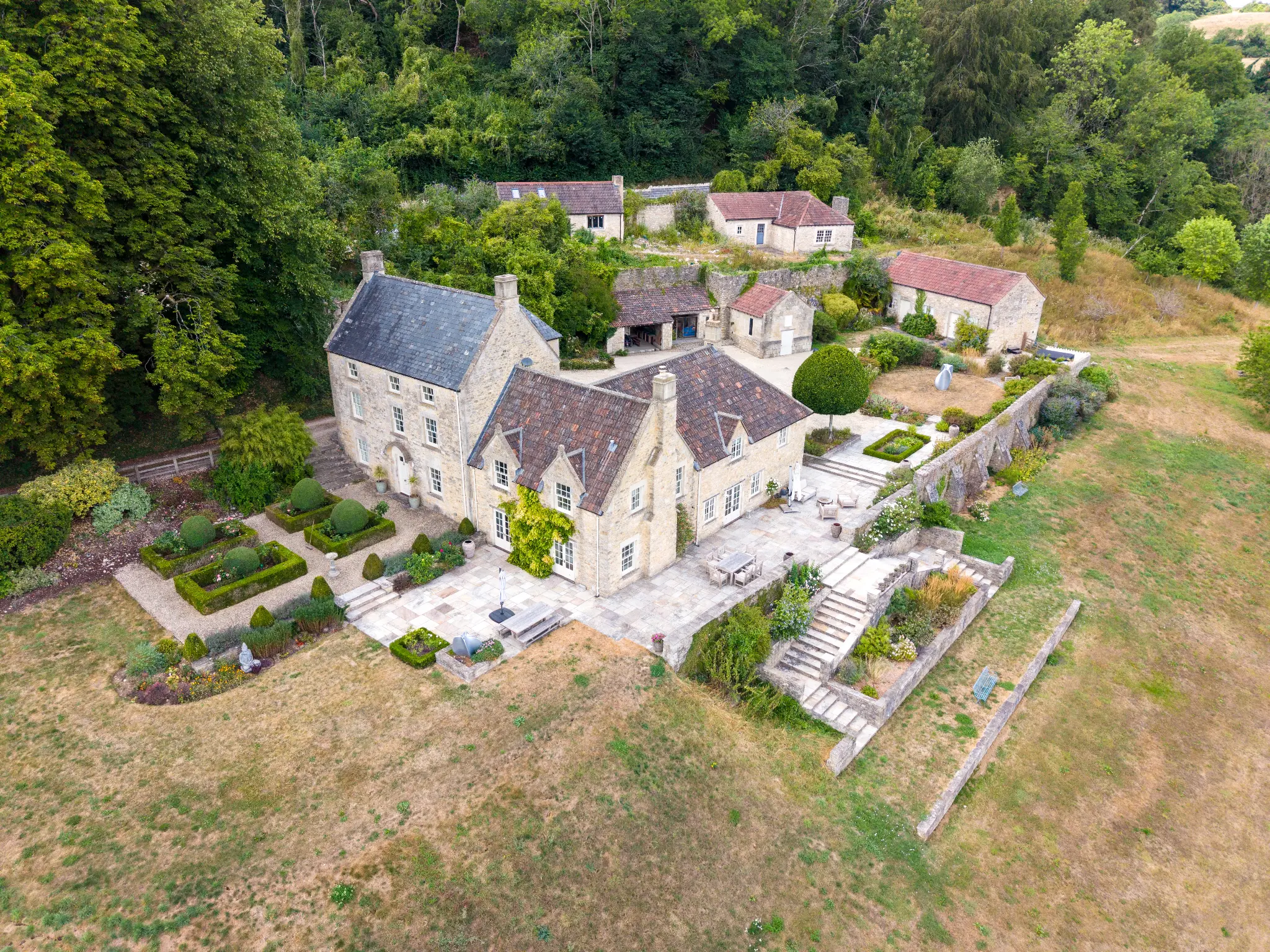
The aerial frame settles questions that ground-level photography cannot. How large is the estate? What is the relationship between the house, the terraces, and the surrounding countryside? For a group booking a property like this, these are not trivial questions. An aerial shows the full extent of what they are hiring in a single image.
02The Arrival: What Guests Experience First
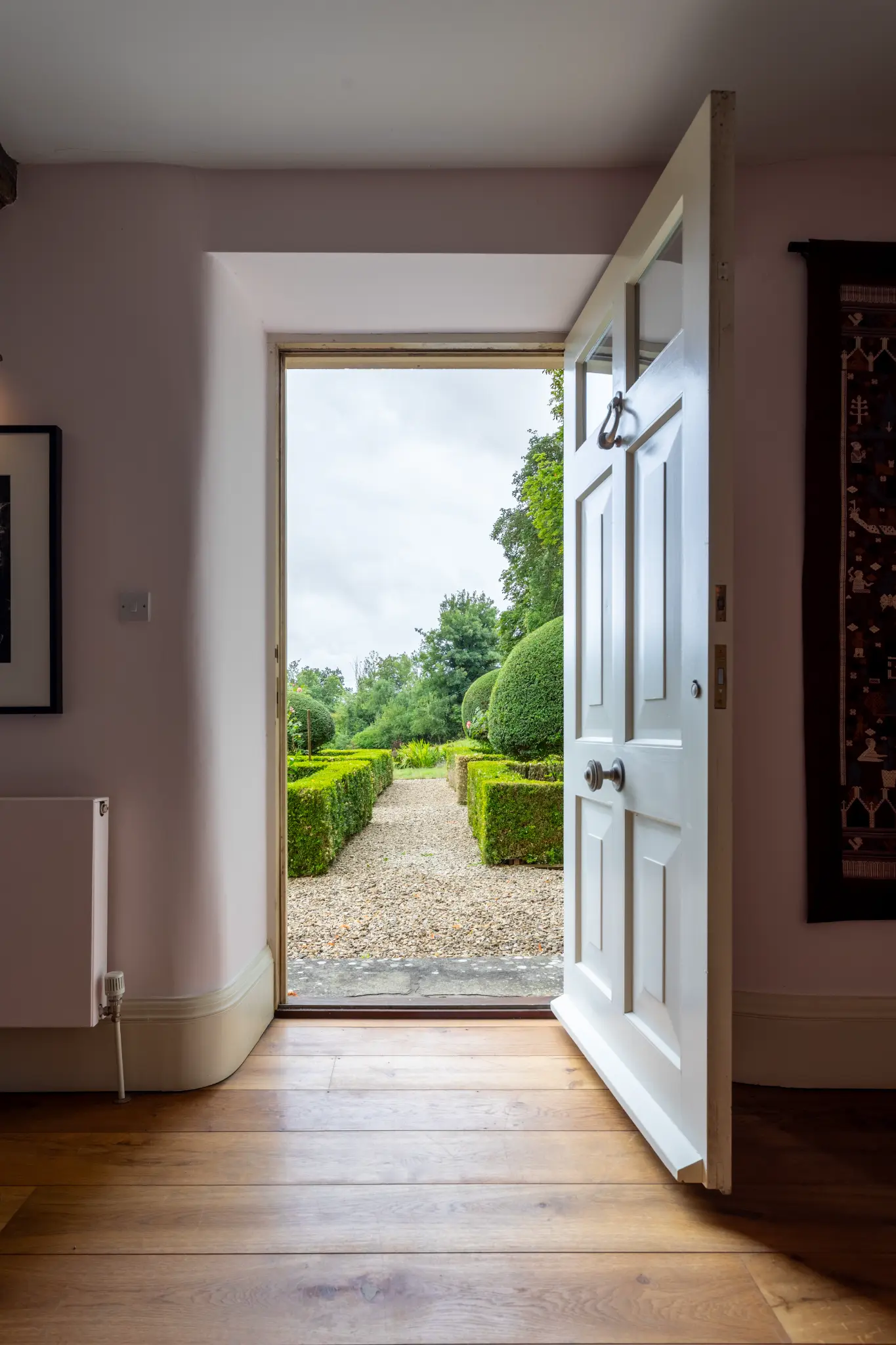
The moment a guest arrives at a property like this, the door opens onto a view. This frame was composed to capture exactly that transition, the warm timber floor inside, the pale walls, the traditional panelled door, and beyond it the formal gravel garden framed by clipped hedges. It is the kind of image that makes someone want to be standing in that doorway.
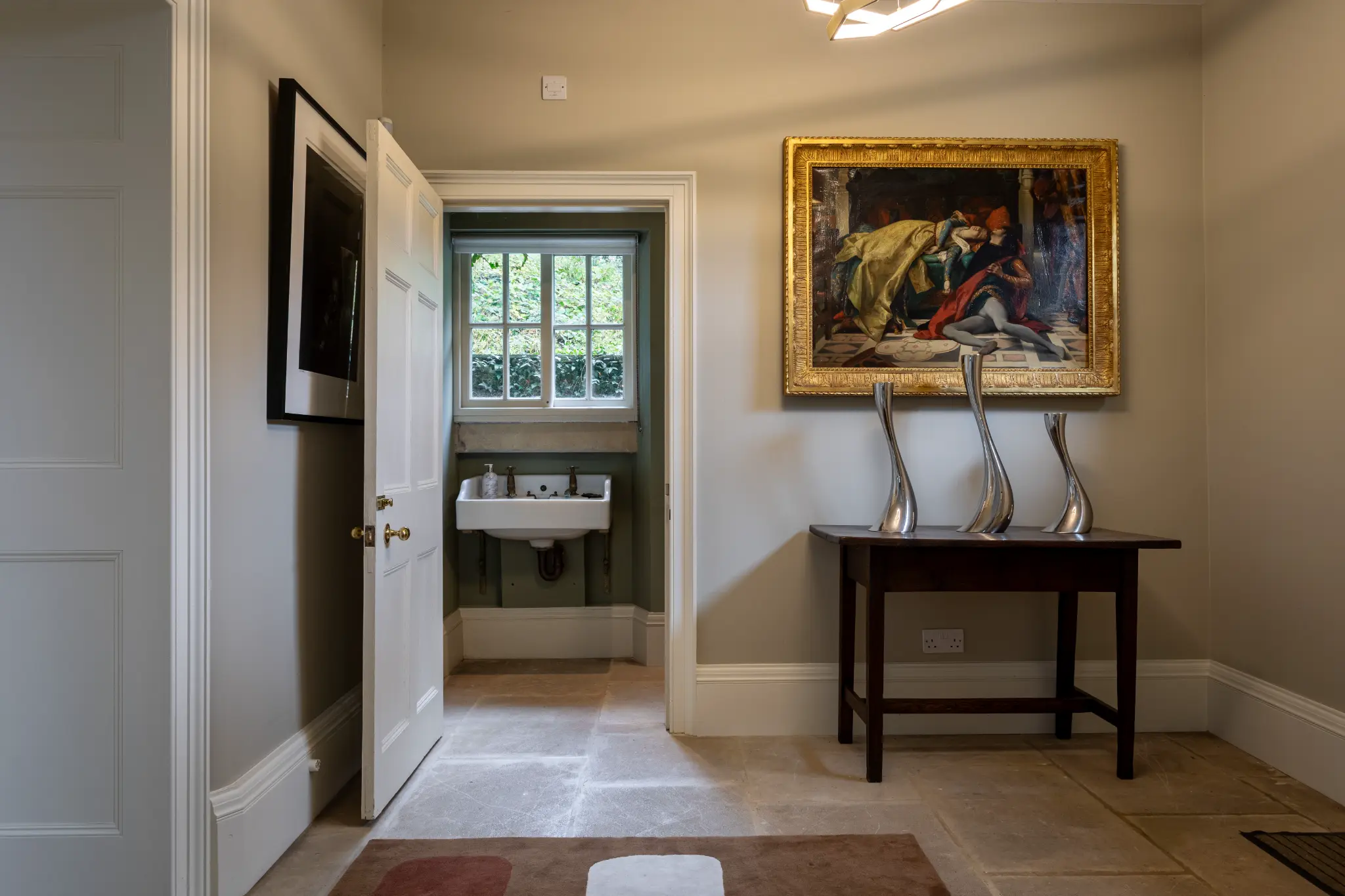
The entrance hall sets the register for the whole property. Flagstone floors, a dark wood console table, silver sculptural pieces, and a substantial gilt-framed painting are the kind of details that communicate a particular level of curation. Photographing them well means resisting the urge to go wide and instead finding the composition that shows the quality of each element.
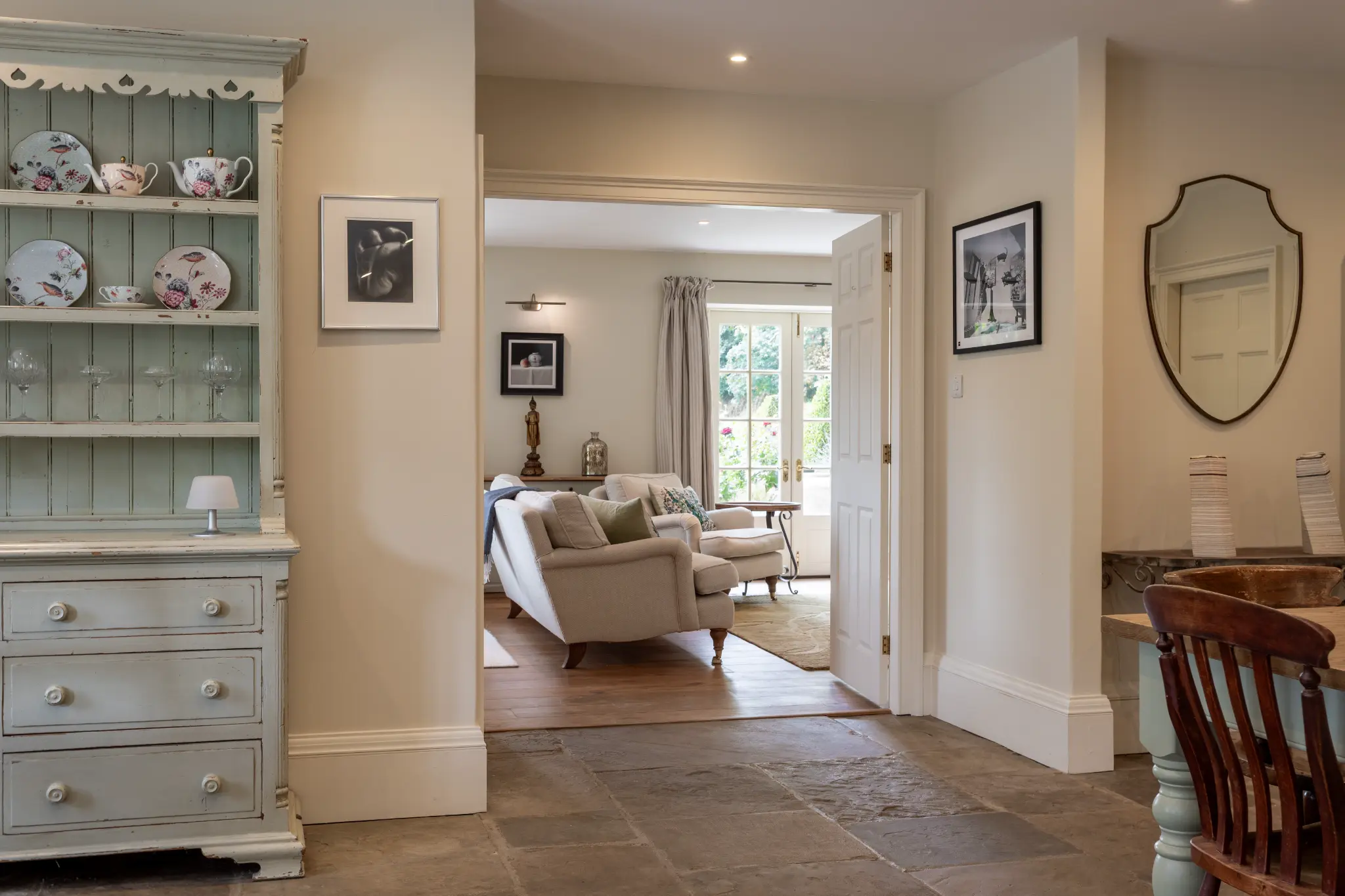
A sightline from the hallway through to the sitting room. These connecting views matter in a large property because they give a prospective guest a sense of how the spaces flow into each other. A property that photographs well as a sequence of connected rooms feels more generous than one that only shows individual spaces in isolation.
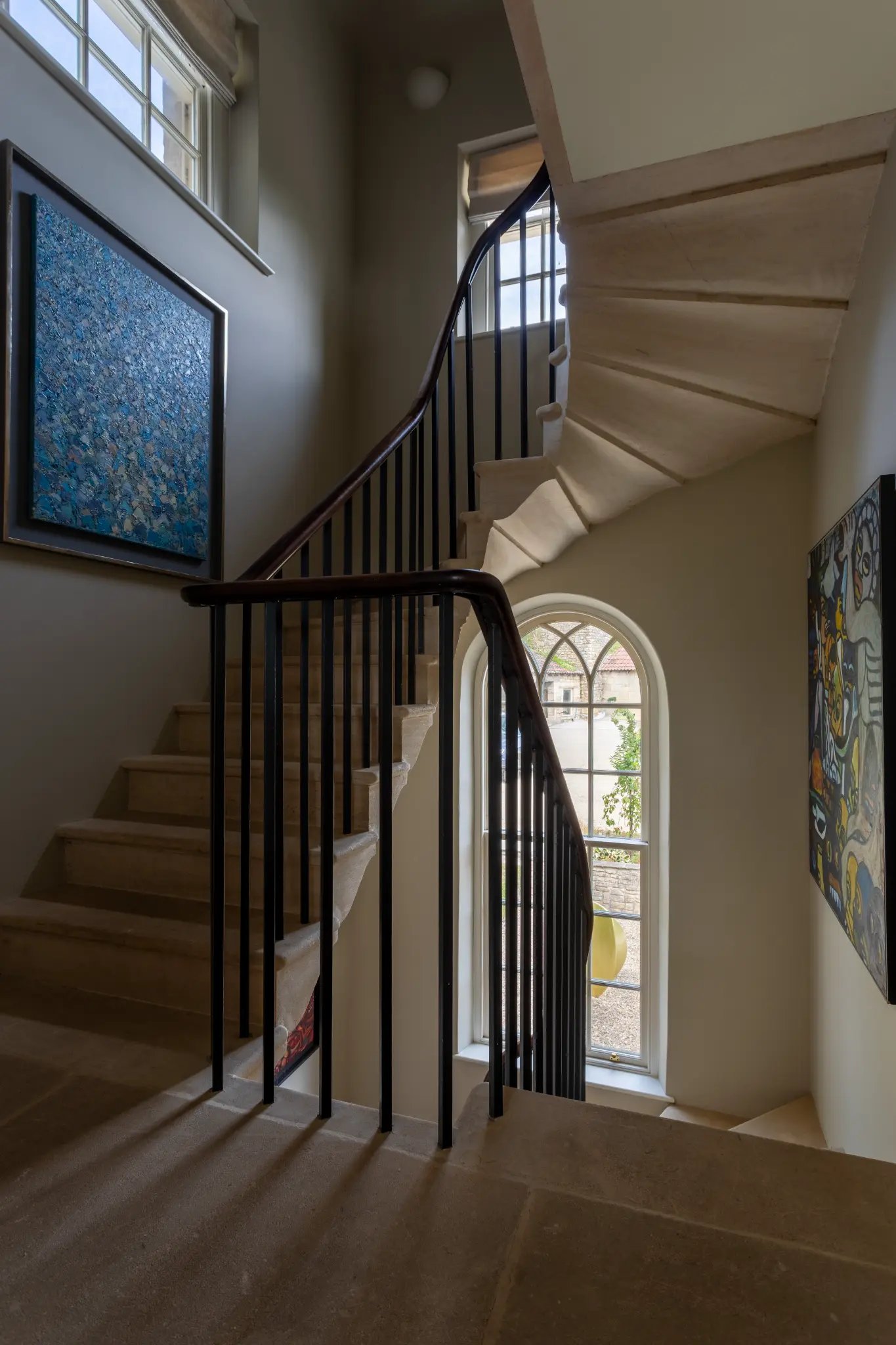
The staircase is one of the architectural centrepieces of the building. The stone treads, the polished dark handrail, the slender balusters, and the arched window on the lower landing are all period features that no amount of renovation can replicate. The contemporary abstract paintings on the walls are a deliberate curatorial choice by the management company, and they work precisely because the architecture is confident enough to carry them.
03The Entertaining Spaces: Where the Brief Gets Serious
For a large group stay, the reception rooms are the product. Guests are not booking bedrooms first, they are booking the dining room, the drawing rooms, and the spaces where the time together will actually happen. These needed to be photographed in a way that showed both their scale and their warmth, because a room that looks grand but cold is not a room people want to spend an evening in.
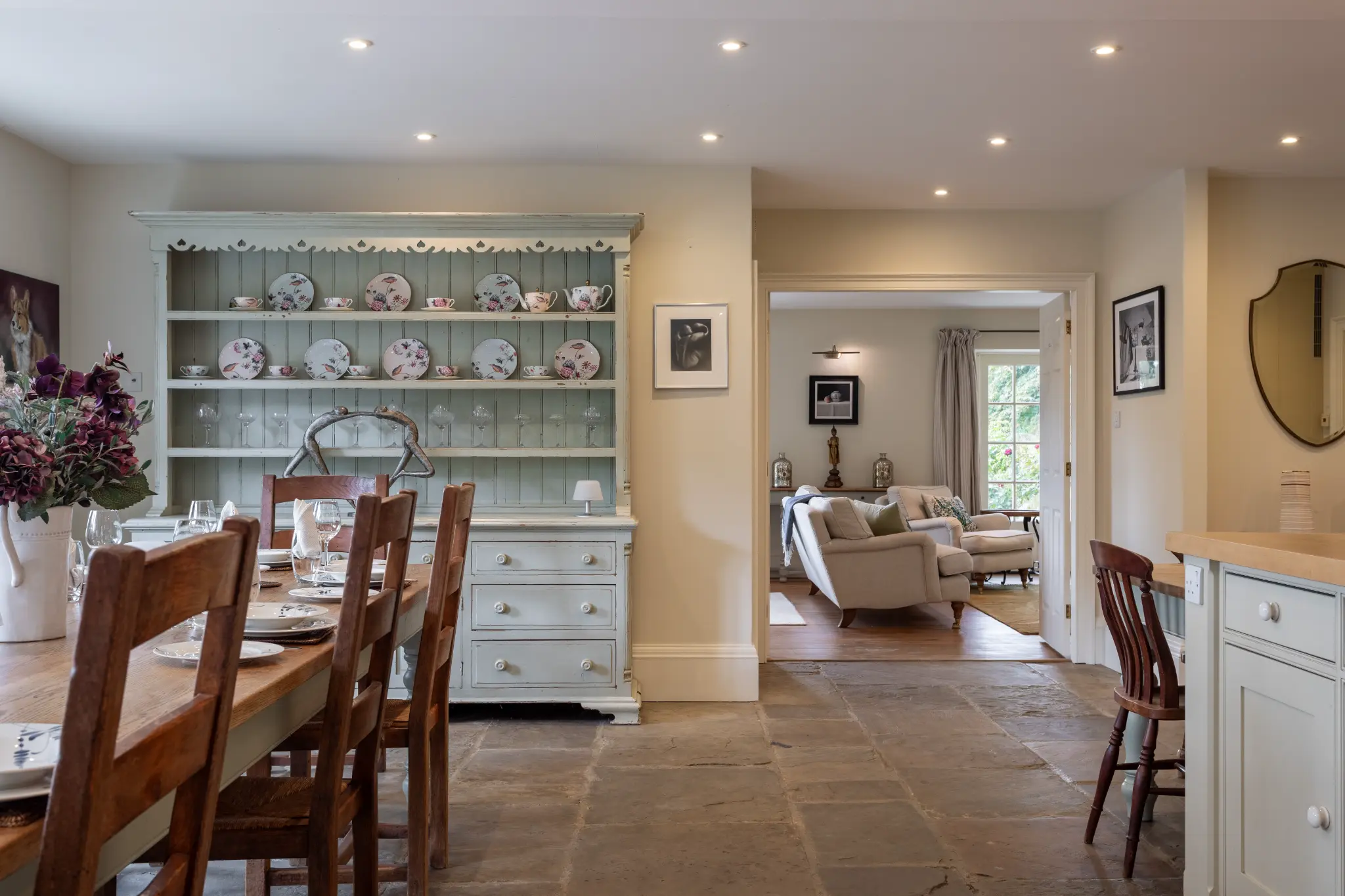
The kitchen dining room is where the scale of the property's capacity becomes visible. A long wooden table laid for a group, a painted dresser displaying fine china, flagstone floors, and a sightline through to the sitting room beyond. This is a room that can seat a large gathering for a formal dinner and still feel like a home rather than a function suite.
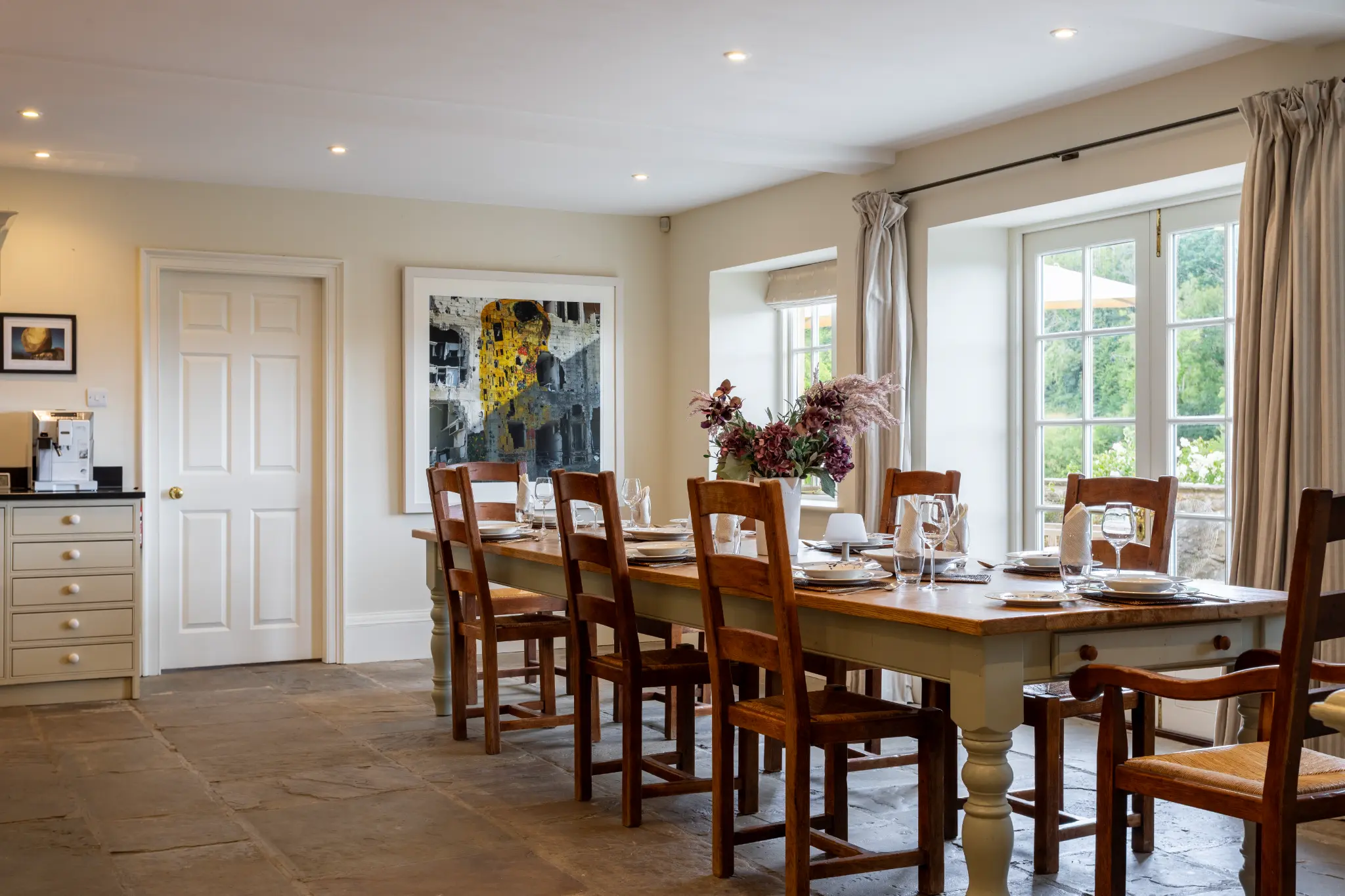
A second dining space, photographed with the French doors open and the table laid for a formal occasion. The abstract artwork on the wall, the stone-paved floor, and the quality of the natural light coming through the windows are all elements that needed to be present in the frame. Dining rooms in properties like this are often photographed as empty rooms, which is a mistake. A table set for dinner is a promise, not a floor plan.
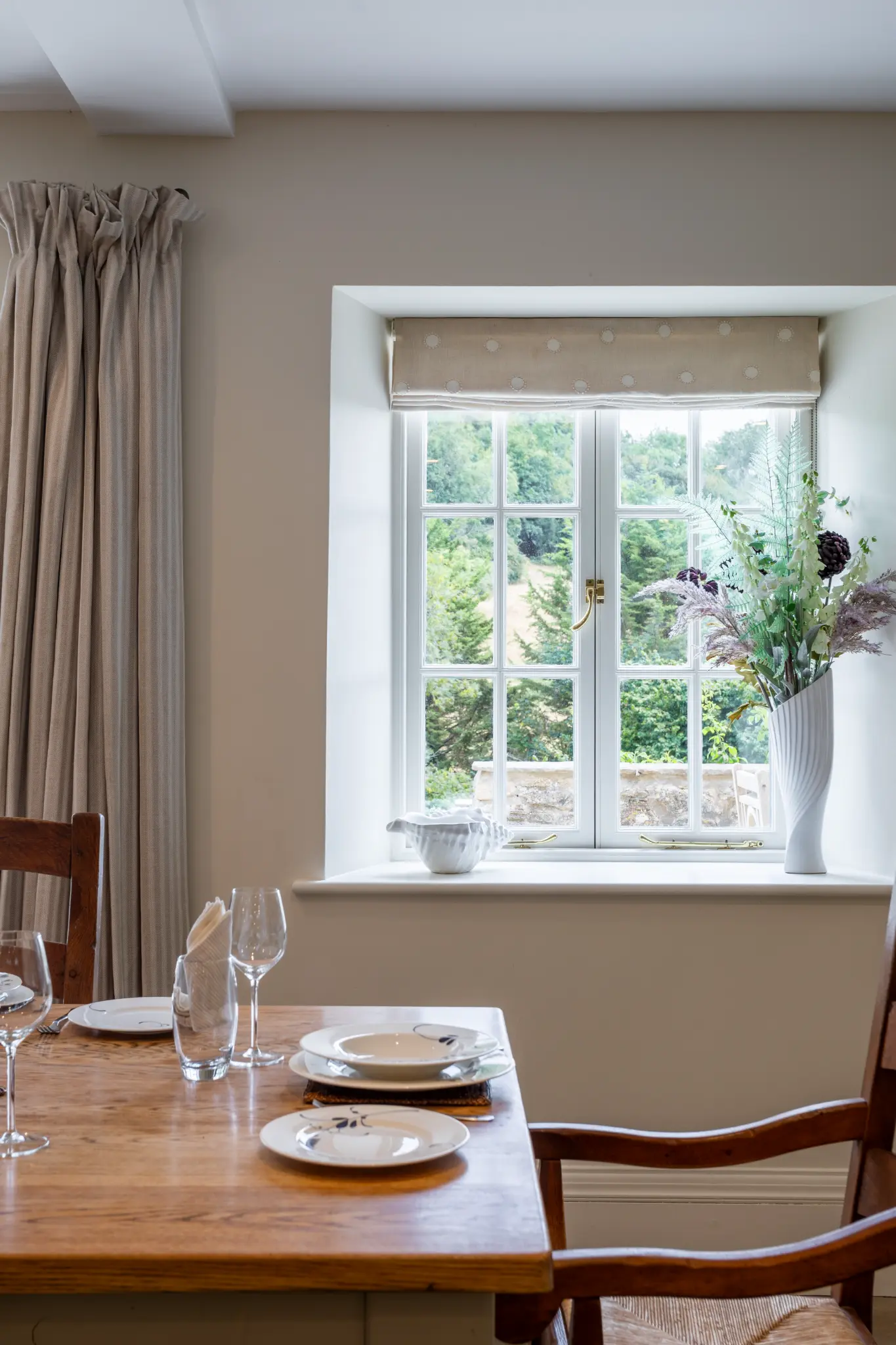
A more intimate dining setting, with the window view of the countryside as the backdrop. Not every meal at a property like this is a formal dinner for a large group. The photography needed to show that the space works for smaller gatherings too, and that the views from the dining rooms are part of what guests are paying for.
04The Drawing Rooms: Comfort at Scale
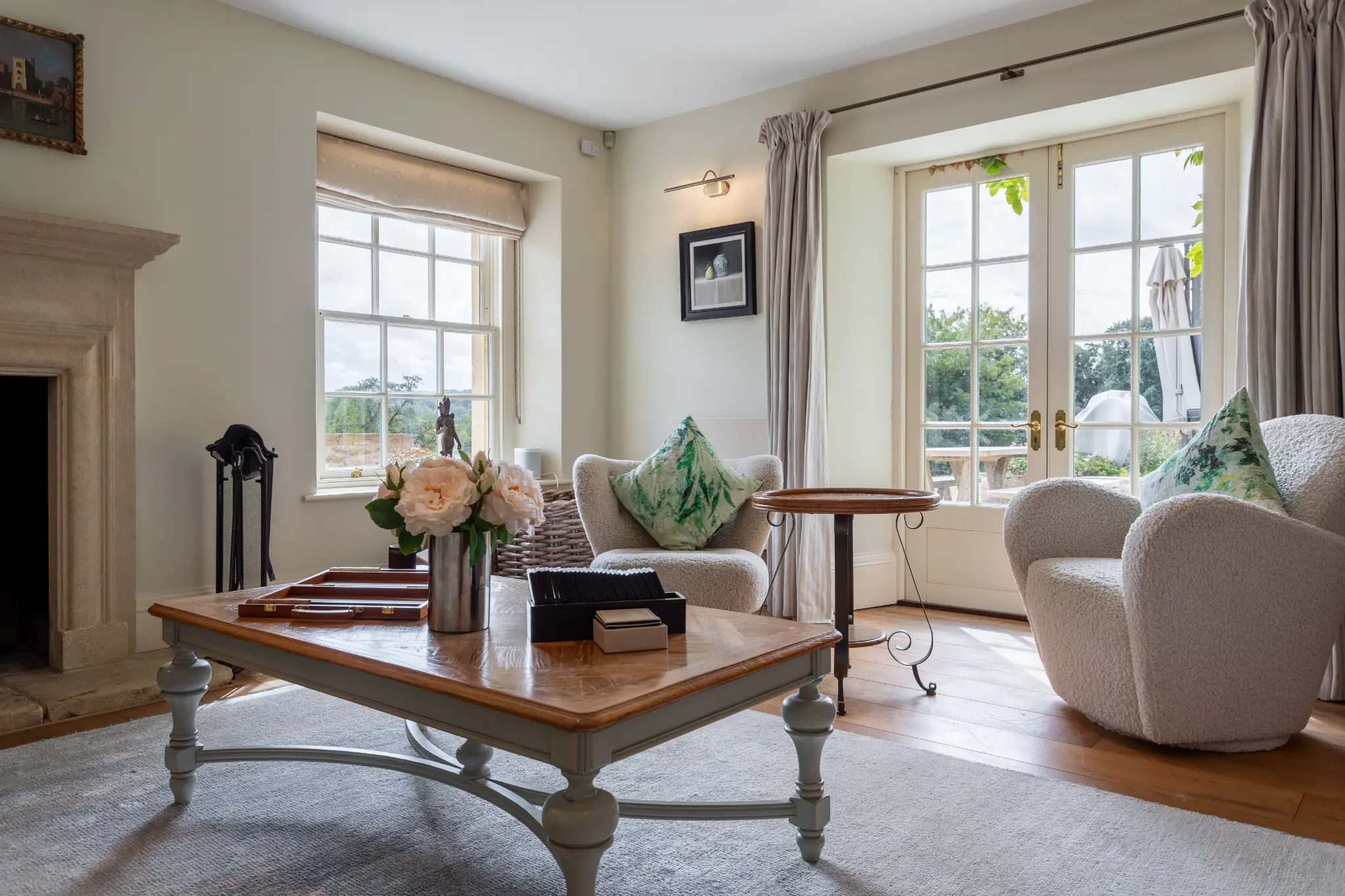
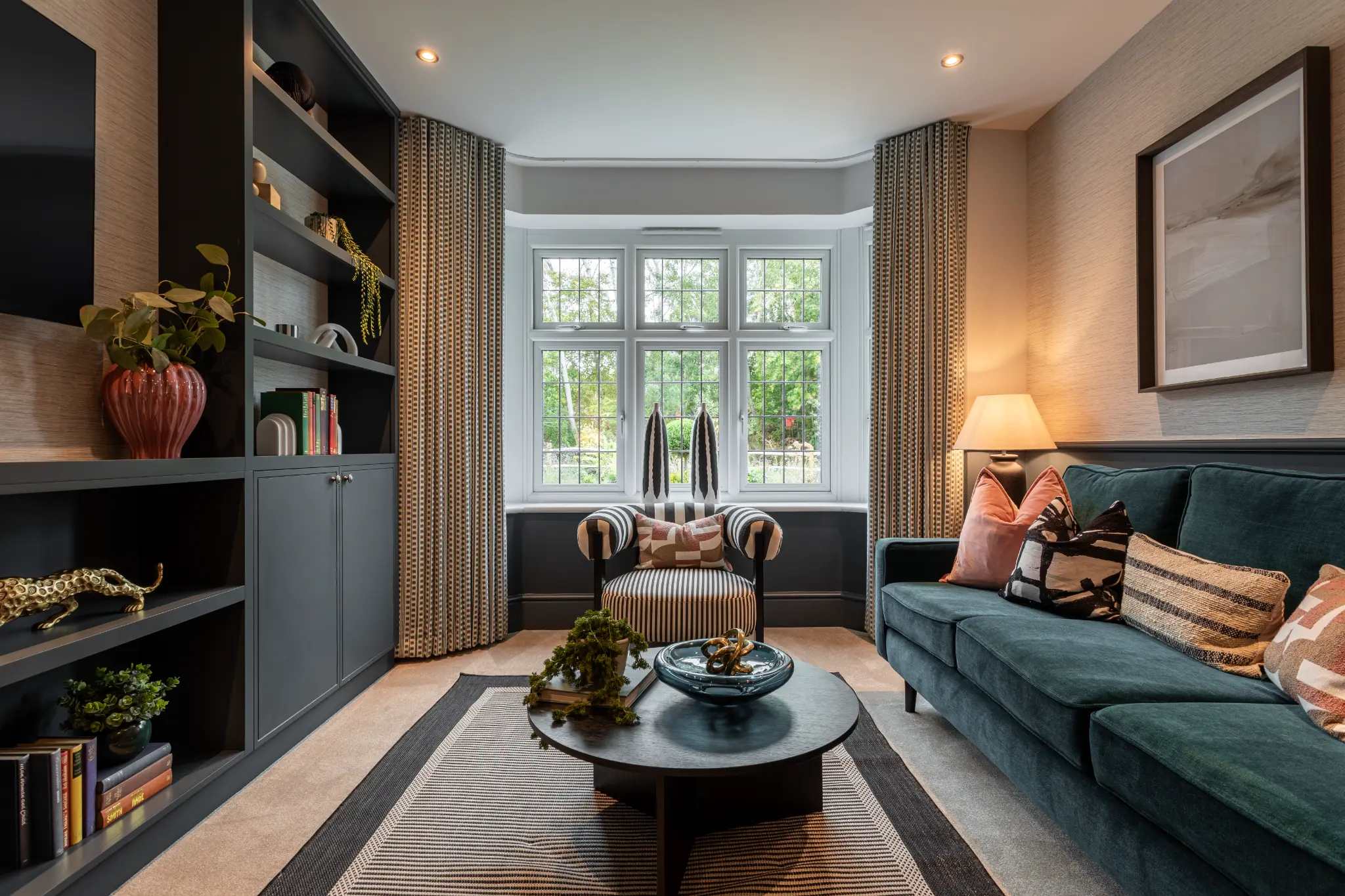
The drawing room with the stone fireplace is the kind of space that photographs well in almost any light, because the fireplace gives the composition an anchor and the French doors bring the garden in. The cream boucle armchairs, the coffee table styled with flowers and games, and the warm tones of the room all contribute to an image that feels lived-in rather than staged.
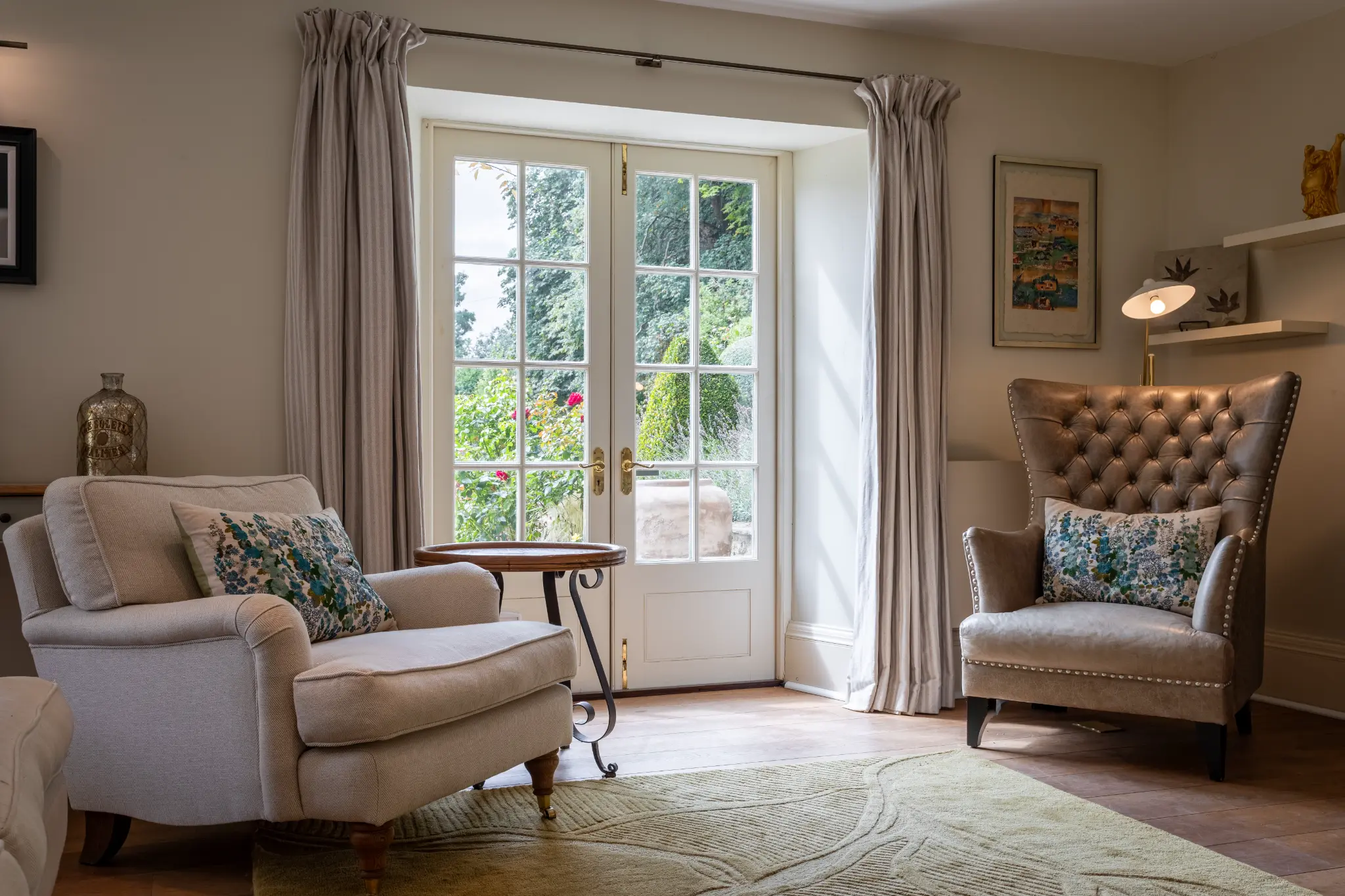
The same room from a different angle, with the French doors as the compositional lead. Shooting a room from multiple positions is not about padding the set, it is about giving the management company options. A landscape frame for the website hero, a portrait frame for social, a detail frame for the brochure. Each serves a different format without requiring a return visit.
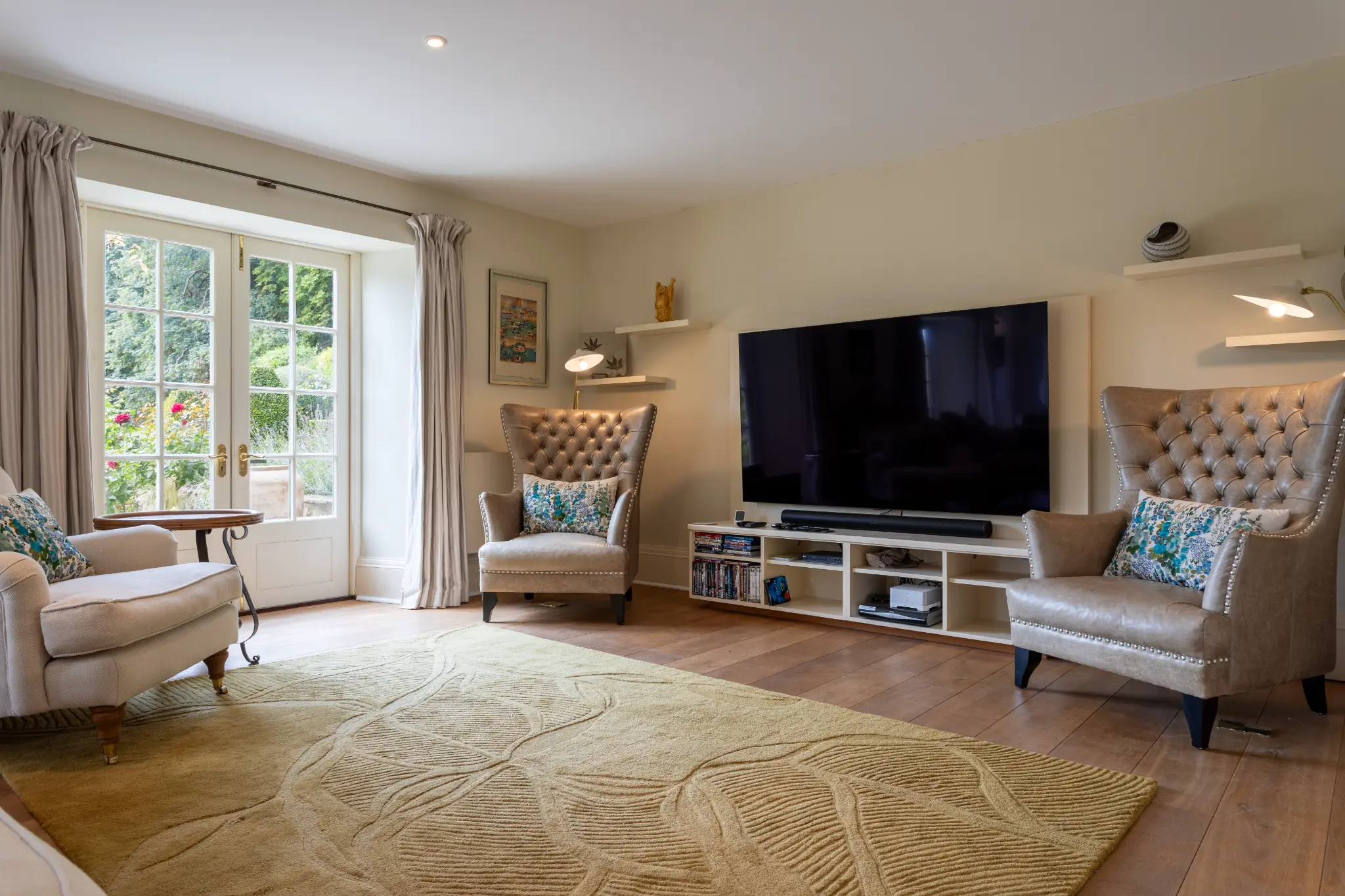
The media room, which at a property like this is a practical selling point. Groups staying for a weekend want somewhere to watch a film or a match, and showing this space as comfortable and well-equipped answers that question directly.
05The Games Room: Showing the Full Guest Experience
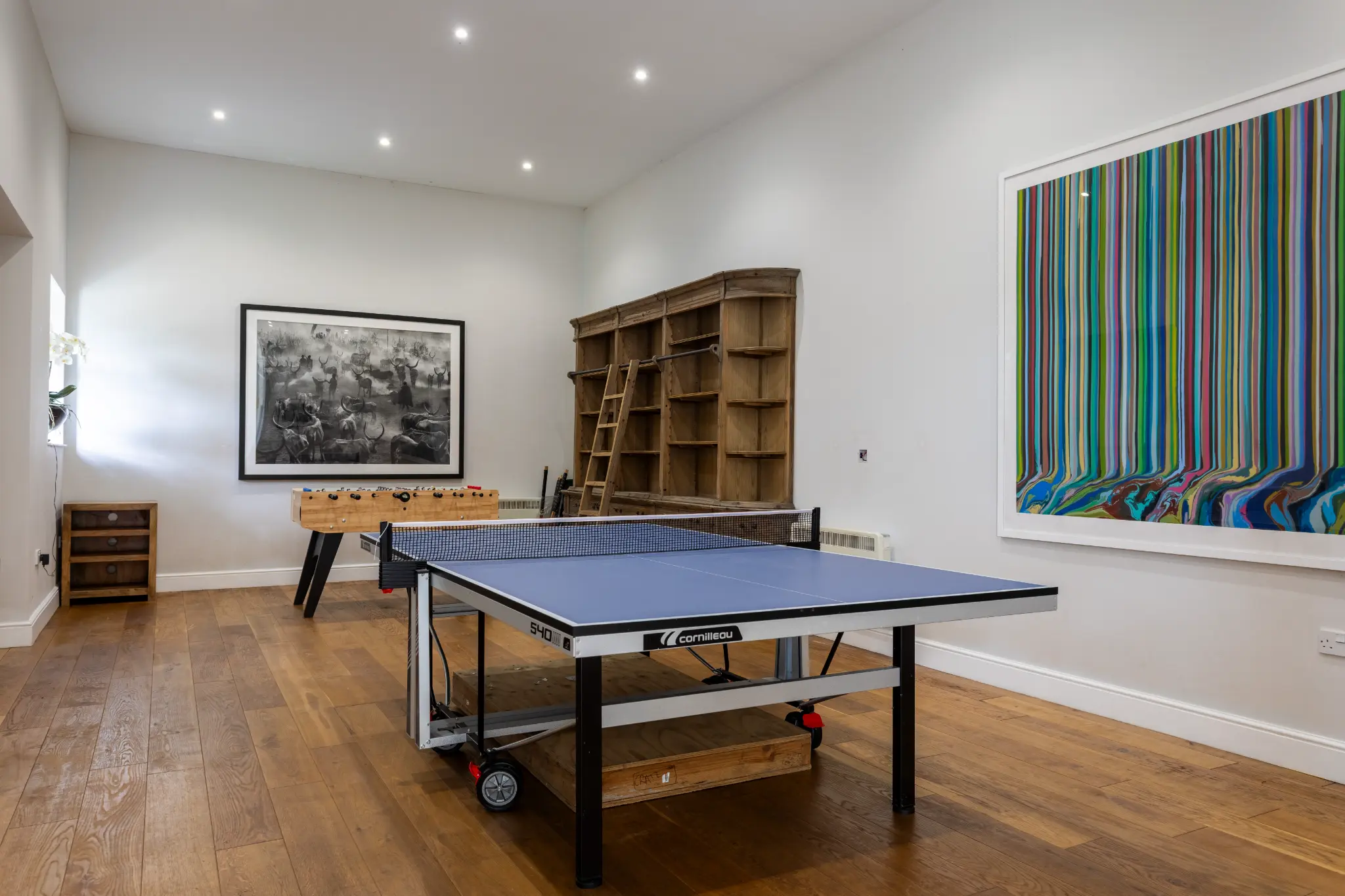
The games room is a selling point that many large properties underplay in their photography. For a group booking a manor for a long weekend, the games room is often the room that tips the decision. A blue Cornilleau table tennis table, a wooden foosball table, warm timber flooring, and large contemporary artwork make this a space that looks genuinely enjoyable rather than an afterthought.
06The Bedrooms: Where the Stay Becomes the Experience
For a large group stay, the bedrooms are the accommodation that makes a multi-day visit possible. They needed to be photographed to the same standard as the reception rooms, because guests spending a weekend at a manor expect the bedrooms to match the promise of the rooms downstairs.
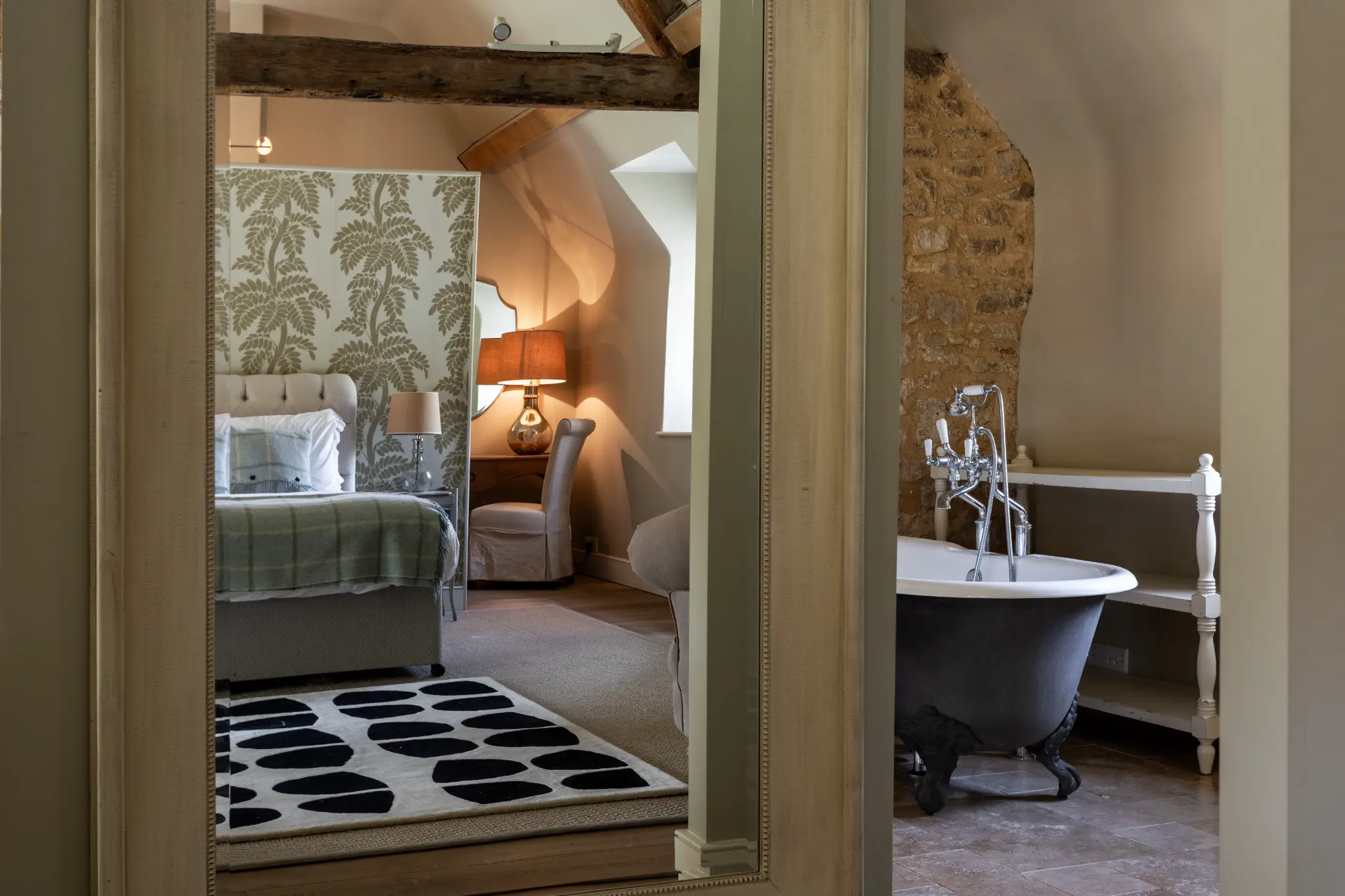
The principal suite, with exposed timber beams, a freestanding clawfoot bath set against exposed stone walls, and botanical wallpaper. This is the kind of room that appears in the hero image of a property's accommodation page, because it contains enough distinctive elements to communicate the quality of the whole. The combination of historic architecture and carefully chosen furnishings is exactly what the management company wanted to lead with.
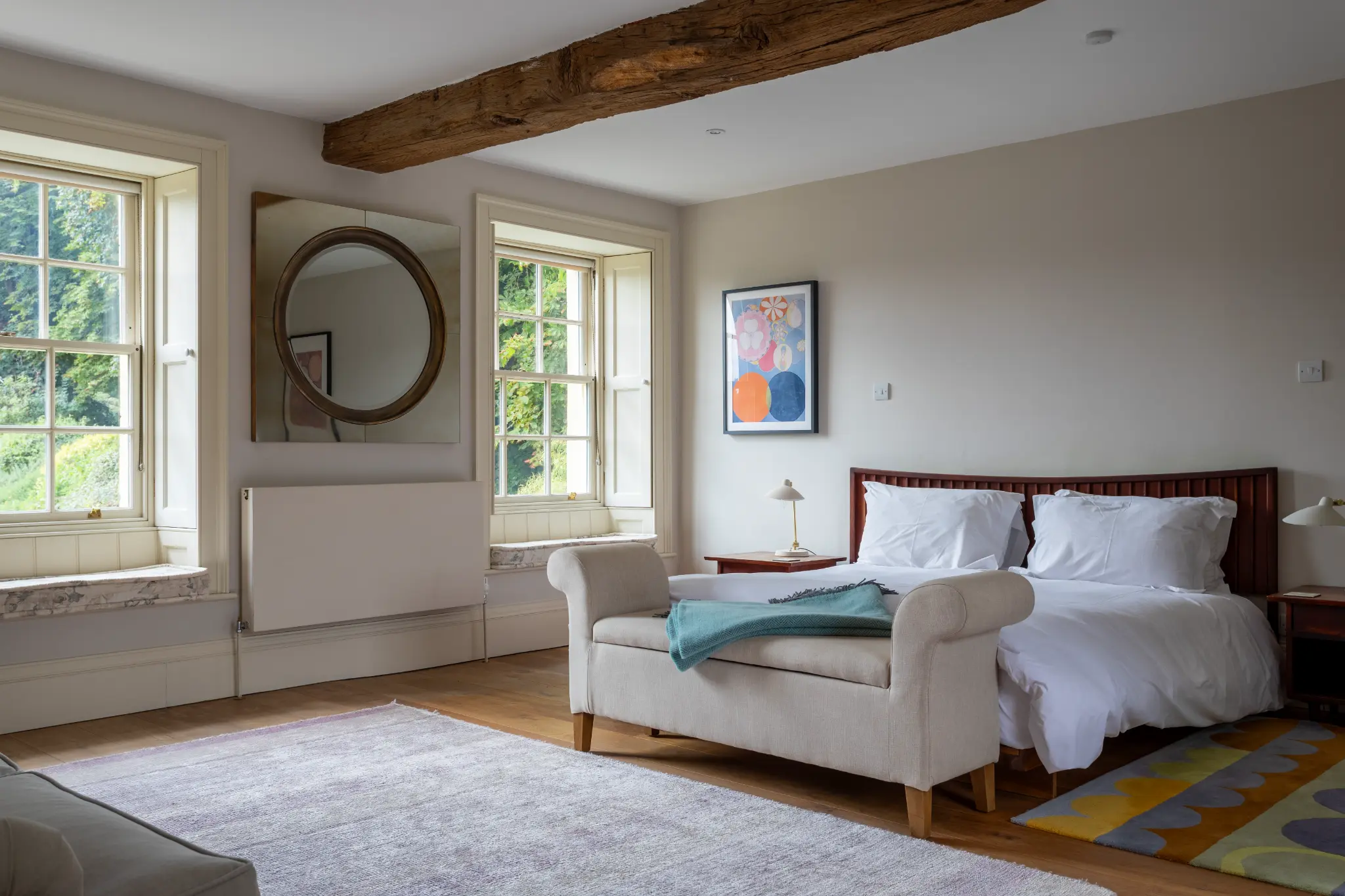
A wide establishing shot of a second bedroom, showing the full extent of the space. The exposed ceiling beam, the crisp white bedding, the upholstered bench at the foot of the bed, and the deep sash windows with their reveals all contribute to a frame that reads as genuinely luxurious without requiring any styling tricks.
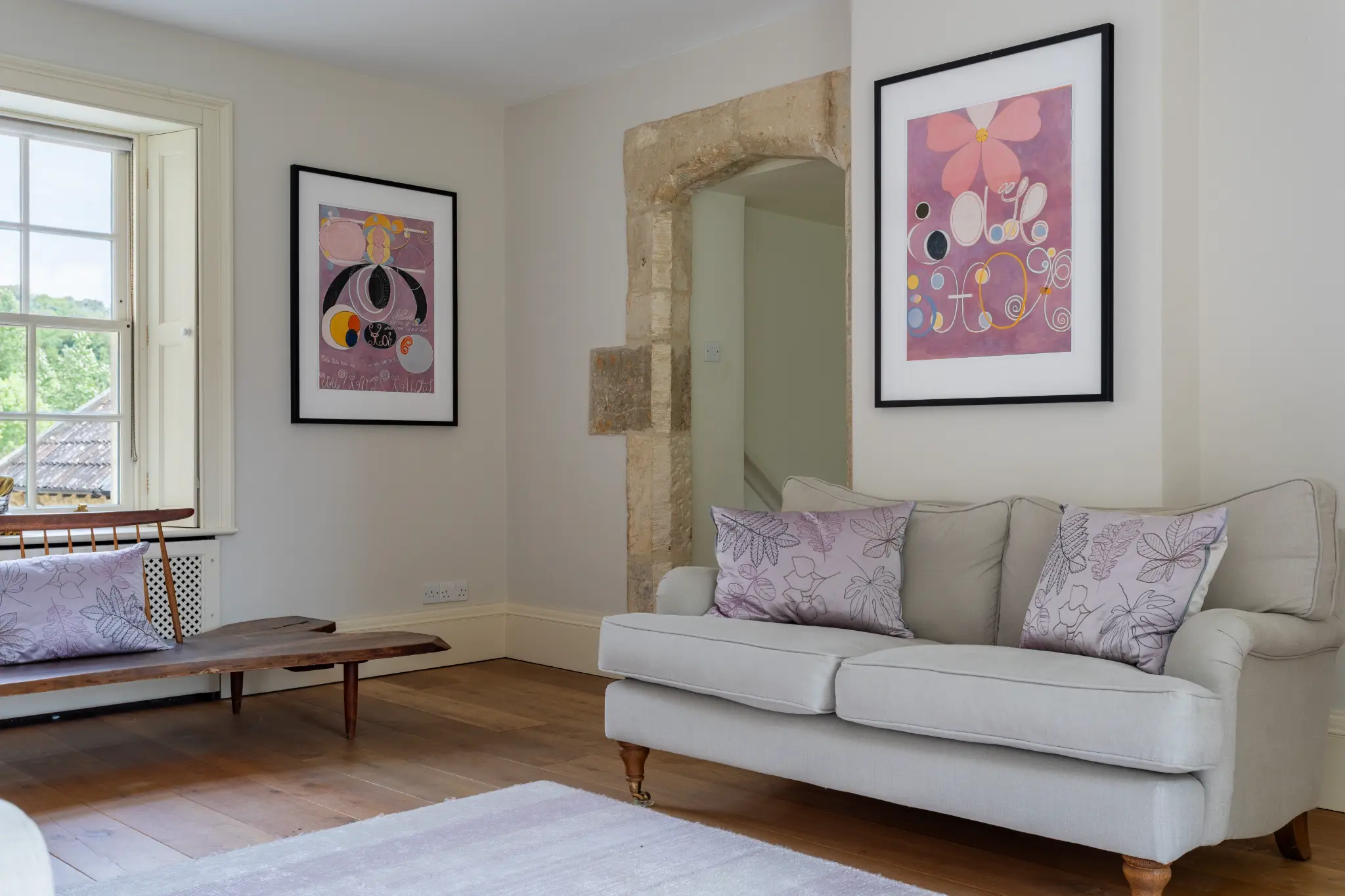
A third bedroom, with a stone-arched doorway leading through to an adjoining space. The exposed stonework is a period feature specific to this building, and the light grey sofa, patterned cushions, and paired abstract artworks give the room a considered, curated feel. Finding the angle that showed the archway in context rather than as an isolated architectural detail was the compositional challenge here.
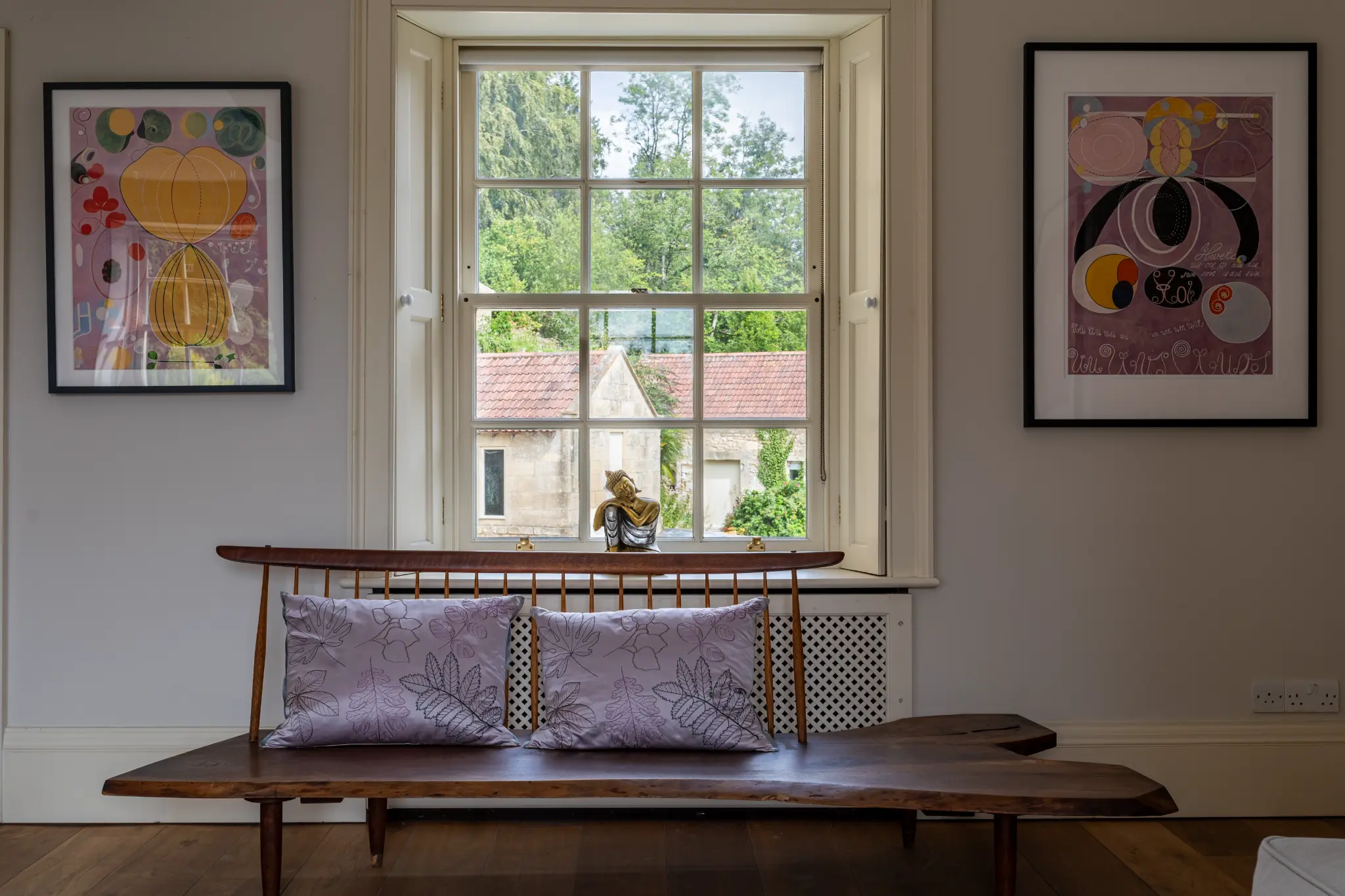
The same bedroom from a different position, centred on the live-edge wooden bench beneath the open sash window. The view over the rooftops and gardens beyond, the paired abstract artworks on either side, and the small bronze sculpture on the sill are the kind of details that make a bedroom feel like a considered space rather than just a room with a bed in it.
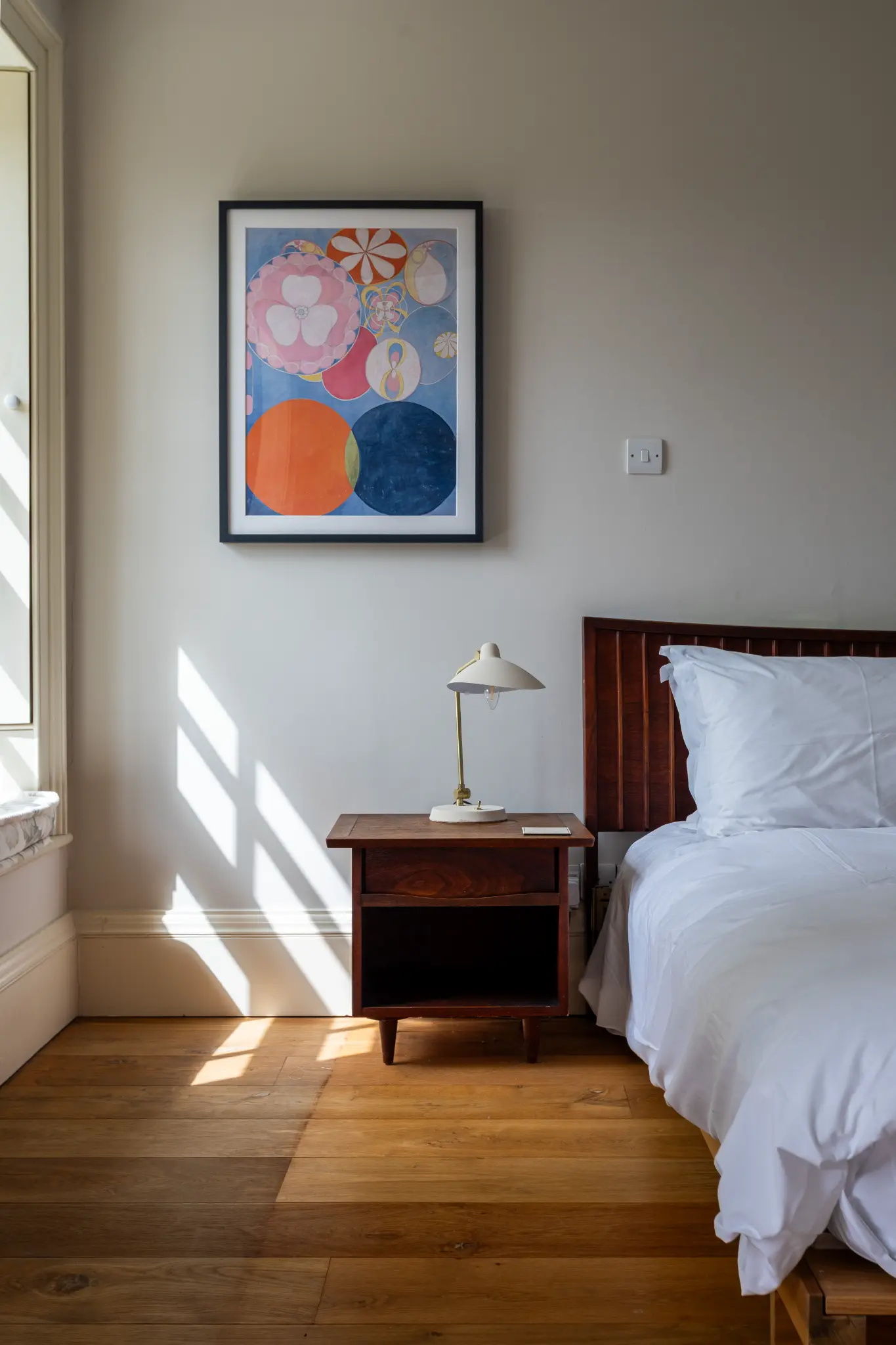
A detail frame from the same bedroom. The mid-century nightstand, the retro desk lamp, the framed abstract artwork, and the geometric shadows cast by the window across the floor are the kind of details that make a bedroom photograph feel considered rather than functional. The light in this frame was natural and unrepeatable, which is why it was worth waiting for.
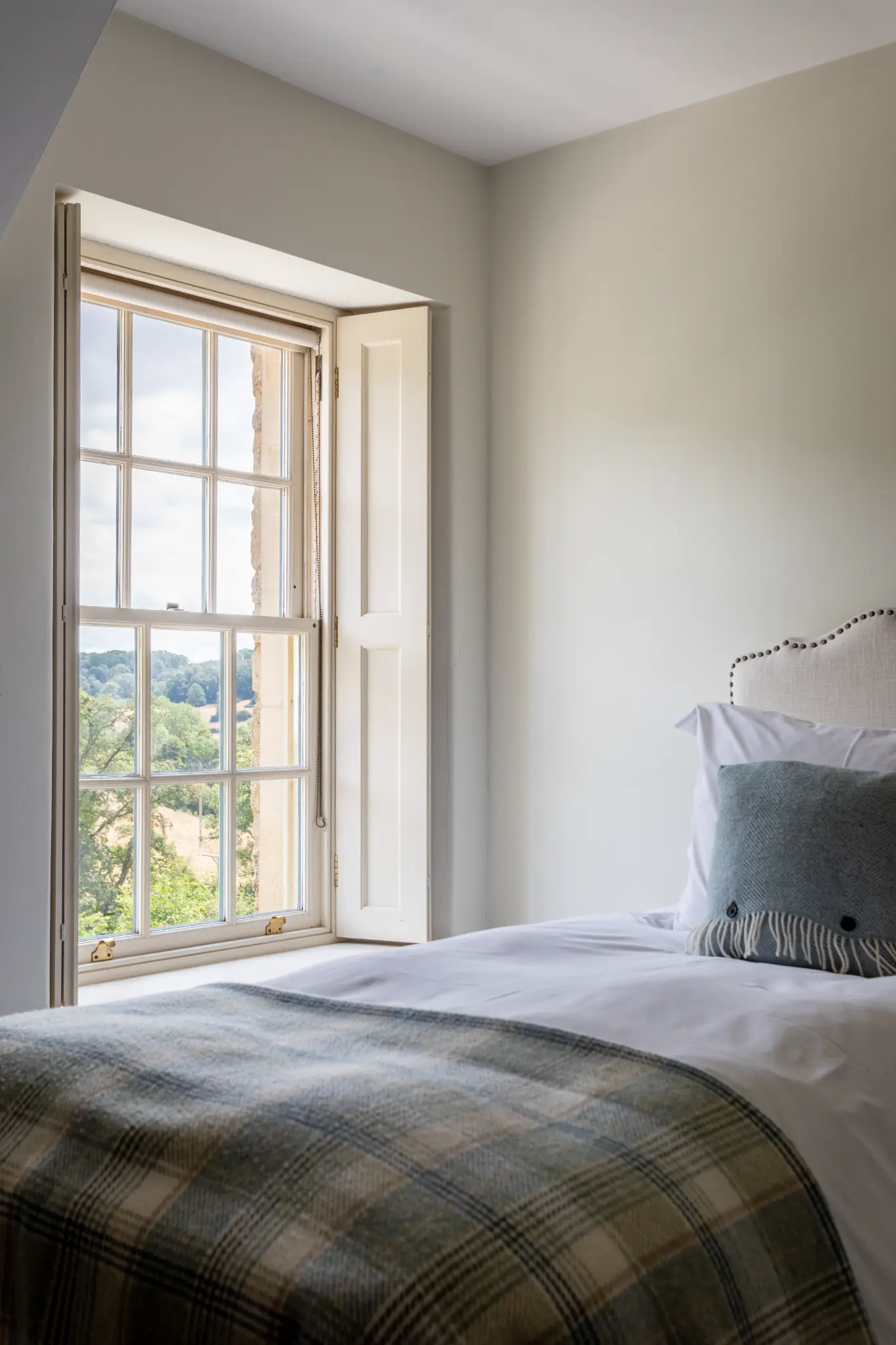
A bedroom with interior shutters and a view of the rolling hills beyond. For a property like this, the view from a bedroom window is a genuine asset, and it is worth composing to include it rather than shooting away from it. The upholstered headboard, the plaid throw, and the blue cushion are understated styling choices that let the architecture and the view do the work.
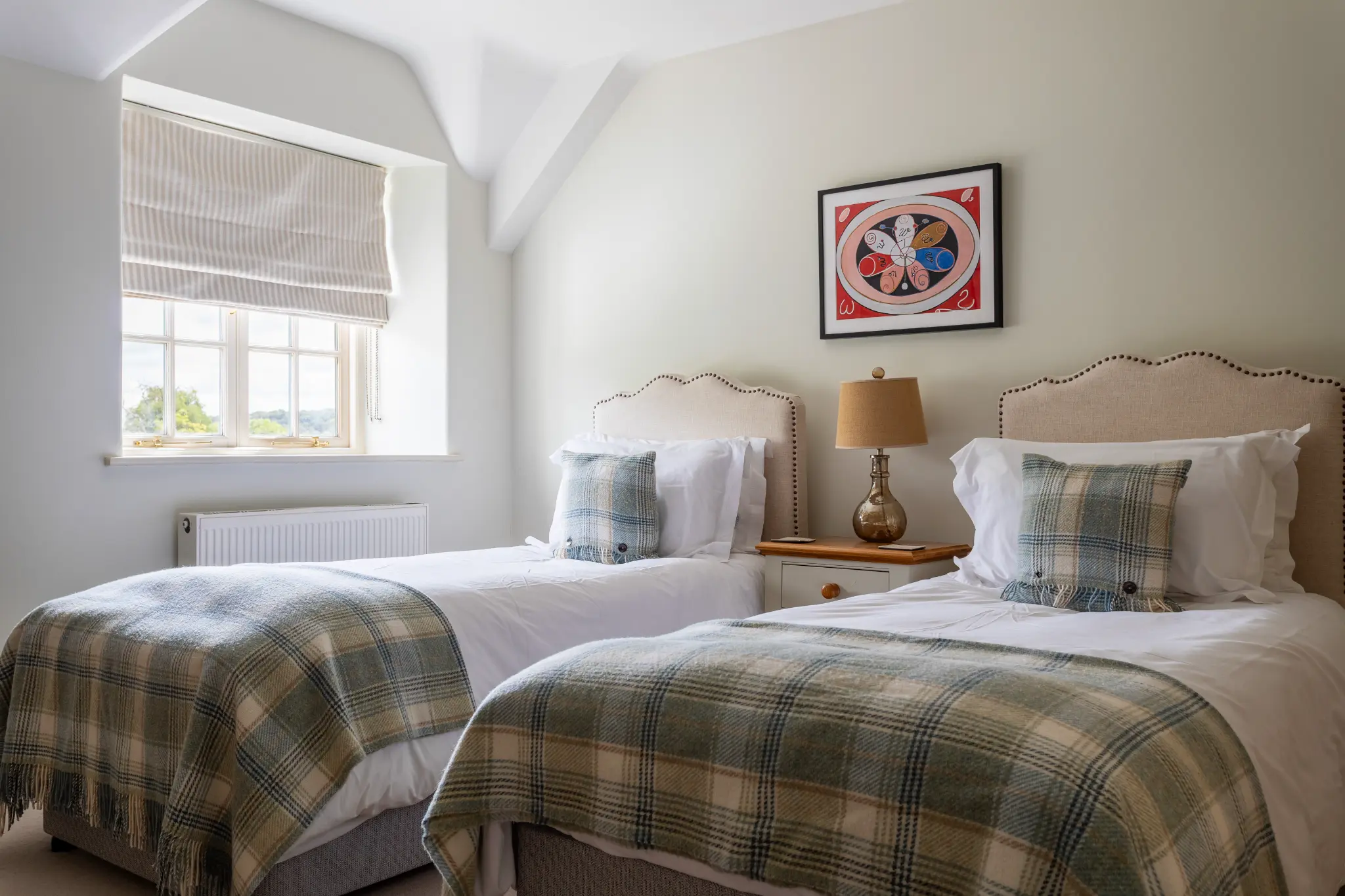
The twin bedroom, photographed to show both beds and the full character of the room. Twin rooms in large managed properties are often the last to be photographed well, because the assumption is that guests care less about them. The opposite is true. A group booking a manor for a family gathering needs to know that every room is comfortable, not just the principal suite.
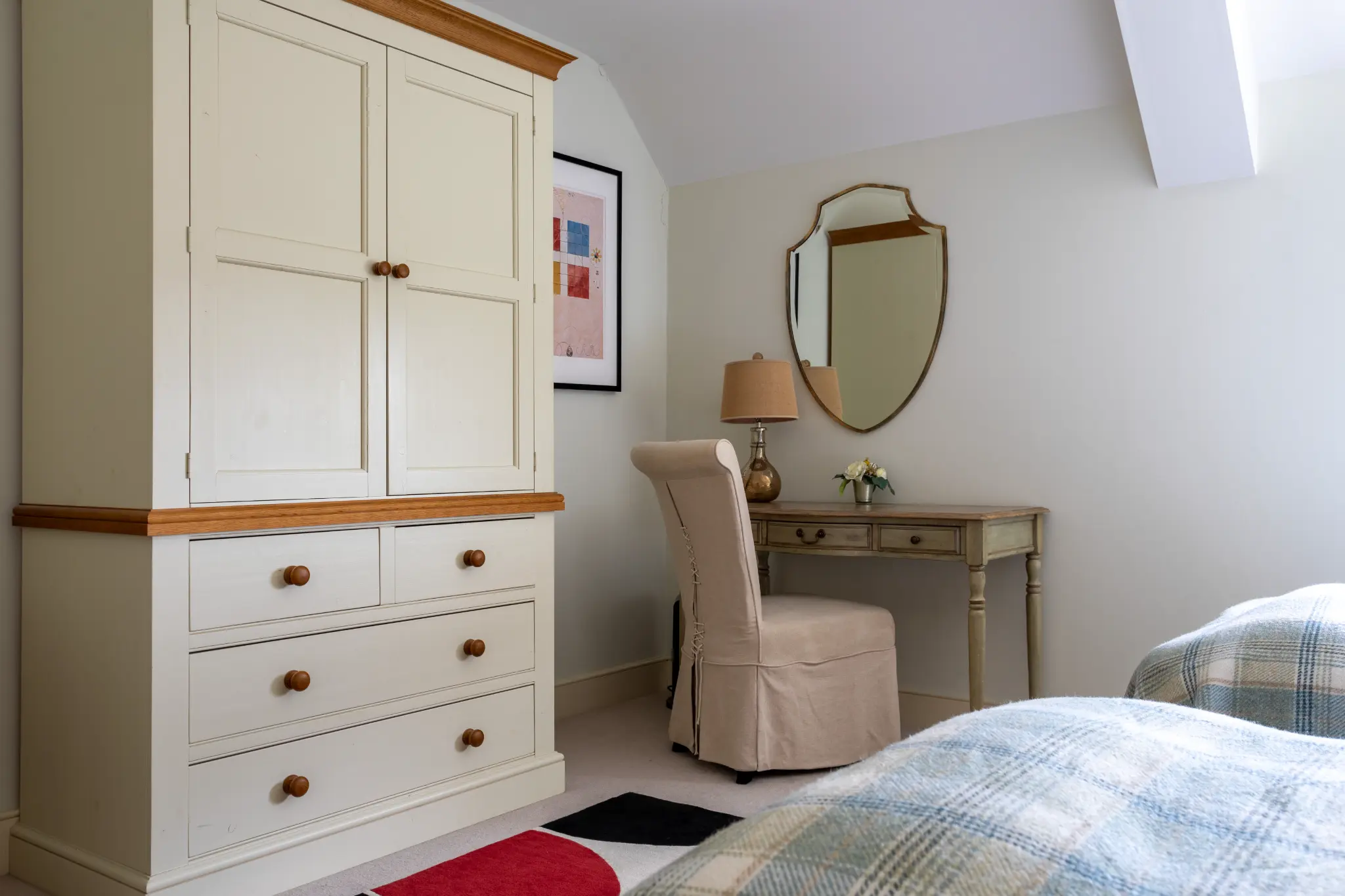
A detail frame from the same twin room, showing the wardrobe, the dressing table, and the armchair under the sloped ceiling. Attic rooms in period properties have a particular character that is easy to miss if you only shoot the beds. The sloped ceiling, the cream painted woodwork, and the warm styling make this a room that feels special rather than secondary.
07The Bathrooms: Period Character, Modern Comfort
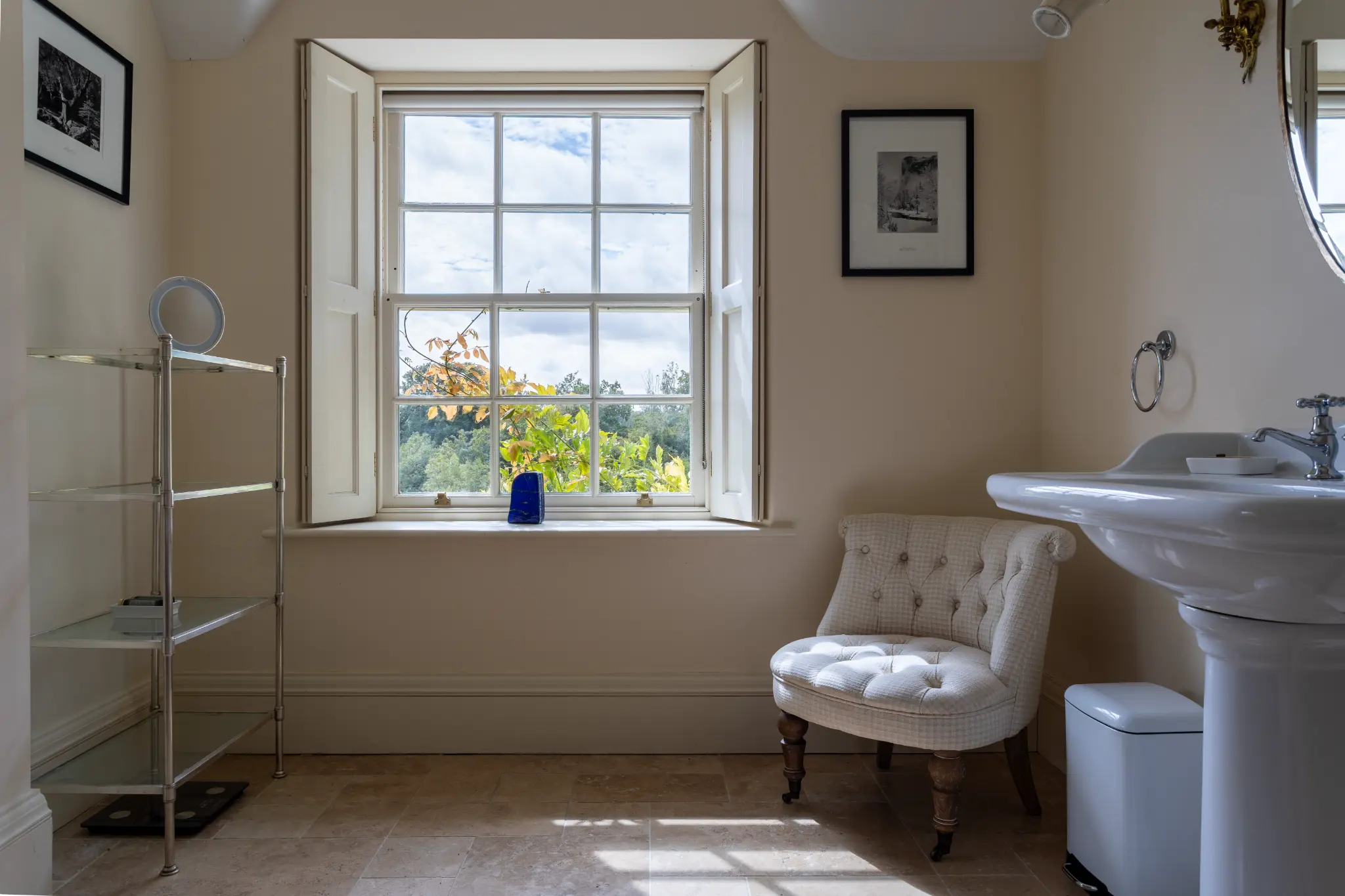
The principal bathroom, with a pedestal sink, a tufted cream armchair, and a large sash window looking out to the trees. The armchair in a bathroom is a small detail that communicates a great deal about the level of comfort the property offers. It is the kind of thing that appears in a brochure and makes a prospective guest feel that someone has thought carefully about their experience.
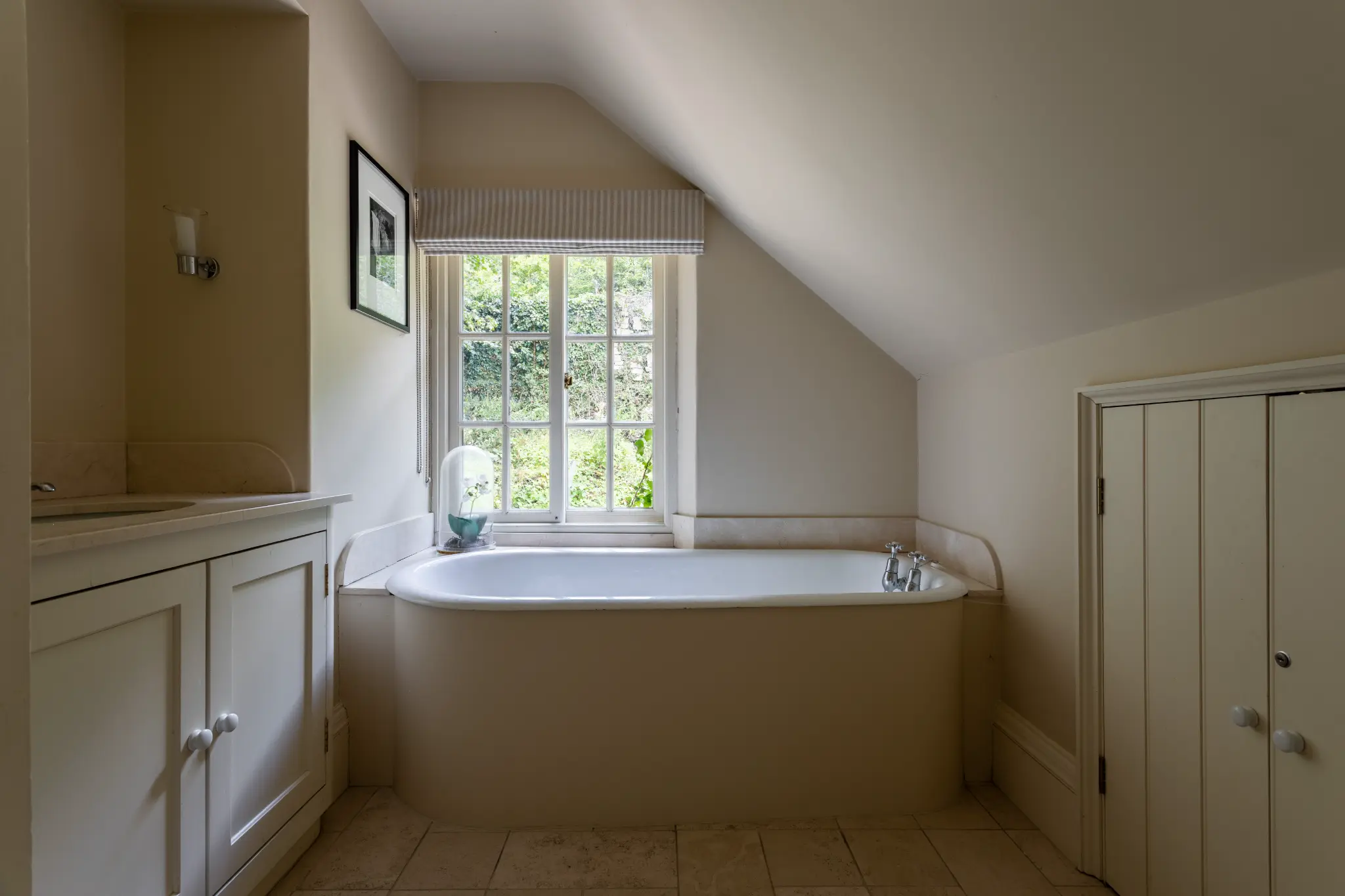
The attic bathroom, with the bath positioned beneath the sloped ceiling and the window looking out to the garden. Small bathrooms in period properties are among the hardest spaces to photograph well, because the proportions are unusual and there is rarely a clean angle. The key here was to use the window as the compositional anchor and let the natural light do the work.
08What the Set Delivers for the Management Company
The commercial logic behind investing in photography at this level is straightforward for a managed property. A group booking a manor for a significant stay is making a decision based almost entirely on what they see online. The difference between a property that converts enquiries into bookings and one that does not is often a single strong image, and the difference between a single strong image and a complete set is the difference between a property that looks like it might be good and one that looks like it definitely is.
For this management company, the brief was to produce imagery that matched the calibre of the stays the property hosts. The set covers every space a prospective guest needs to see, from the aerial establishing shot to the detail frames in the bedrooms, and it does so in a consistent register that holds together as a coherent body of work rather than a collection of individual room photographs.
The practical result is a set that works across every channel the management company uses: the website, the booking platforms, the brochure, social media, and editorial submissions to travel and lifestyle publications. Each image is delivered with full commercial usage rights and in multiple formats optimised for different uses.
09Ready to Photograph Your Managed Property or Luxury Let?
If you manage a luxury property, holiday let, or large group accommodation in Bath, Bristol, Somerset, or anywhere across the South West, get in touch for a free quote. I photograph managed properties across the region, with drone coverage included where the setting justifies it, and I travel UK-wide for properties where the brief demands it.
Related: Luxury property photography | Airbnb & holiday let photography | Drone photography | Ochre Hill, Elton: luxury lodge case study