A comprehensive guide to choosing, ordering, and targeting listing photos for maximum Airbnb and Booking.com bookings. Covers the ideal photo sequence (hero shot first, then living room, kitchen, standout features, bedrooms, outdoor spaces), how to attract specific guest types (families need gardens and kitchens early, couples respond to atmosphere and bedroom quality, groups need capacity and entertainment), the four types of shots every listing needs (wide establishing, detail vignettes, lifestyle, and exterior context), common mistakes that cost bookings, and platform-specific tips for Airbnb, Booking.com, and Vrbo. The optimal gallery size is 20 to 30 images for most properties. Professional Airbnb photography packages start from £250 with 48-hour delivery across Somerset, Bristol, Bath, the Cotswolds, and South Wales.
Your listing photos are doing more work than you think. They are not just showing guests what your property looks like. They are telling a story, setting expectations, filtering the wrong guests out, and pulling the right ones in. The order those photos appear, the types of shots you include, and the way you sequence them through your gallery all determine whether someone clicks "Reserve" or keeps scrolling.
I have photographed hundreds of holiday lets, Airbnbs, and short-term rentals across Somerset, Bristol, Bath, the Cotswolds, and South Wales. Every shoot teaches me something about what works and what does not. This guide distils everything I have learned about choosing, ordering, and targeting your listing images for maximum bookings.
01Why Photo Order Matters More Than You Think
Airbnb's own data shows that guests spend between five and seven seconds deciding whether to click into a listing from search results. That decision is made almost entirely on the strength of your cover photo. Once inside, the first four to five images determine whether they keep scrolling or bounce back to the search page.
Your photo gallery is not a random collection of nice images. It is a sales funnel. Each position in the sequence has a job to do, and if you get the order wrong, you lose potential guests before they ever read your description or check your reviews.
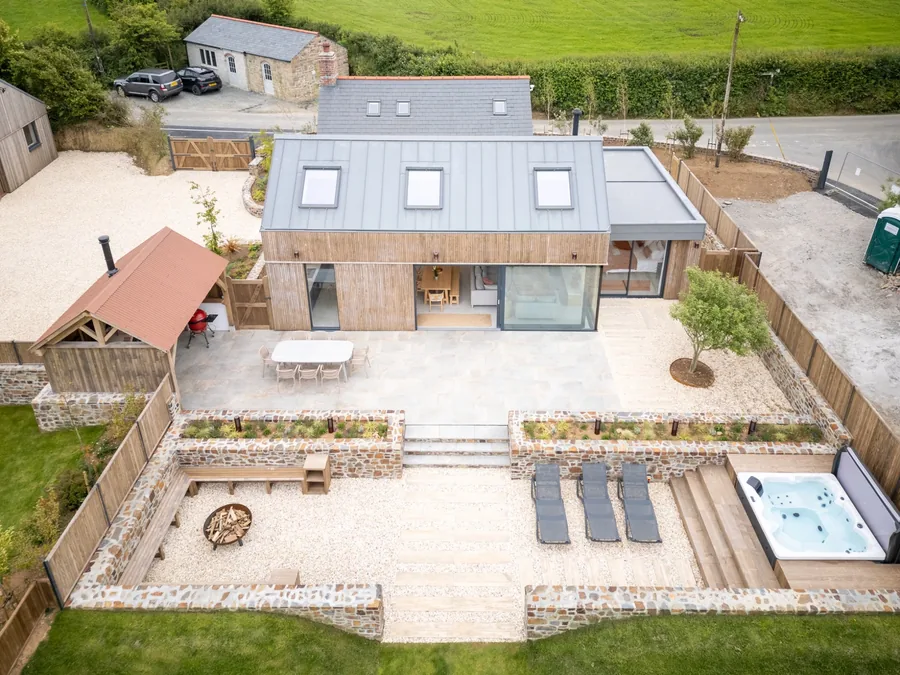
This drone aerial immediately communicates everything a guest needs to know: a modern barn conversion with a hot tub, private outdoor space, and a beautiful rural setting. A guest sees this in search results and instantly understands what kind of stay they are being offered. The property's scale, its surroundings, and the lifestyle on offer are all visible in a single frame.
02The Ideal Photo Order for Maximum Bookings
Based on platform analytics, guest behaviour research, and my own experience shooting properties that consistently outperform their competition, here is the sequence that works:
Position 1: The Hero Shot
This is your cover photo. It appears in search results, in saved lists, and as the first thing anyone sees. It needs to be your single most compelling image, the one that makes someone stop scrolling and click.
For most properties, the hero shot is either: - A stunning exterior showing the full property in its setting - A drone aerial that reveals the garden, surroundings, and context - The single most impressive interior space (usually the living room or a standout feature)
The drone aerial works because it shows the entire property from above, including outdoor entertaining areas, the building itself, and the surrounding landscape. A guest immediately understands the scale, the setting, and the lifestyle on offer.
Positions 2-4: The Money Shots
These are your next three strongest images. They should cover the spaces guests care about most:
- 1.The living room — where guests will spend most of their waking hours
- 2.The kitchen — especially important for families and longer stays
- 3.The master bedroom — reassurance about comfort and quality
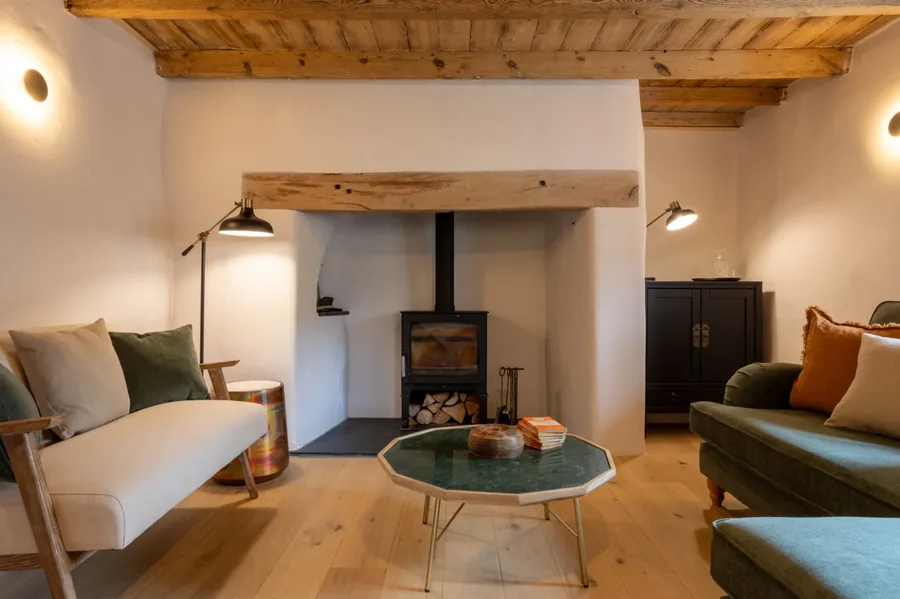
This living room shot from a Somerset barn conversion shows the log burner glowing under a massive oak beam, a deep green velvet sofa, and the overall warmth of the space. A guest looking at this image can already picture themselves relaxing here after a day exploring the countryside. The combination of rustic character and modern comfort is exactly what holiday let guests are searching for.
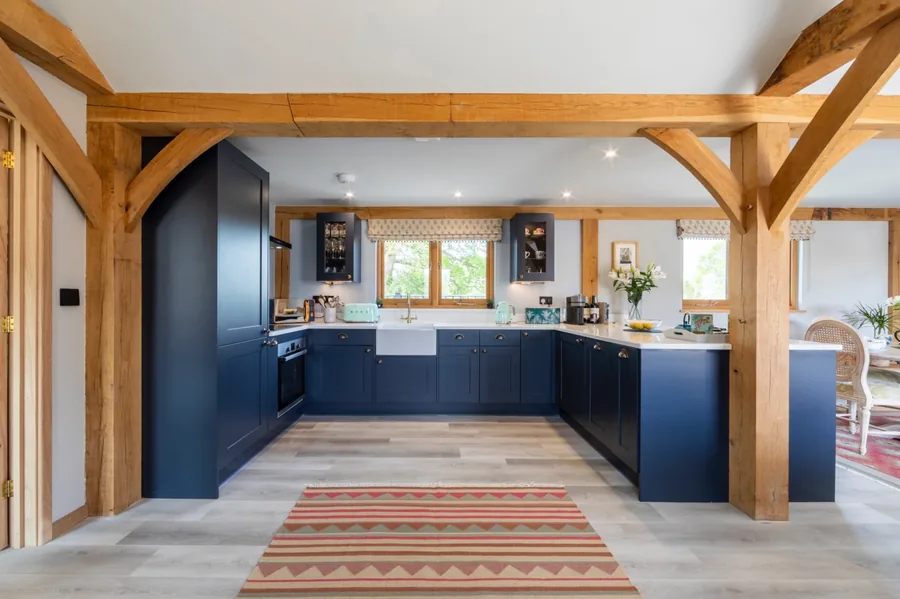
The kitchen tells guests whether they can cook properly during their stay. This spacious kitchen with its navy cabinets, Belfast sink, and oak frame beams communicates quality without being ostentatious. For families especially, seeing a proper kitchen with generous worktop space early in the gallery is reassuring.
Positions 5-8: Standout Features and Unique Selling Points
This is where you differentiate your property from every other listing in your area. What makes your place special? What would a guest tell their friends about after staying?
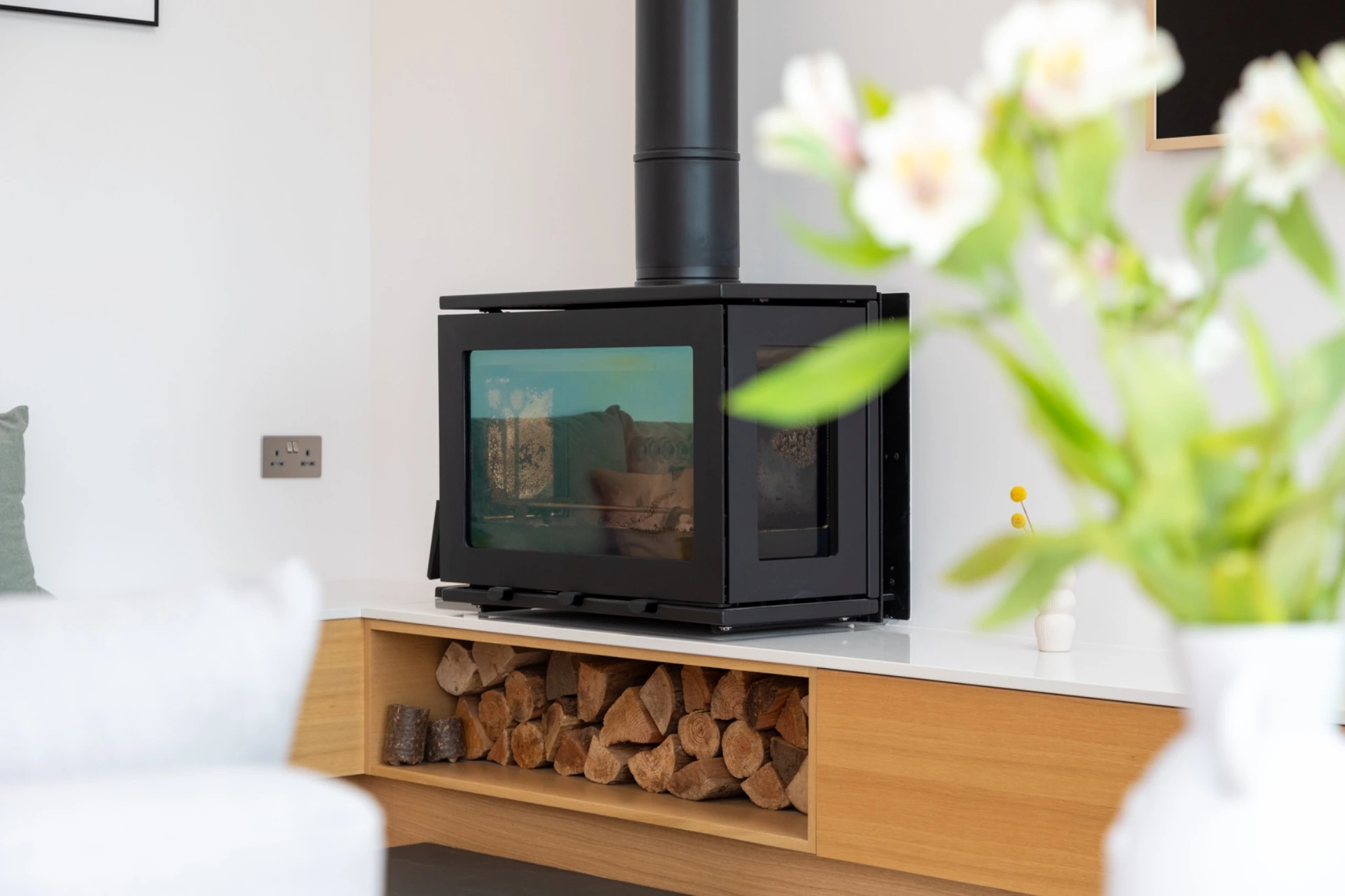
A close-up of a contemporary log burner mounted on an oak floating shelf with neatly stacked logs beneath. This is a detail shot, not a room overview, and it serves a very specific purpose: it communicates atmosphere, cosiness, and the promise of a memorable evening. Detail shots like this are what separate professional listing photography from amateur snapshots.
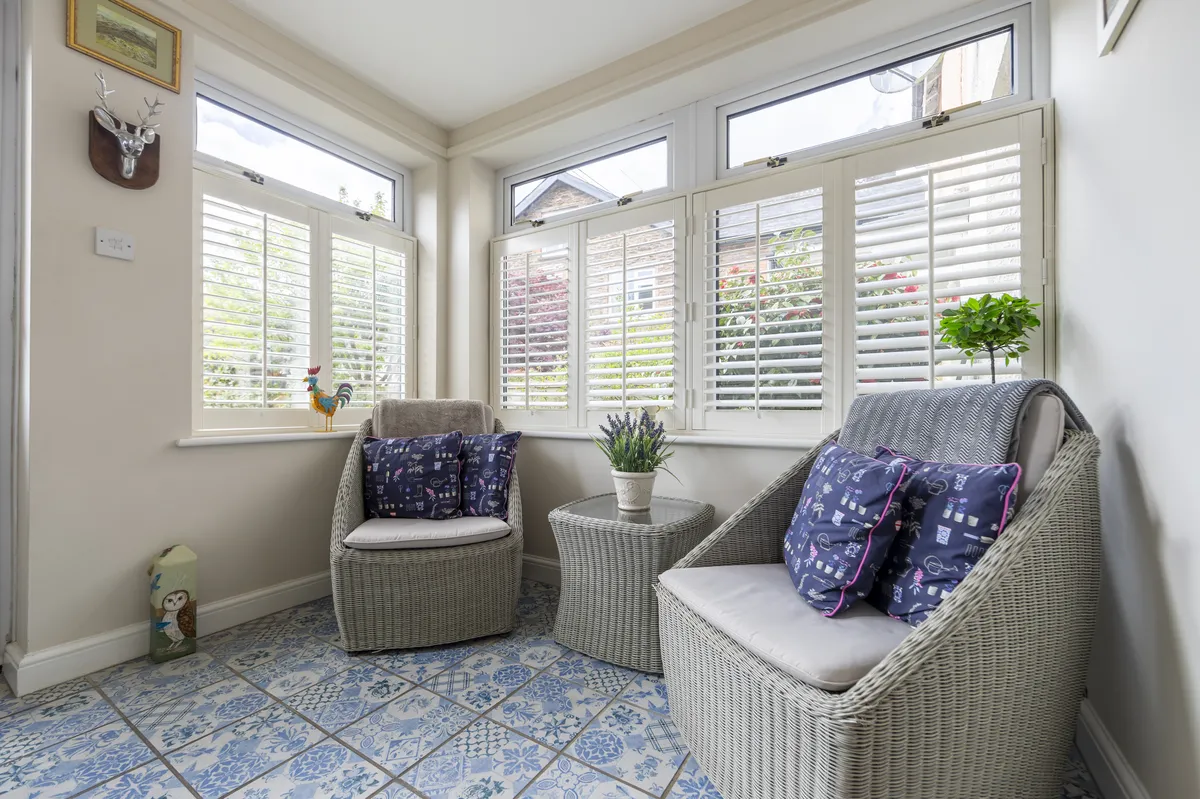
A sun-filled conservatory with wicker armchairs, blue cushions, and plantation shutters. This is the kind of unique space that makes a guest choose your property over the one next door. It needs to appear early enough in the gallery that people actually see it.
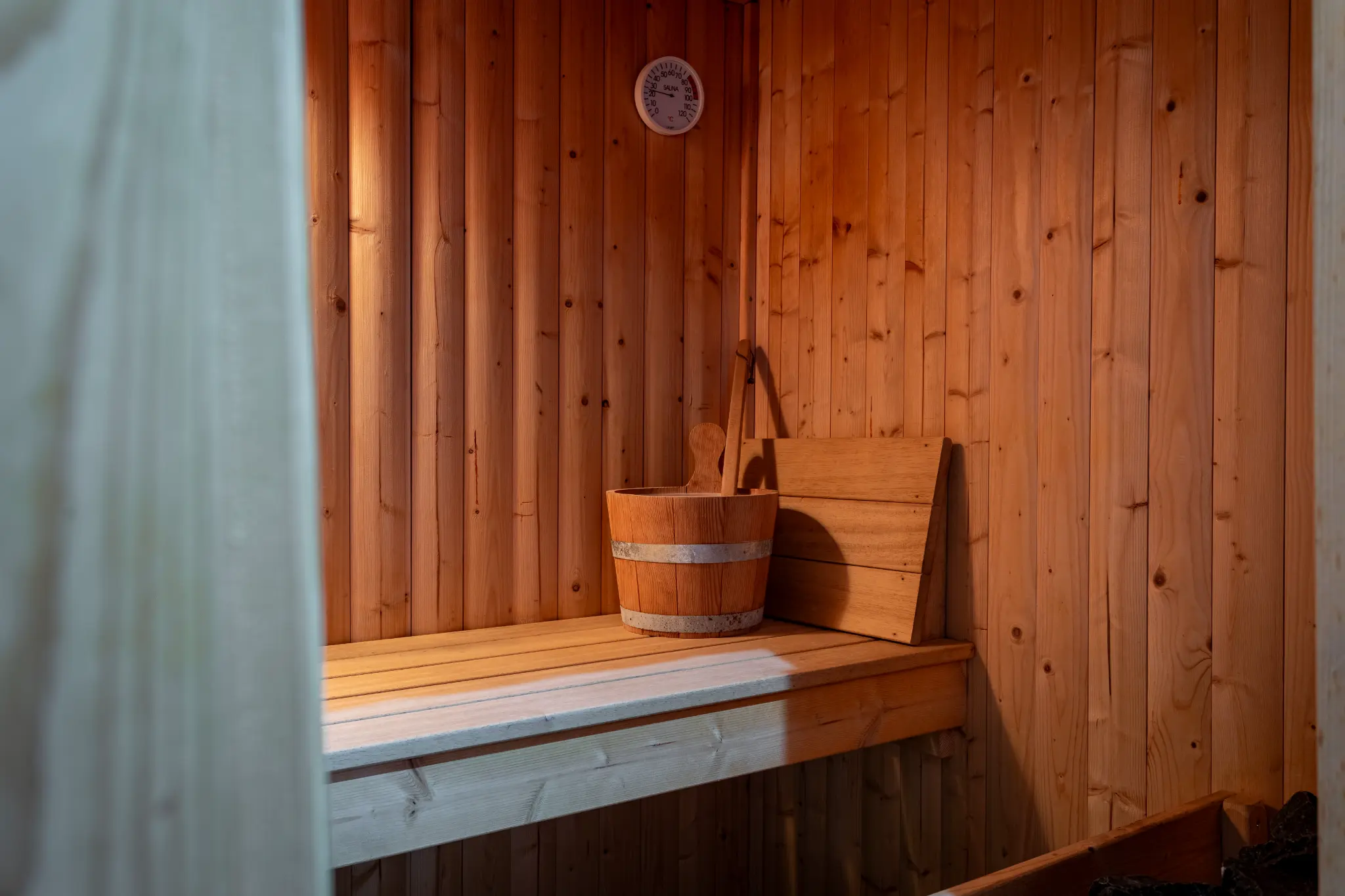
A private sauna is exactly the kind of standout feature that justifies a higher nightly rate and attracts a specific type of guest. This detail shot with the traditional wooden bucket and thermometer communicates luxury and wellness without needing a wide establishing shot. For properties with spa-like features, a well-lit detail image like this can be the single photo that converts a browser into a booker.
Positions 9-15: Bedrooms, Bathrooms, and Practical Spaces
By this point, the guest is interested. They have seen your hero shot, your best interior spaces, and your unique features. Now they want practical information:
- All bedrooms (show bed size, storage, natural light)
- Bathrooms (cleanliness and quality)
- Any additional sleeping arrangements
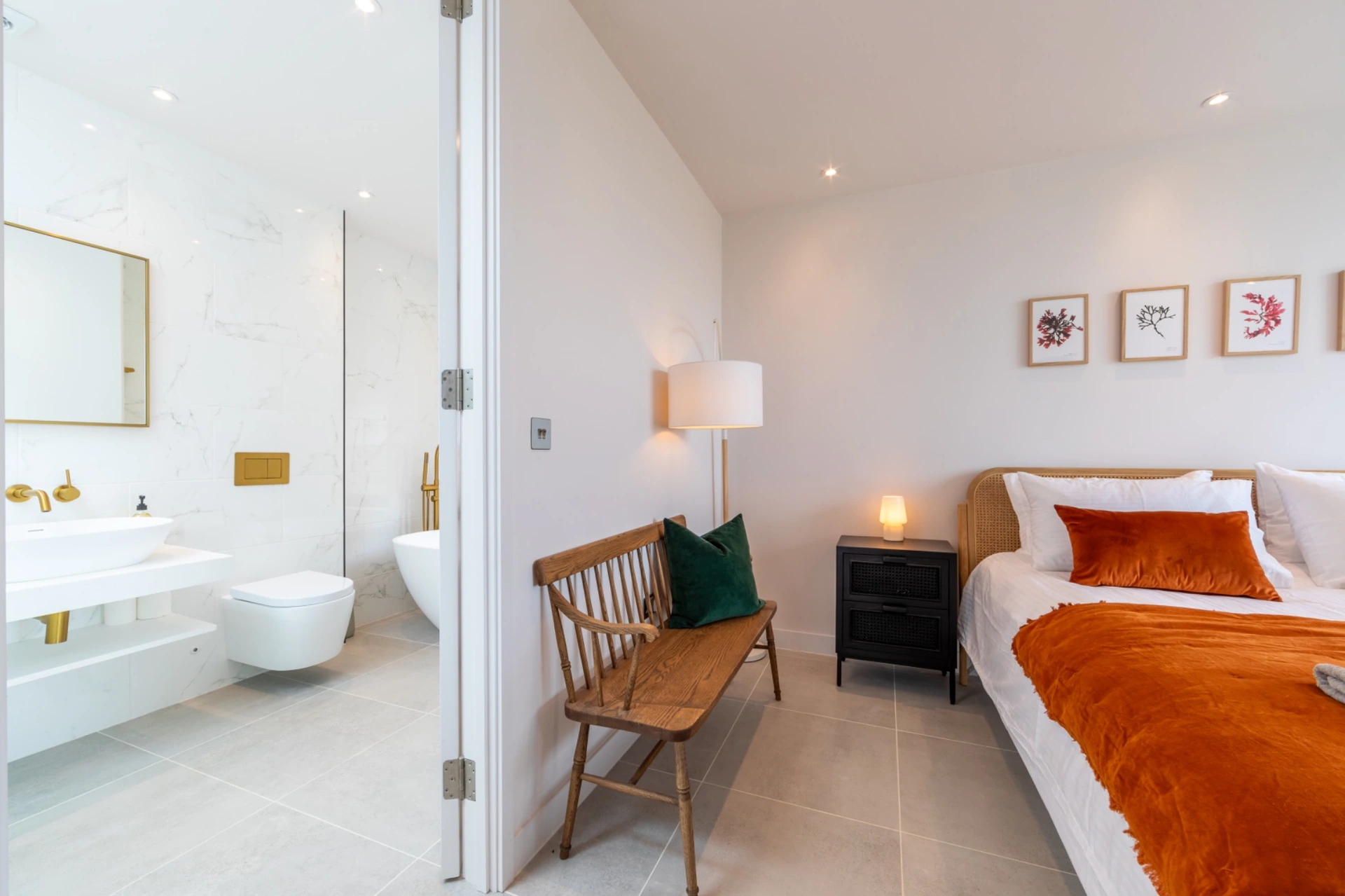
A full bedroom shot showing the bed dressed with a rust-coloured throw, the natural light flooding in, and a glimpse of the en-suite bathroom through the doorway. This answers practical questions: is the bed a proper double? Is there space to move around? Is the room bright? The visible en-suite is a bonus, it tells guests they will not be sharing a bathroom.
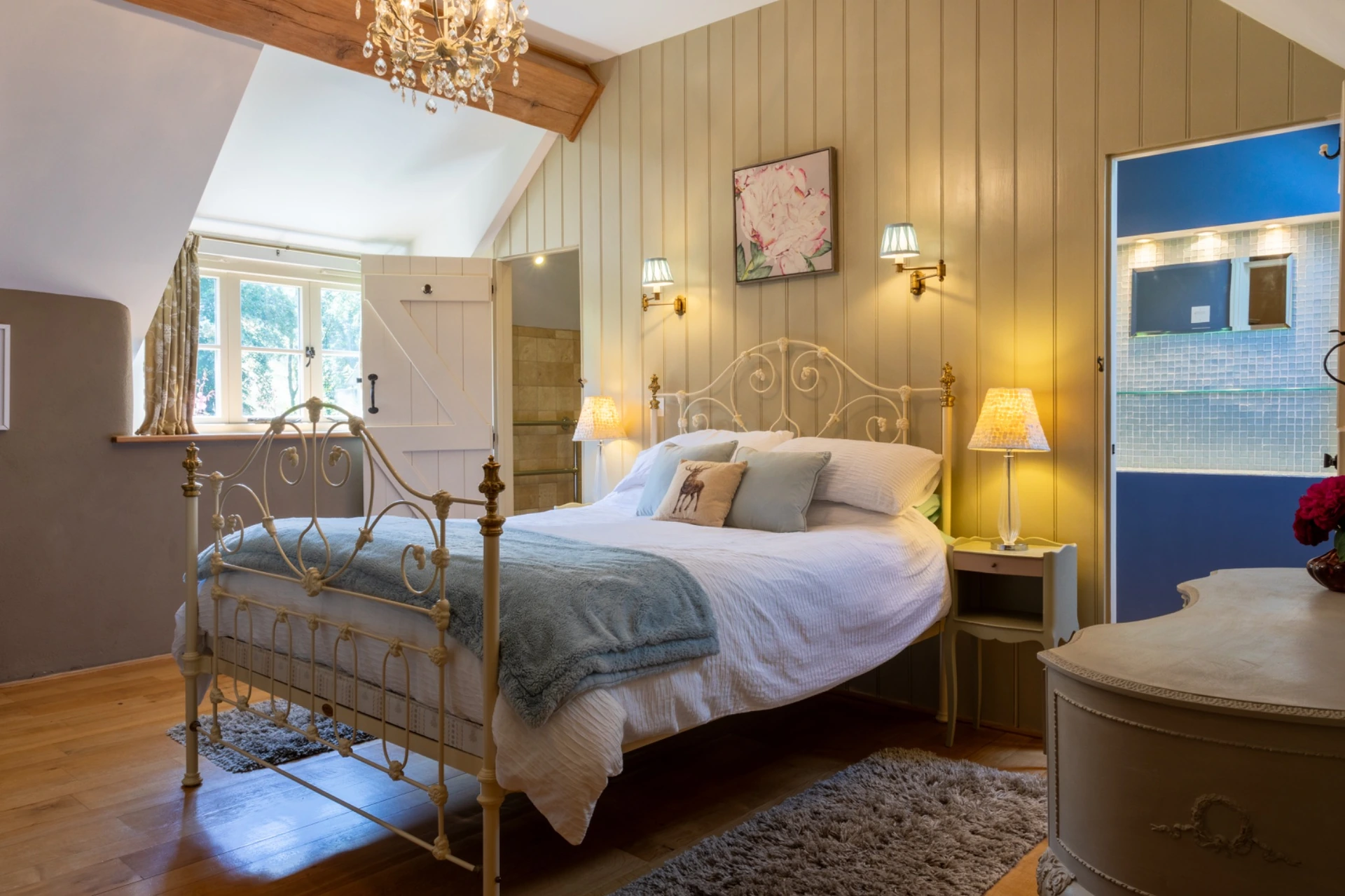
A second bedroom in a different property, this time a period cottage with an ornate iron bed frame, a chandelier, and exposed ceiling beams. This is not just documenting a room, it is showing guests that even the bedrooms have personality and charm. The character details justify a higher nightly rate.
Positions 16-25: Outdoor Spaces, Surroundings, and Context
The final section of your gallery should cover:
- Garden and outdoor entertaining areas
- Views from the property
- Parking and access
- The entrance and approach
- Any surrounding landscape or neighbourhood context
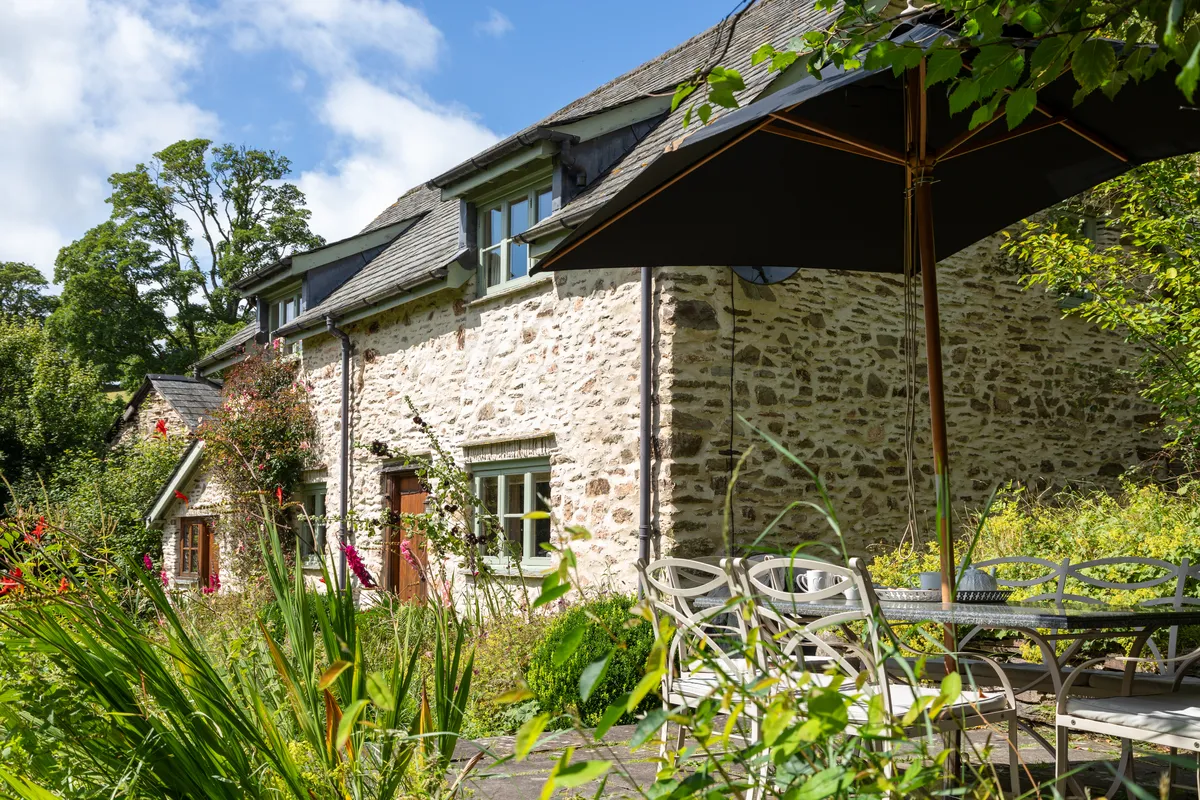
A ground-level shot of a cottage patio with parasol, outdoor furniture, and stone steps leading up to the garden. This complements any aerial hero shot by giving guests a sense of what it actually feels like to sit outside. They can picture themselves having morning coffee here.
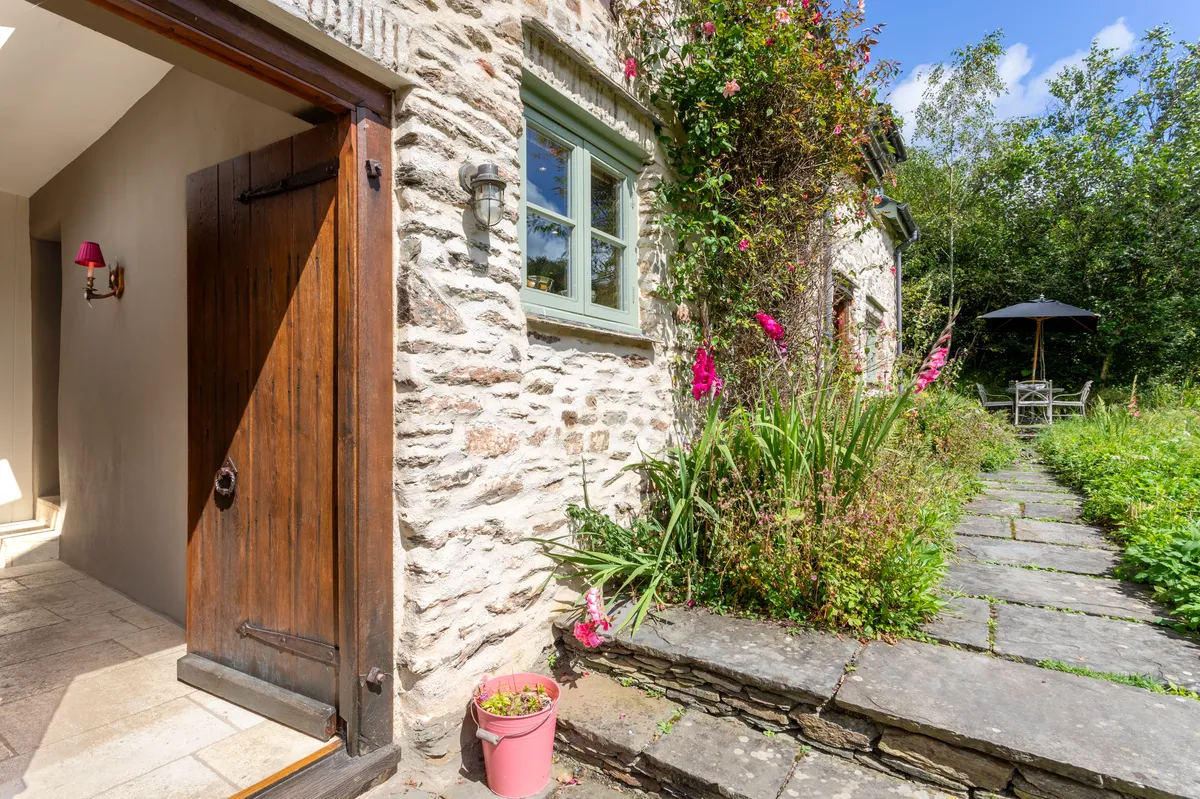
The front entrance of a Somerset cottage with its wooden stable door and pink climbing flowers. This kind of contextual shot helps guests understand what arriving at the property will look like. The flowers, the stone walls, and the traditional door all contribute to a sense of welcome before they have even stepped inside.
03How Many Photos Should Your Listing Have?
The sweet spot for most properties is 20 to 30 images. Here is why:
- Below 12 photos raises suspicion. Guests wonder what you are hiding.
- 12 to 19 photos works for small properties (studios, one-bed flats) but feels thin for anything larger.
- 20 to 30 photos is optimal for most two to four bedroom properties. Enough to tell the full story without scroll fatigue.
- Above 35 photos starts to feel excessive. Guests lose interest and the quality of individual images gets diluted.
The exception is luxury or unique properties where every room has genuine character. A five-bedroom Cotswolds manor house might justify 40 images. A one-bedroom city flat probably needs 15 at most.
04Choosing Photos for Your Target Guest
This is where most hosts get it wrong. They choose photos they personally like, rather than photos that will attract the guests they actually want to book. Your photo selection should be deliberate and strategic.
Targeting Families
Families need reassurance. They want to know the property is safe, practical, and has enough space for everyone. Prioritise:
- The garden — show it early, ideally in your first five images
- The kitchen — families cook. Show worktop space, a proper oven, and a dining table
- Multiple bedrooms — show every bedroom clearly, including any children's rooms or bunk beds
- Safe outdoor spaces — enclosed gardens, patios away from roads
- Living space — show there is room for everyone to spread out
Avoid: moody low-light shots, wine bottles in every frame, anything that screams "adults only"
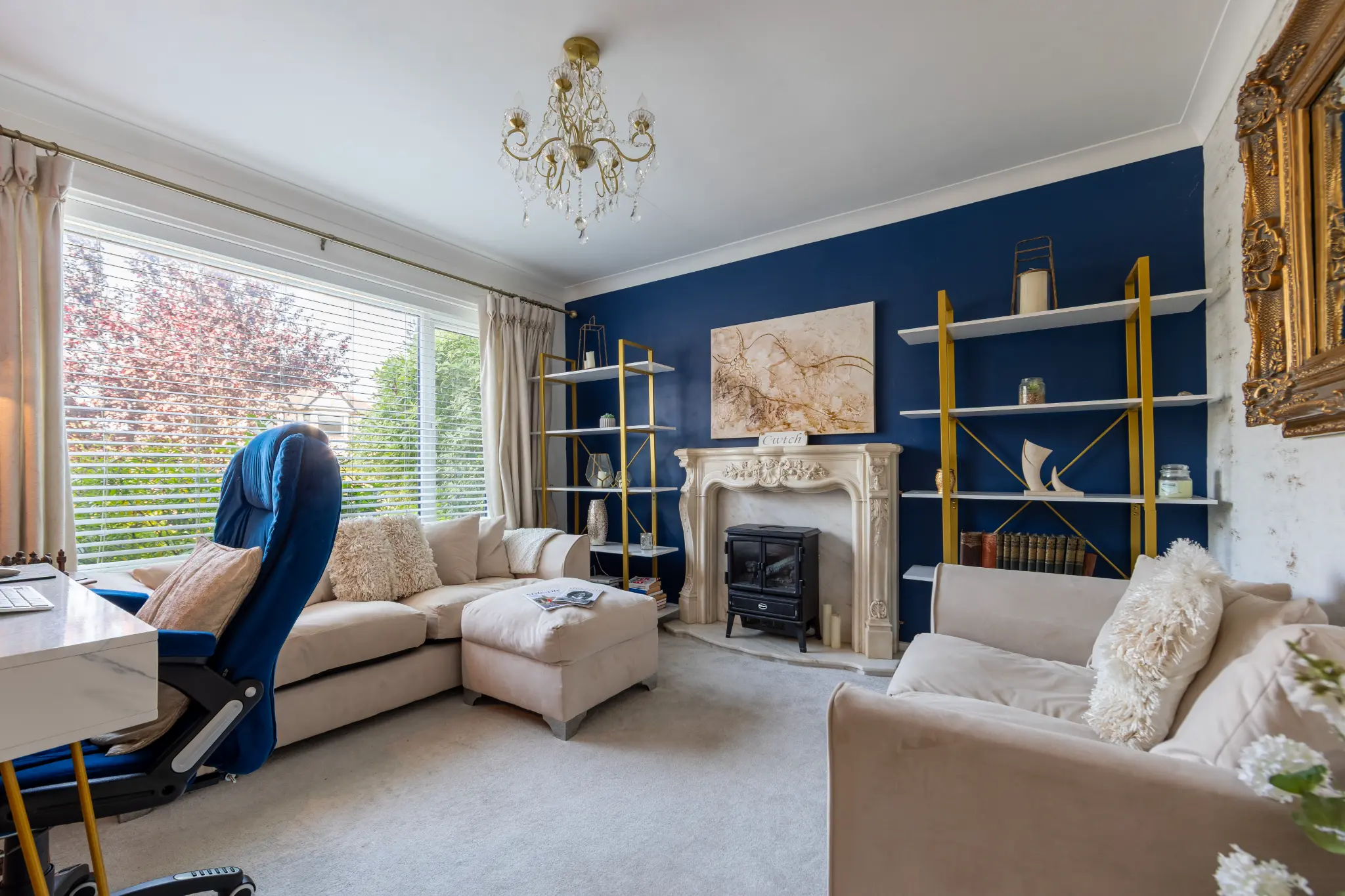
A family-friendly snug with plenty of seating, a navy feature wall, and a fireplace. This kind of secondary living space is gold for families because it shows there is room for everyone to spread out. The kids can be in one room, the adults in another. Photographing these spaces well, with bright natural light and a sense of warmth, reassures parents that the property can handle their family without feeling cramped.
Targeting Couples
Couples are looking for atmosphere, romance, and escape. They respond to:
- The bedroom — make it look inviting, not just functional. Quality bedding, soft lighting, a sense of intimacy
- Unique features — a freestanding bath, a fireplace, a private terrace with a view
- Detail shots — fresh flowers, wine glasses, candles, quality toiletries
- Cosy living spaces — sofas you want to sink into, blankets, warm lighting
- Views and setting — the surrounding landscape, the approach to the property
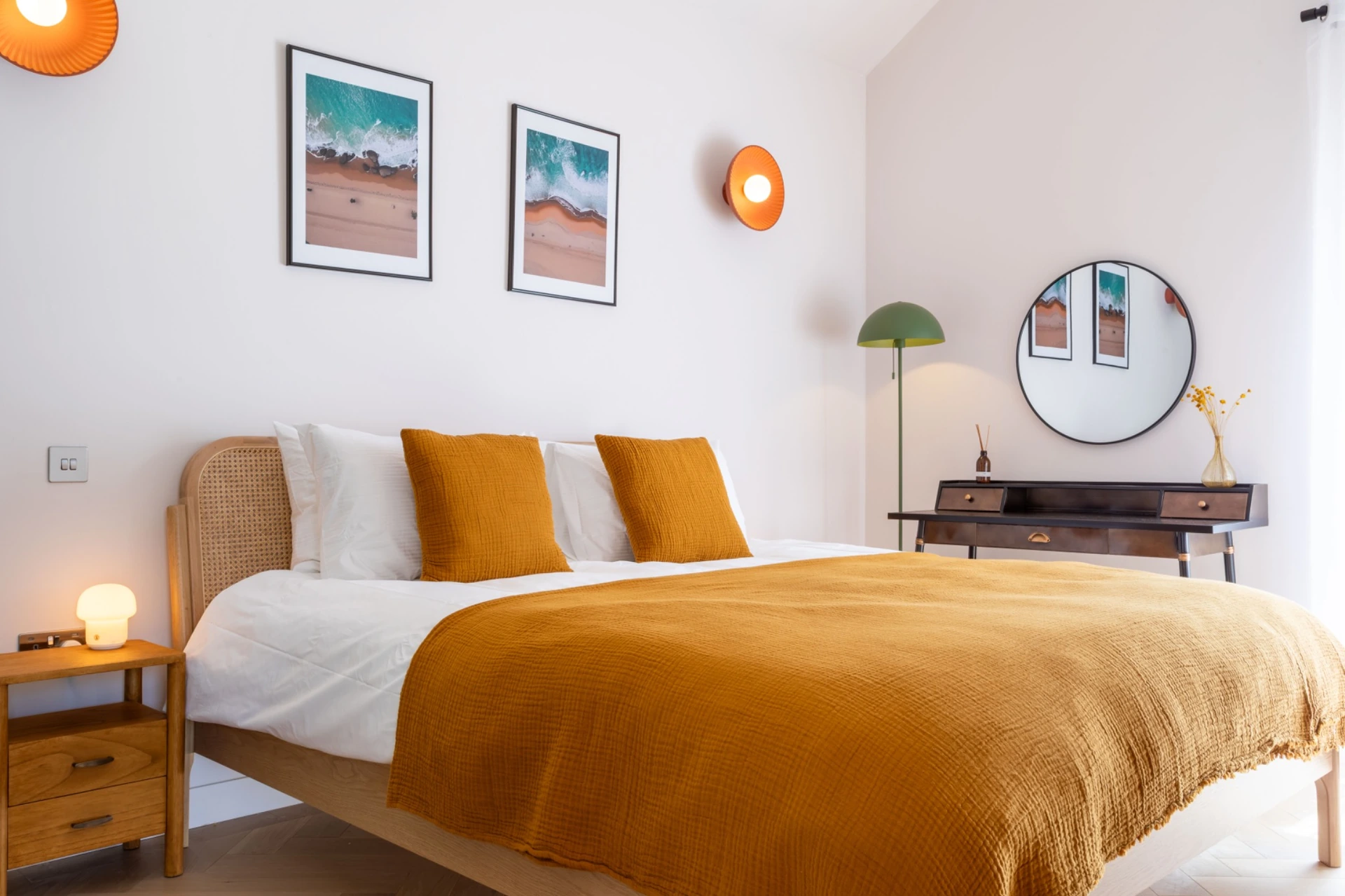
This bedroom works for couples because it emphasises comfort, warmth, and considered styling. The matching lamps, the carefully chosen throw, and the symmetrical bedside tables communicate a level of care that couples respond to. It feels like somewhere you would want to spend a lazy morning.
Targeting Groups (Stag, Hen, Friends)
Groups need to see capacity and entertainment. They want to know everyone will be comfortable and there are things to do together:
- Large dining table — show it set for a group meal
- Multiple bedrooms — every sleeping space documented
- Outdoor entertaining — BBQ areas, fire pits, large patios
- Games or entertainment — hot tubs, games rooms, large TVs
- The full property exterior — show the scale
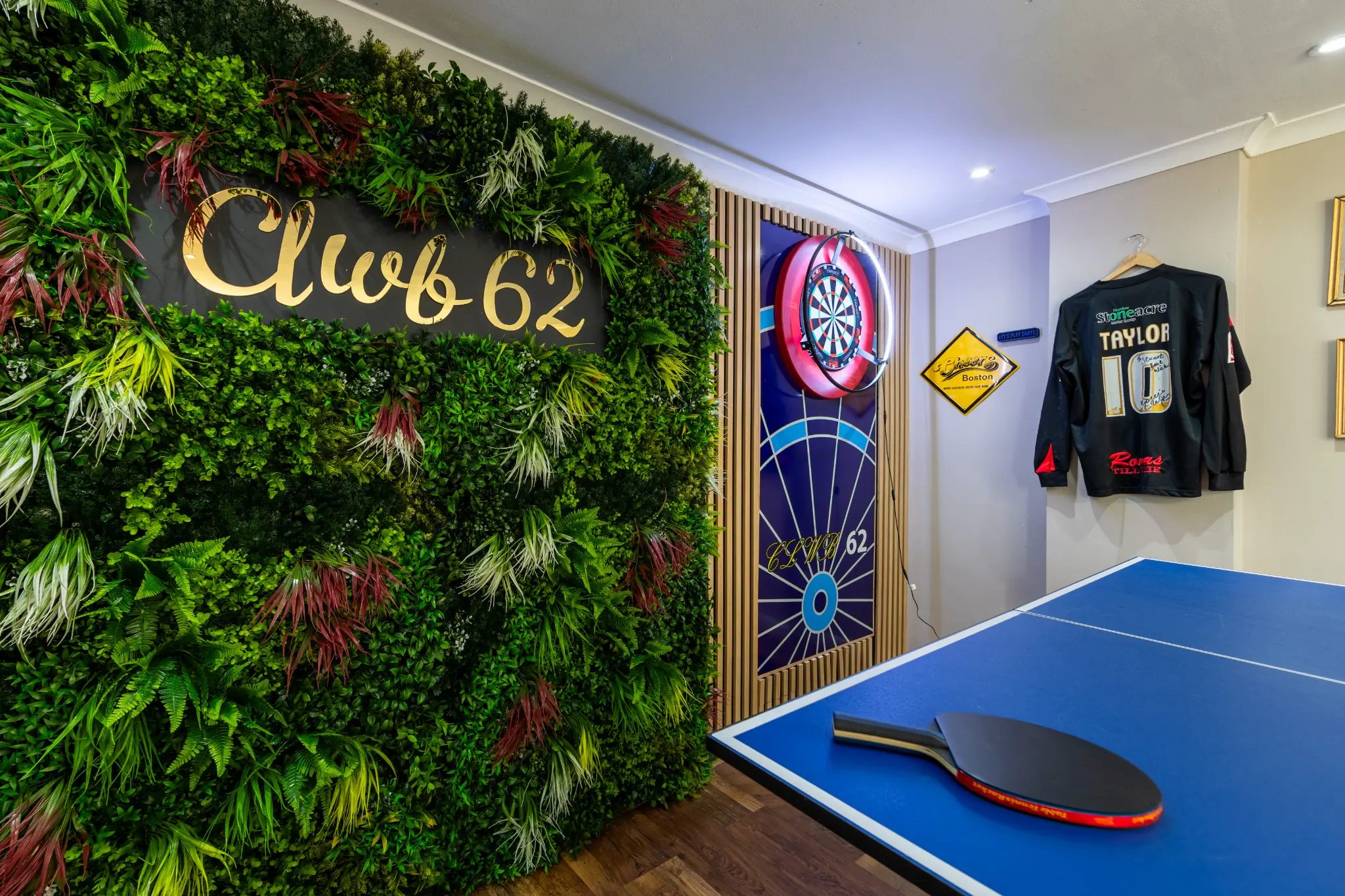
This is the kind of image that sells a property to groups instantly. A dedicated games room with a ping pong table, a dartboard with LED surround, and a living wall with custom signage. A stag group or a birthday party sees this and the booking is made before they have even looked at the bedrooms. If your property has a games room, it needs to be in your first eight images.
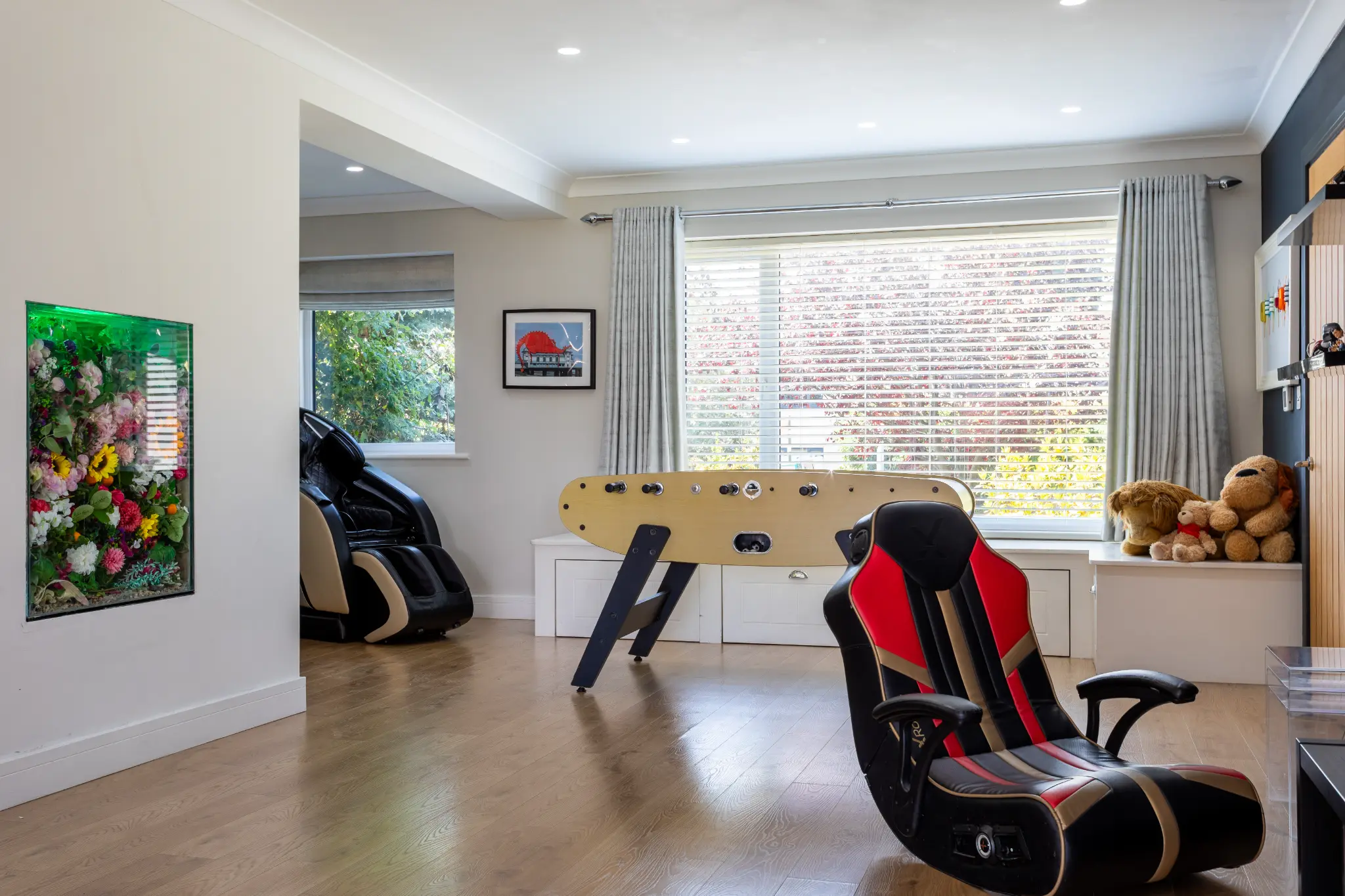
Another angle from the same property showing a gaming chair, an air hockey table, and a massage chair. For properties targeting groups, showing multiple entertainment options communicates that there is enough to keep everyone occupied. This is particularly effective for stag and hen parties, or large family gatherings where different age groups need different activities.
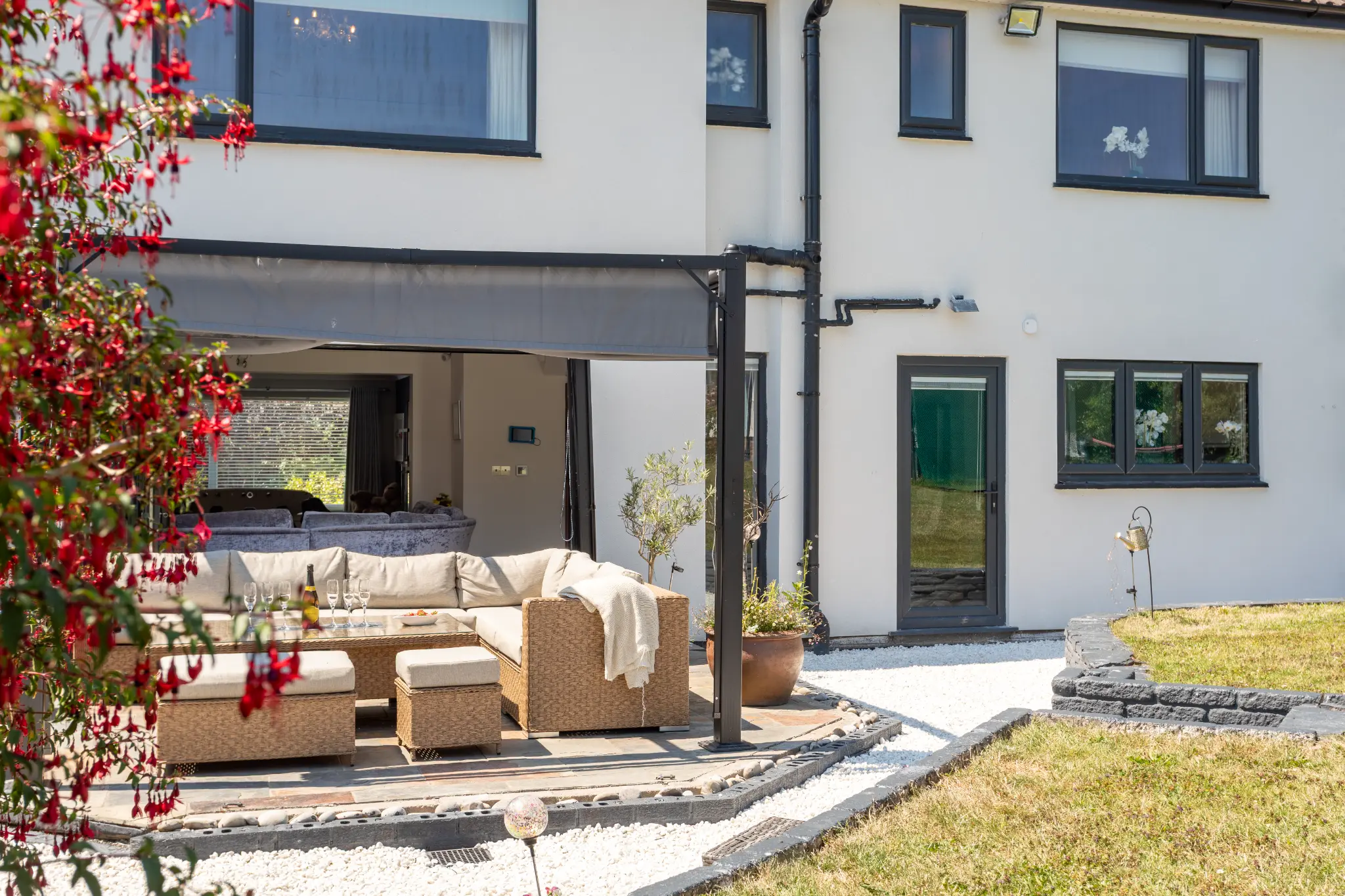
An outdoor entertaining area with a large corner sofa, wine glasses ready, and a retractable awning for shade. For groups, outdoor space is just as important as indoor space. This image shows guests that they can spread out, socialise, and enjoy the garden without being on top of each other. The bifold doors opening directly onto the patio reinforce the sense of indoor-outdoor flow.
Targeting Business Travellers
Business guests want efficiency, cleanliness, and connectivity:
- A workspace — even a small desk by a window
- Clean, uncluttered spaces — minimal styling, modern finishes
- The kitchen — for quick meals
- Good lighting — bright, well-lit rooms
- Parking and access — show it is easy to arrive and leave
05The Types of Photos Every Listing Needs
A complete listing gallery should include a mix of these shot types:
Wide Establishing Shots
These show the full room from corner to corner. They answer the question "how big is this space?" and give guests a mental map of the layout. Every room needs at least one establishing shot.
Detail and Vignette Shots
Close-ups of compelling features: a fireplace, quality bedding, a styled coffee table, fresh flowers, a beautiful door handle. These communicate quality and care. They are what make your listing feel curated rather than documented.
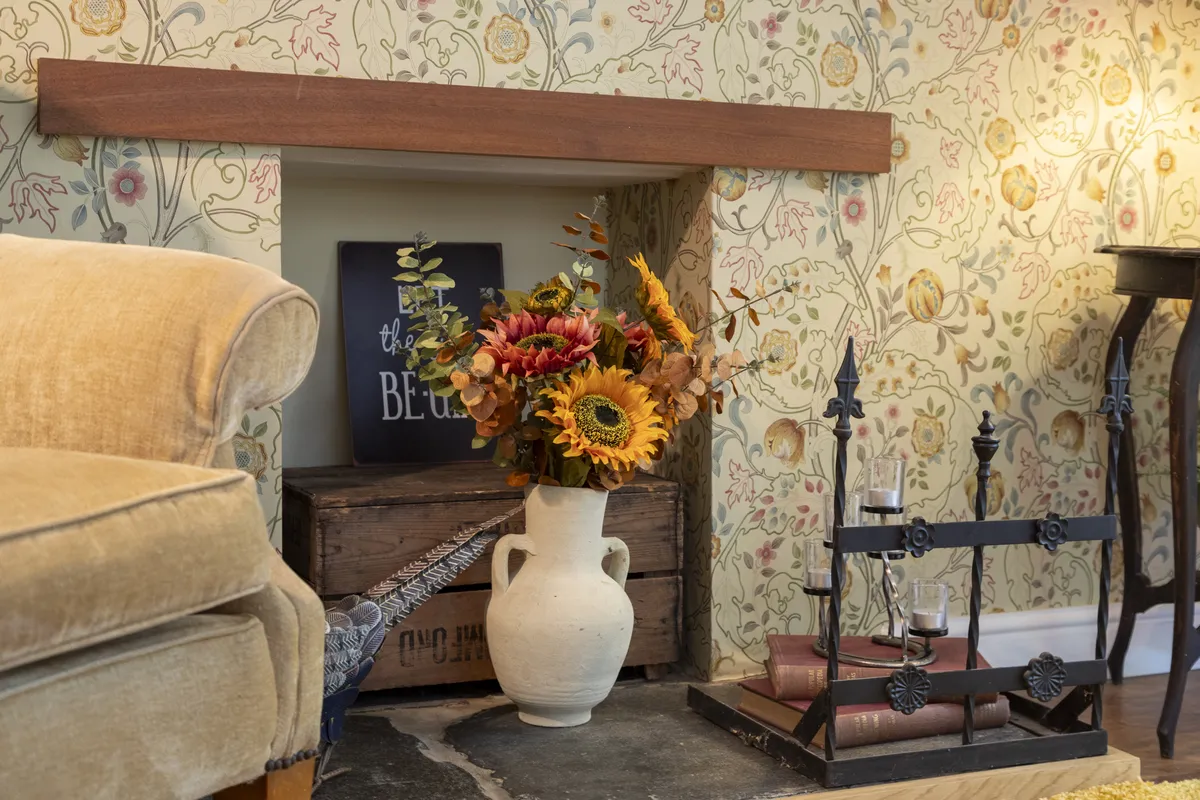
A vignette shot of a cottage fireplace with a chunky wooden beam, fresh sunflowers, and floral wallpaper. This does not show the whole room, but it communicates a feeling. A guest sees this and imagines themselves sitting by the fire on a winter evening with a glass of wine.
Lifestyle Shots
Images that show how the space is used, rather than just what it looks like. A kitchen with bread on the board and coffee brewing. A living room with a throw casually draped over the sofa. A garden table set for lunch. These help guests project themselves into the experience.
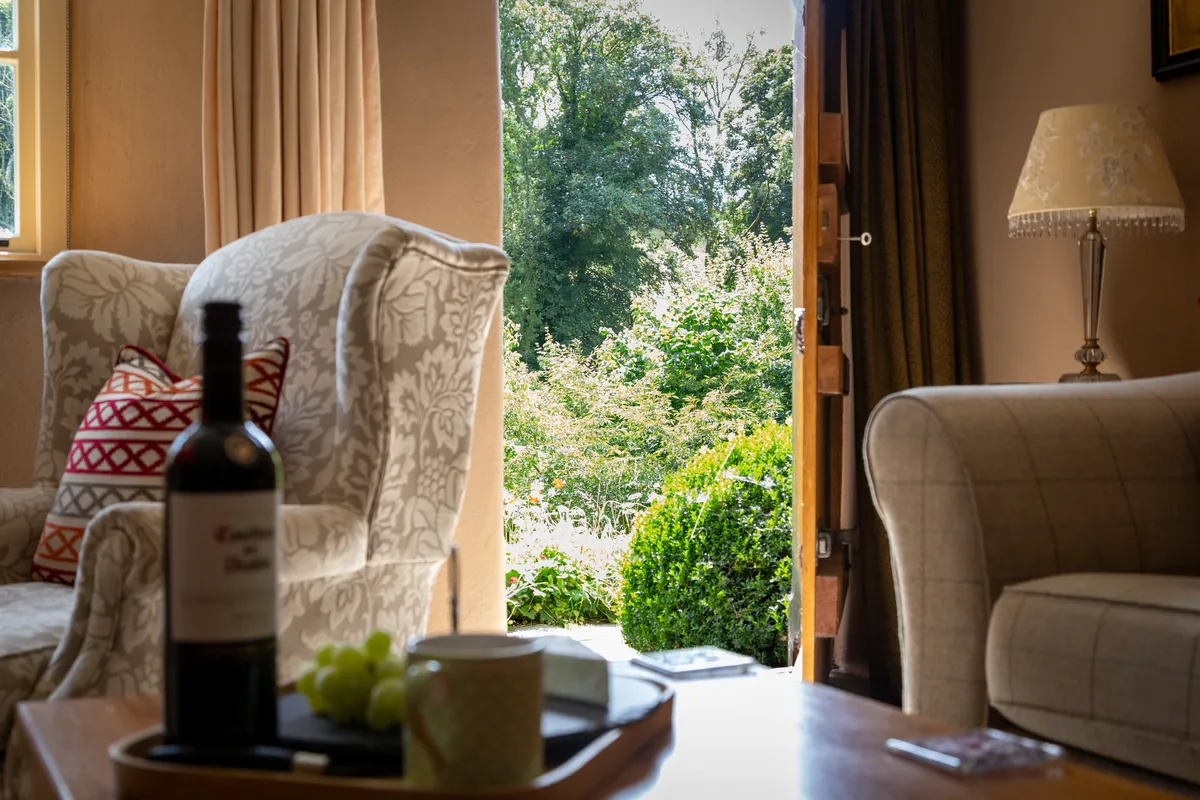
An armchair positioned by an open window with a bottle of wine and a view over the garden. This is a lifestyle shot, it shows how the space is used rather than just what it contains. A guest sees this and imagines themselves unwinding here after a long walk.
Exterior and Context Shots
The property from outside, the garden, the view, the surrounding area. These ground the listing in a real place and help guests understand what arriving will feel like.
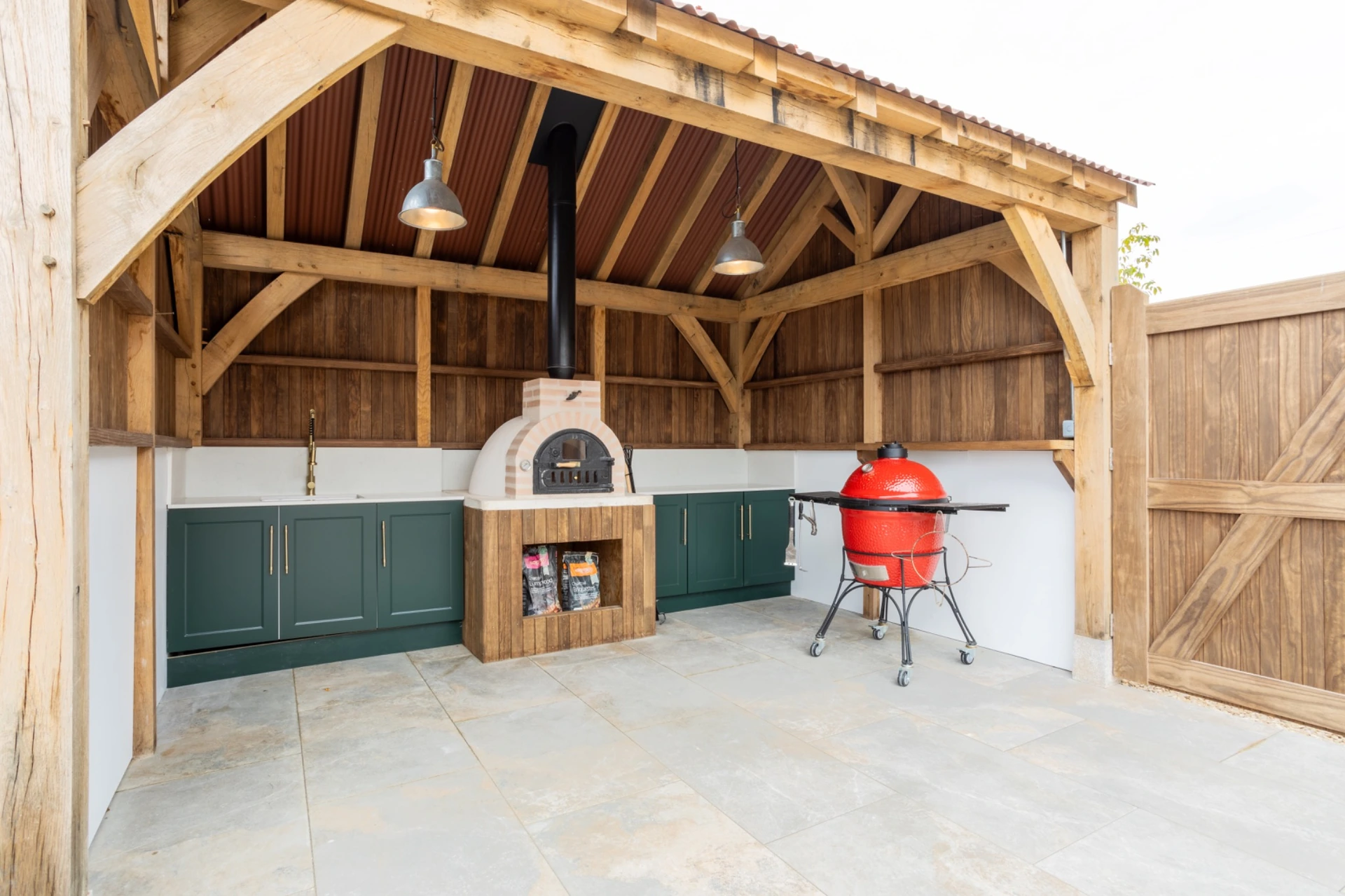
An outdoor kitchen with a pizza oven and BBQ under an oak-frame barn roof. This is the kind of outdoor feature that sells a property to groups and families alike. It tells guests that this is a place for making memories, not just sleeping.
Drone and Aerial Shots
For properties with gardens, land, or a notable setting, a drone shot can be transformative. It shows context that ground-level photography simply cannot capture: the size of the garden, the relationship to neighbours, the surrounding landscape.
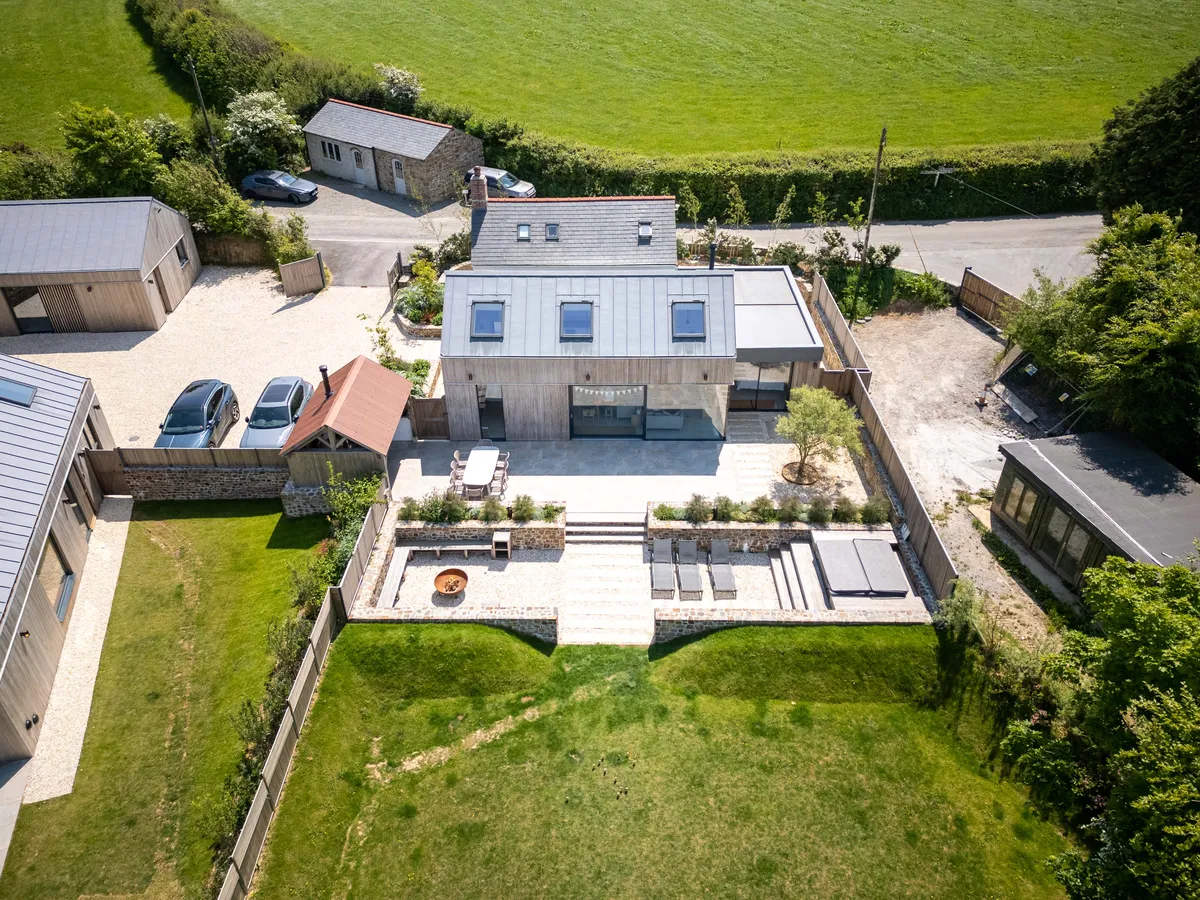
This aerial shows a holiday let complex from above, revealing the hot tub, the landscaped garden, the outbuildings, and the relationship between the different spaces. None of this would be visible from ground level. For properties with outdoor features, a drone shot is often the single most valuable image in the entire gallery.
Editorial Style / Portrait-Orientation Shots
This is the category most hosts overlook entirely, and it is one of the most powerful tools in your listing photography toolkit. Editorial-style shots are typically portrait (vertical) orientation, tightly composed, and focused on a single moment or detail within a space. They give your listing a polished, magazine-quality feel that immediately communicates luxury and professionalism.
Why do they work so well? Three reasons:
1. They dominate on social media. Instagram, TikTok, Pinterest, and Facebook Stories are all portrait-format platforms. If you want to promote your listing on social media (and you should), you need vertical images that fill the screen. A landscape-format room shot loses half its impact when cropped into a Story or Reel. Editorial-style portrait shots are ready to use across every social platform without any cropping or compromise.
2. They communicate luxury. There is a reason boutique hotels and high-end interior designers use this style. The tight composition, the shallow depth of field, the focus on texture and detail — it all signals quality. When a guest scrolls through your listing and encounters an editorial-style shot between your standard room photos, the perceived value of your property increases immediately.
3. They tell a different story. Wide establishing shots answer "what does this room look like?" Editorial shots answer "what does it feel like to be here?" They capture atmosphere, mood, and the sensory experience of a space in a way that standard property photography cannot.
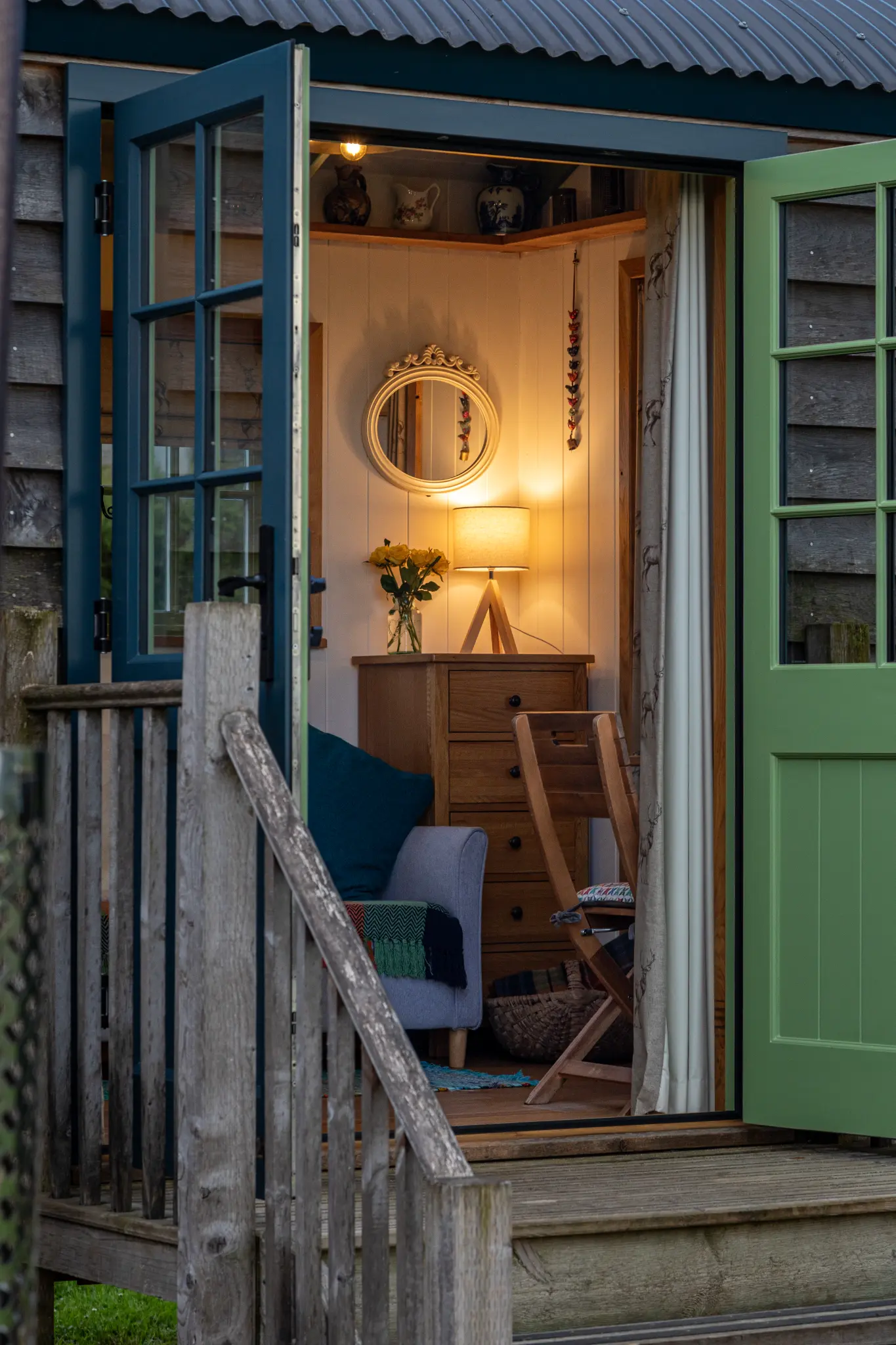
A portrait-format shot looking through the open stable doors of a shepherd's hut. The warm lamp light, armchair, chest of drawers, and vase of yellow flowers draw you into the space. This is not trying to show you the whole interior, it is trying to make you feel what it is like to arrive. The vertical format draws the eye through the doorway into the scene, and the tight crop eliminates any distracting context. On Instagram, this fills the entire screen.
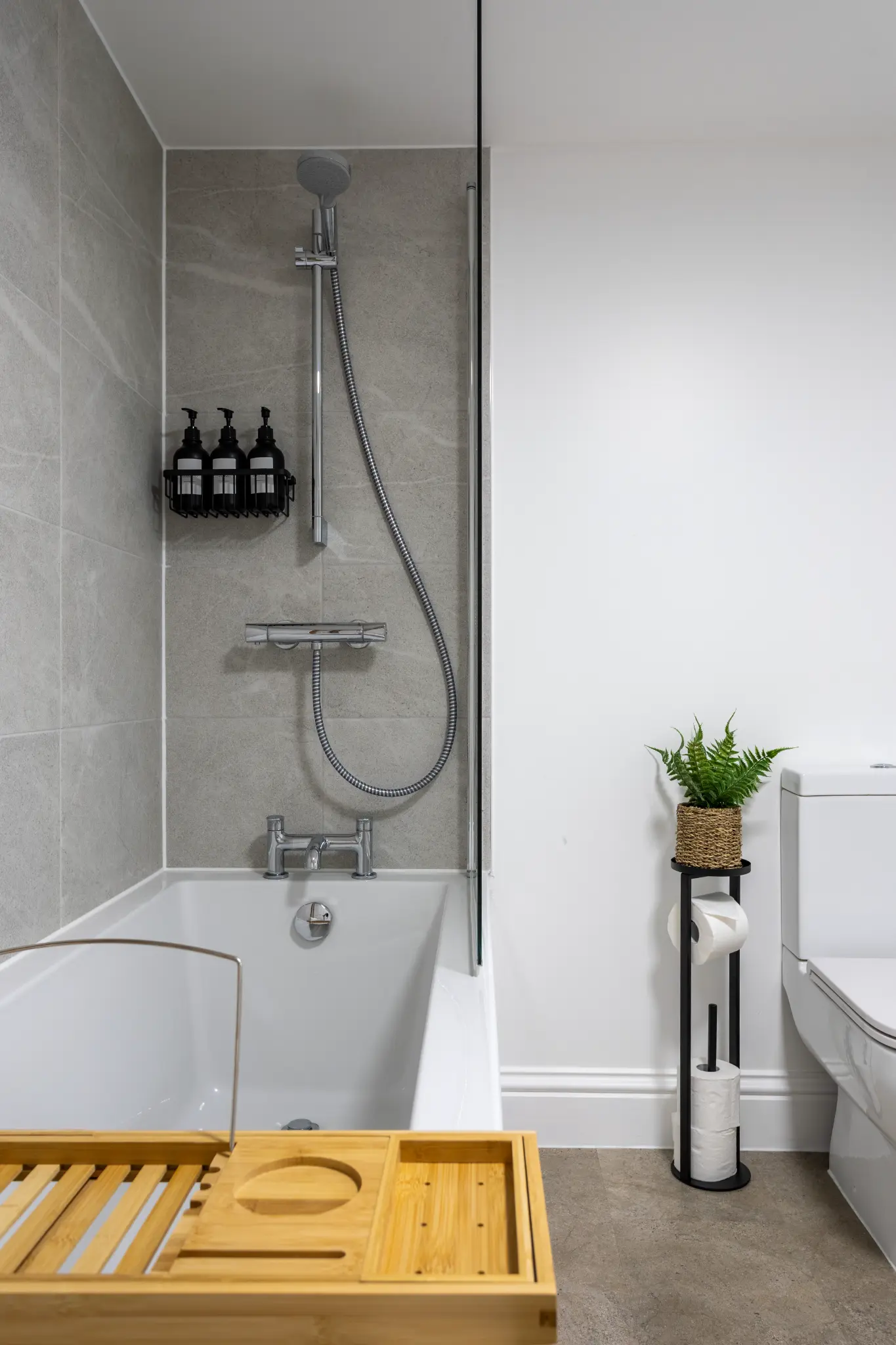
A bathroom captured in editorial style: the bamboo bath tray, grey marble-effect tiles, black pump bottles, and a fern on a stand. Rather than showing the whole room, this focuses on the quality of the finishes and the feeling of running a bath here. For couples browsing listings, this kind of detail shot is far more compelling than a standard wide-angle bathroom photo.
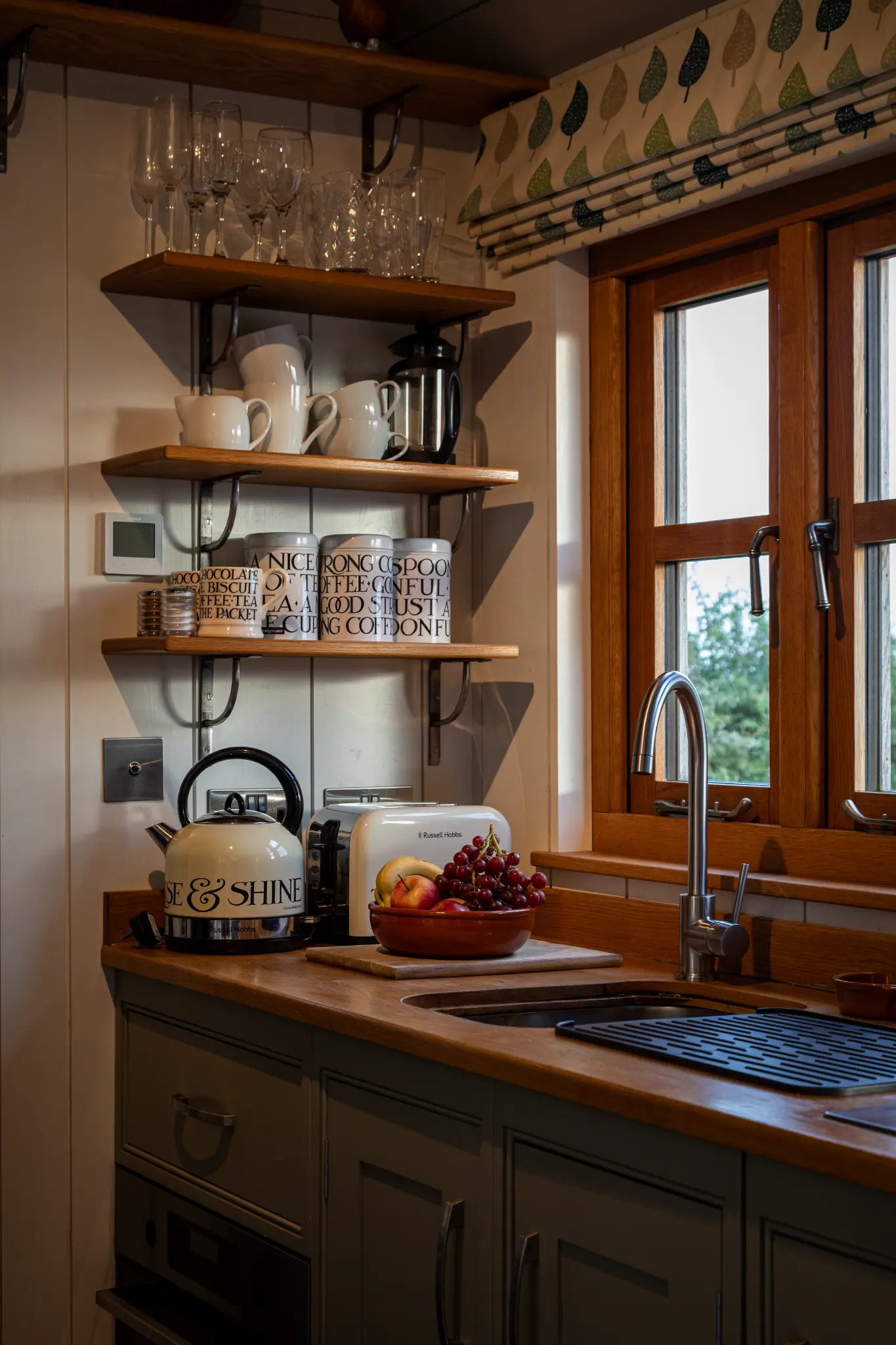
An editorial kitchen shot showing open oak shelving with wine glasses and mugs, typographic storage canisters, a cream kettle, and a bowl of fresh fruit by the window. The portrait orientation means this image works perfectly as an Instagram post or Pinterest pin without any cropping. The warmth of the wood, the natural light through the oak-framed window, and the leaf-pattern blind all communicate a charming, well-equipped cottage kitchen.
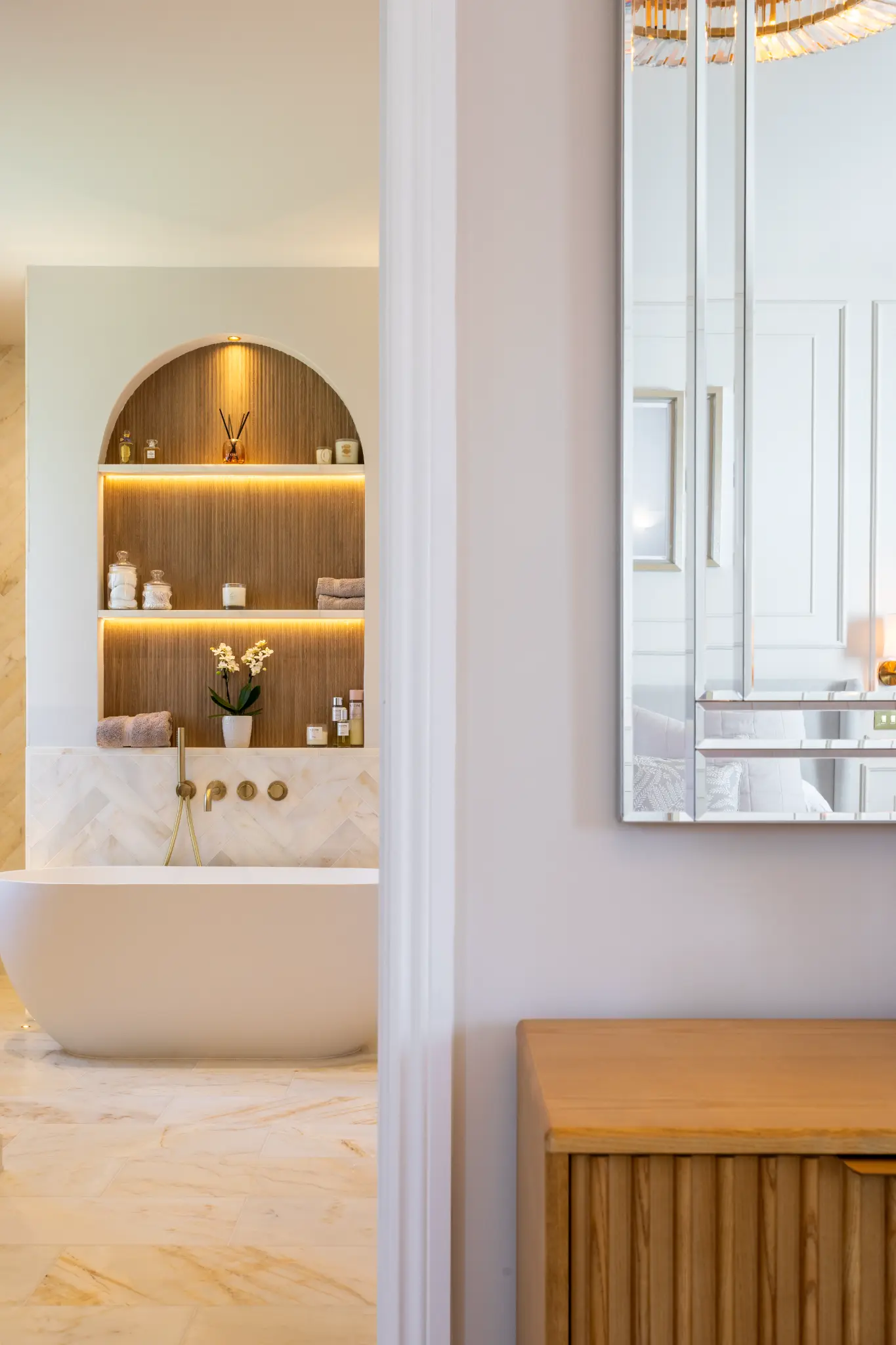
A portrait shot looking through a doorway into a luxury en-suite bathroom. The freestanding bath, arched reeded-wood alcove with LED-lit shelving, candles, and marble floor are all visible in a single frame. This is the kind of detail shot that makes a guest pause and think "this place has been properly thought through." It works beautifully as a social media post because the vertical format and tight composition create immediate visual impact.
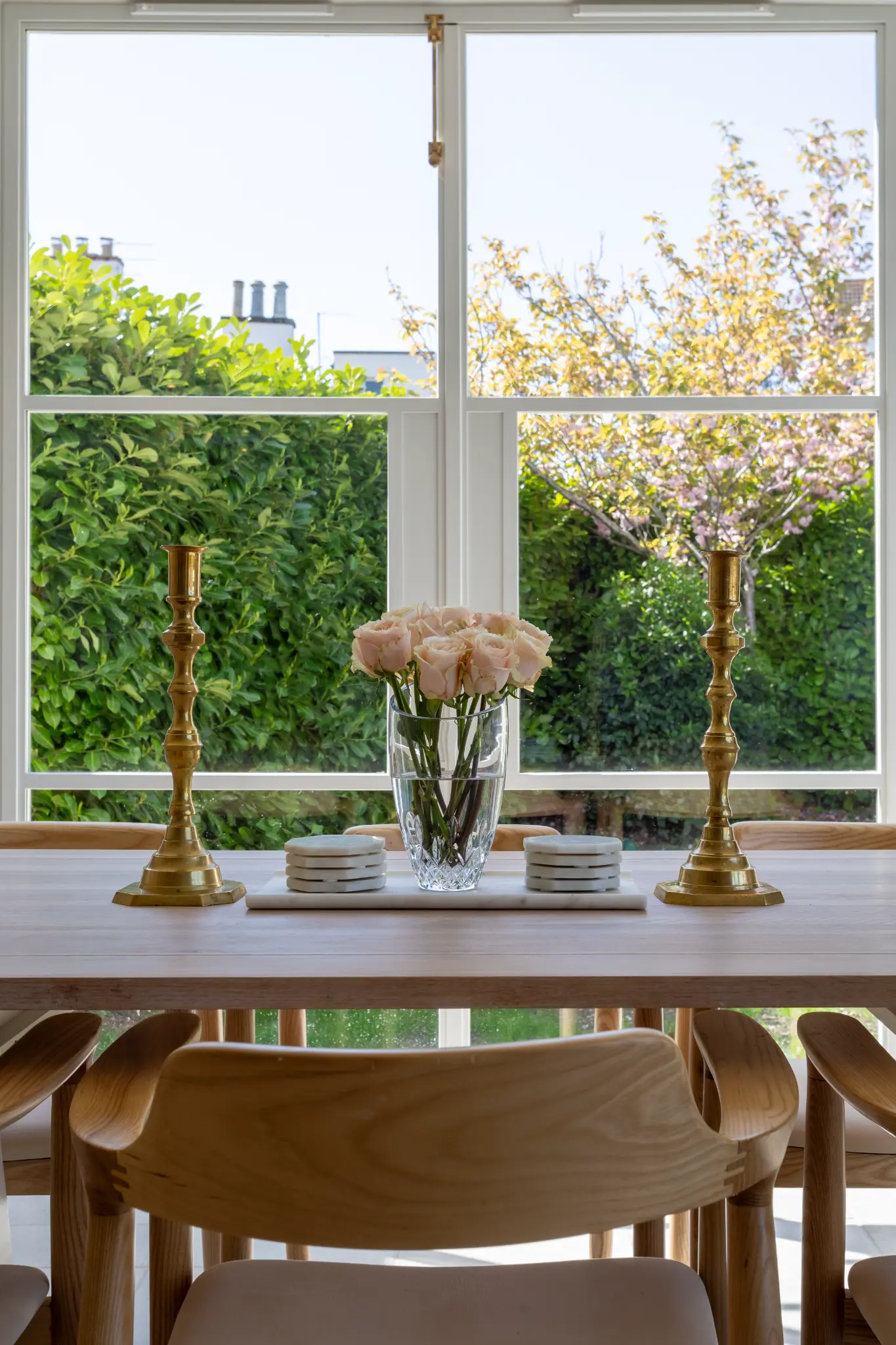
A portrait-format dining shot focusing on brass candlesticks, a crystal vase of pink roses, and marble coasters on a light oak table. The garden view through the window, with its green hedge and cherry blossom, adds depth. The editorial approach here, shooting vertically and focusing on material quality and styling rather than room size, transforms a simple dining table into something that feels considered and luxurious. This is exactly the kind of image that performs well on Pinterest and Instagram.
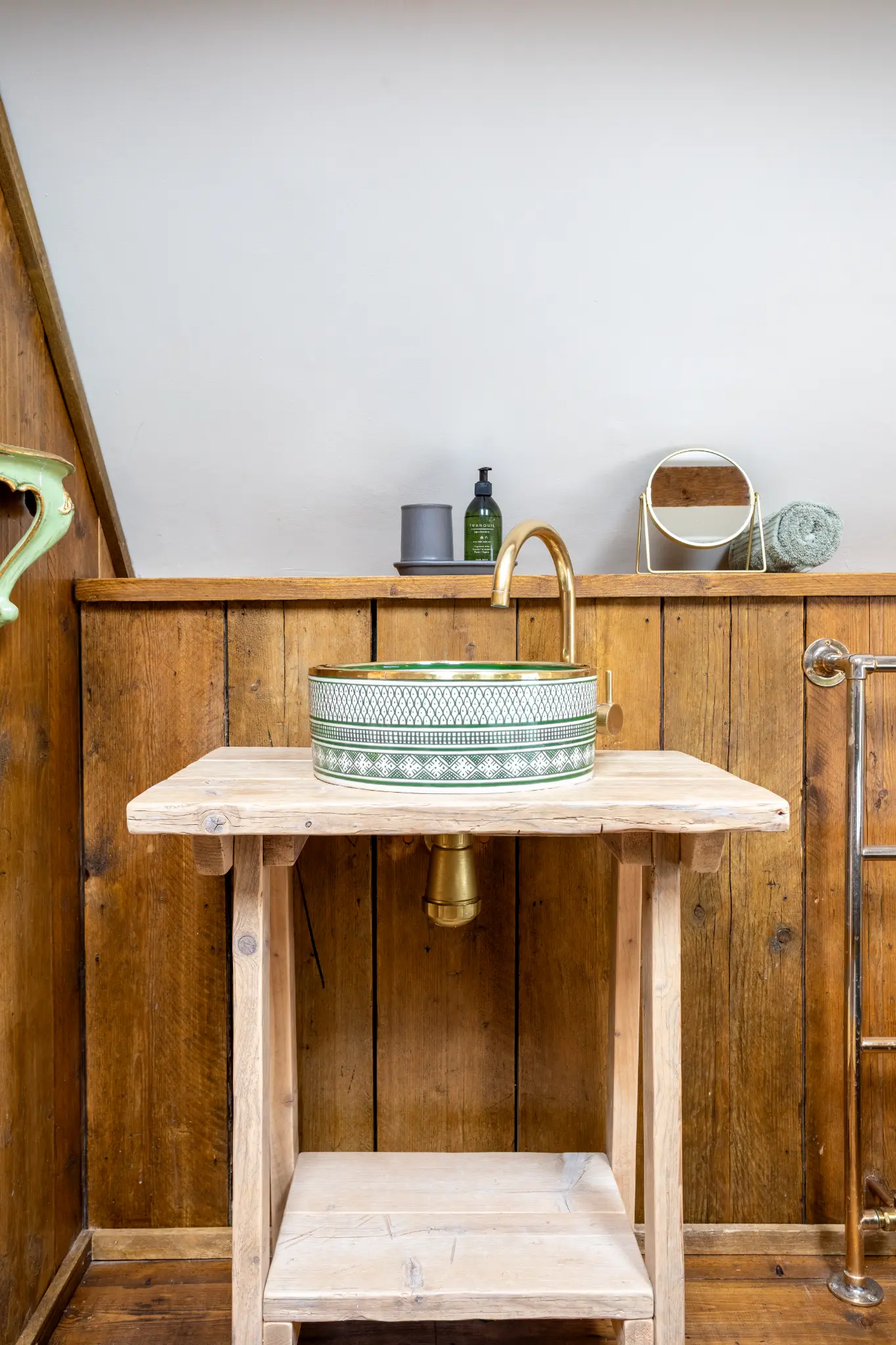
An editorial-style bathroom composition with a hand-painted green-and-white bowl basin and brass gooseneck tap as the focal point. The rough wooden washstand and timber wall panelling add rustic character. The portrait format captures the full height of the vanity and its surroundings without the distraction of the wider room. For social media, this is a ready-made content piece that communicates craftsmanship and character in a single frame.
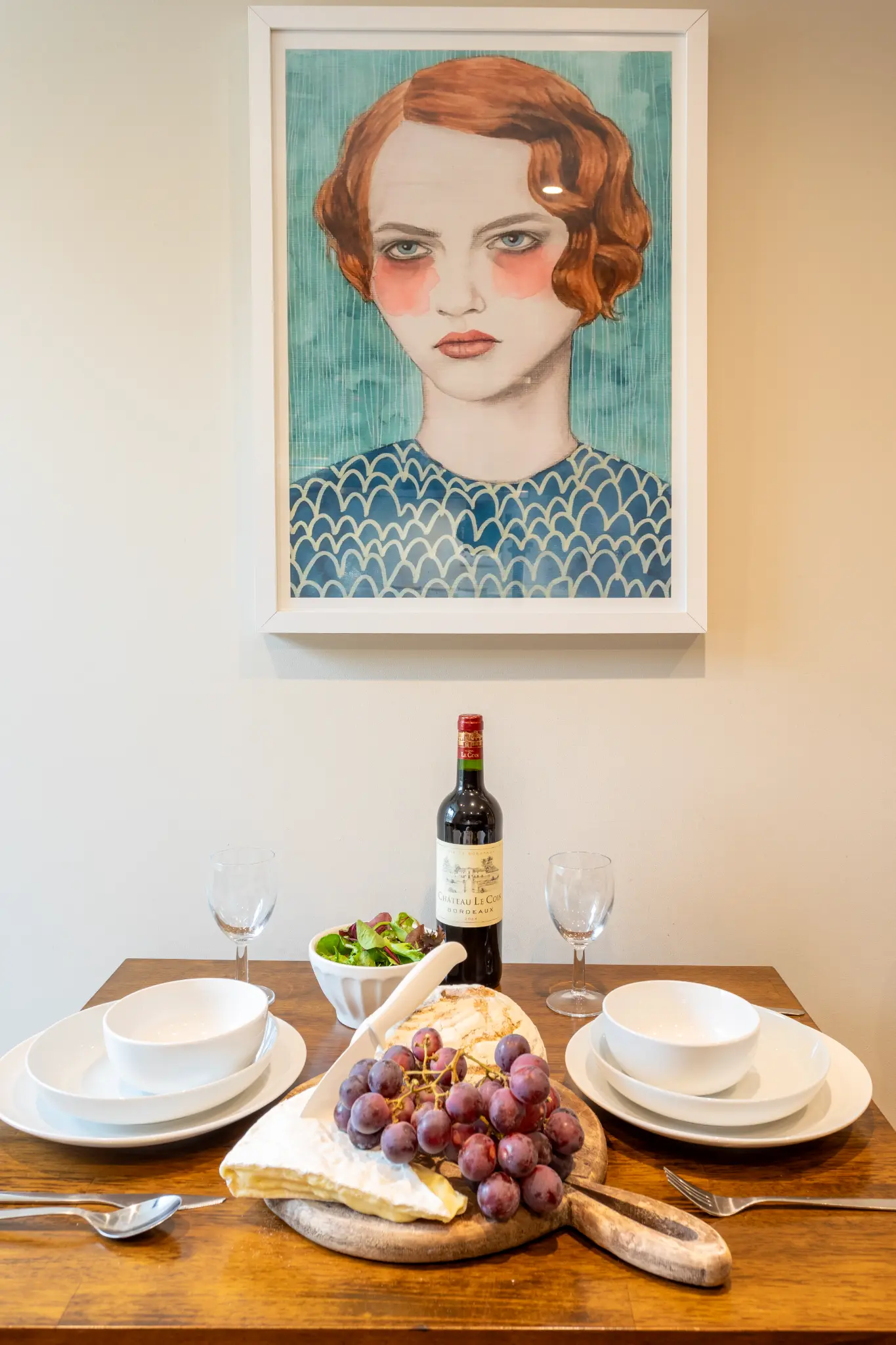
A dining table set for two, captured in portrait orientation, with a bottle of Bordeaux, a cheeseboard with brie and grapes, and a bold framed portrait above. This is a lifestyle-editorial hybrid, it shows both a feature of the property and the experience of using it. A guest sees this and immediately imagines themselves enjoying an evening in. The vertical format makes it perfect for Instagram without any cropping.
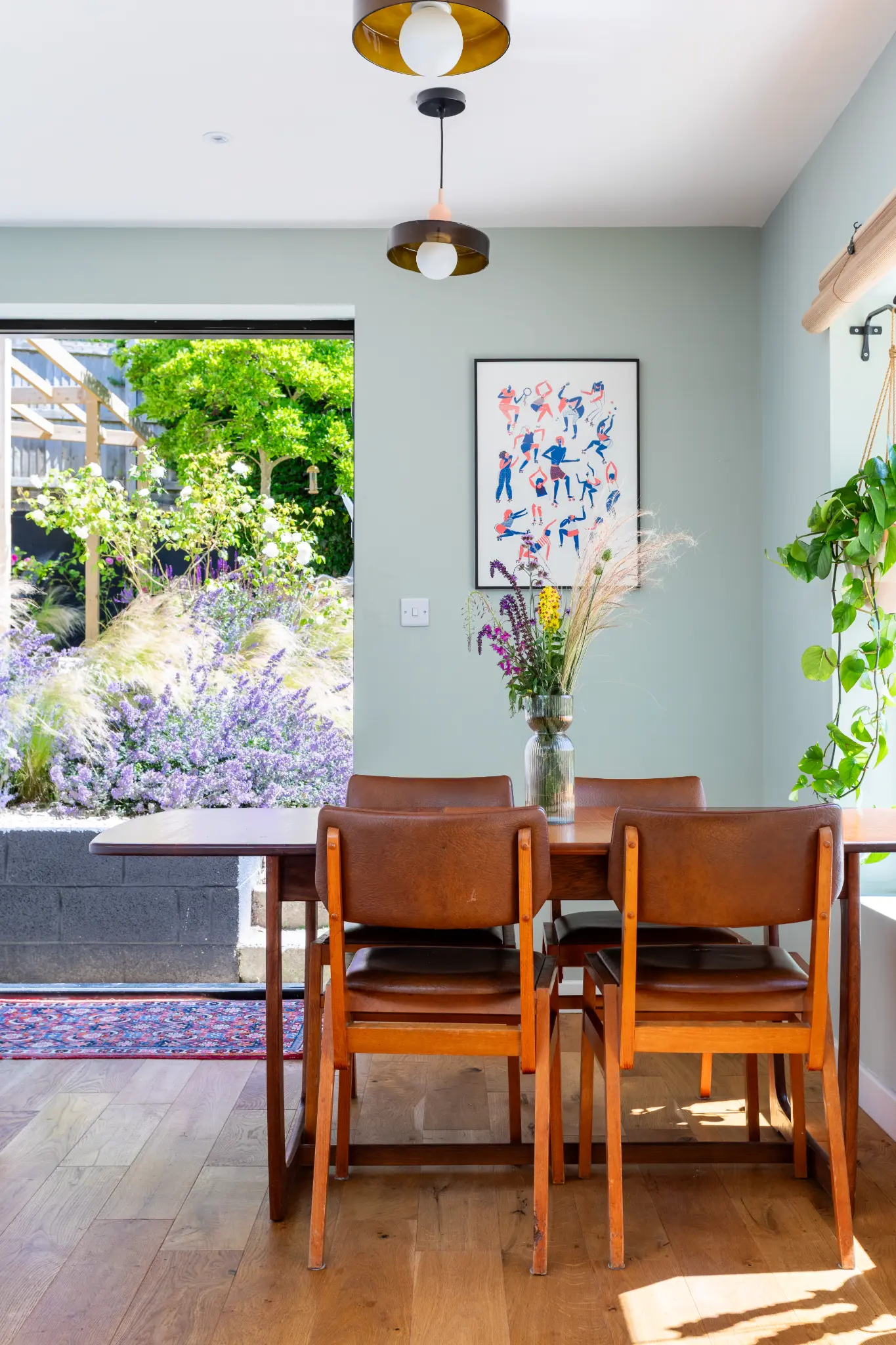
A dining area captured in editorial style, with tan leather chairs, a vase of wildflowers, sage-green walls, and open doors looking onto a bright garden filled with lavender. The portrait format creates a sense of depth that draws the eye from the interior through to the outdoor space. A wide-angle shot would lose this layered composition entirely.
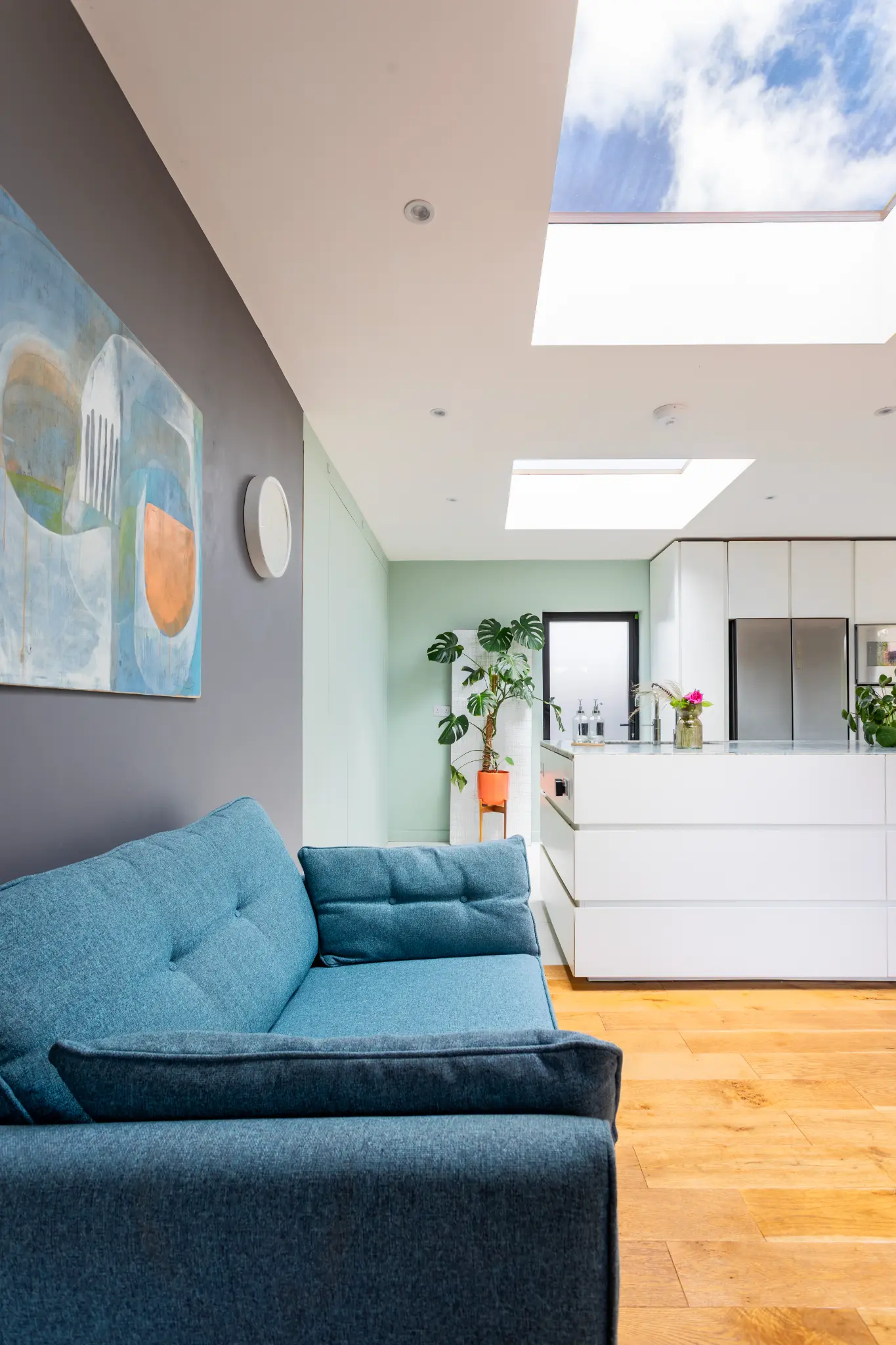
An open-plan living space shot in editorial style, with a blue sofa in the foreground, abstract artwork on a dark feature wall, skylights flooding the space with natural light, and a sleek white kitchen visible beyond. The vertical format emphasises the height of the room and the drama of the skylights, and works perfectly for Instagram Stories or Reels cover images. This is the kind of shot that makes someone save your listing for later.
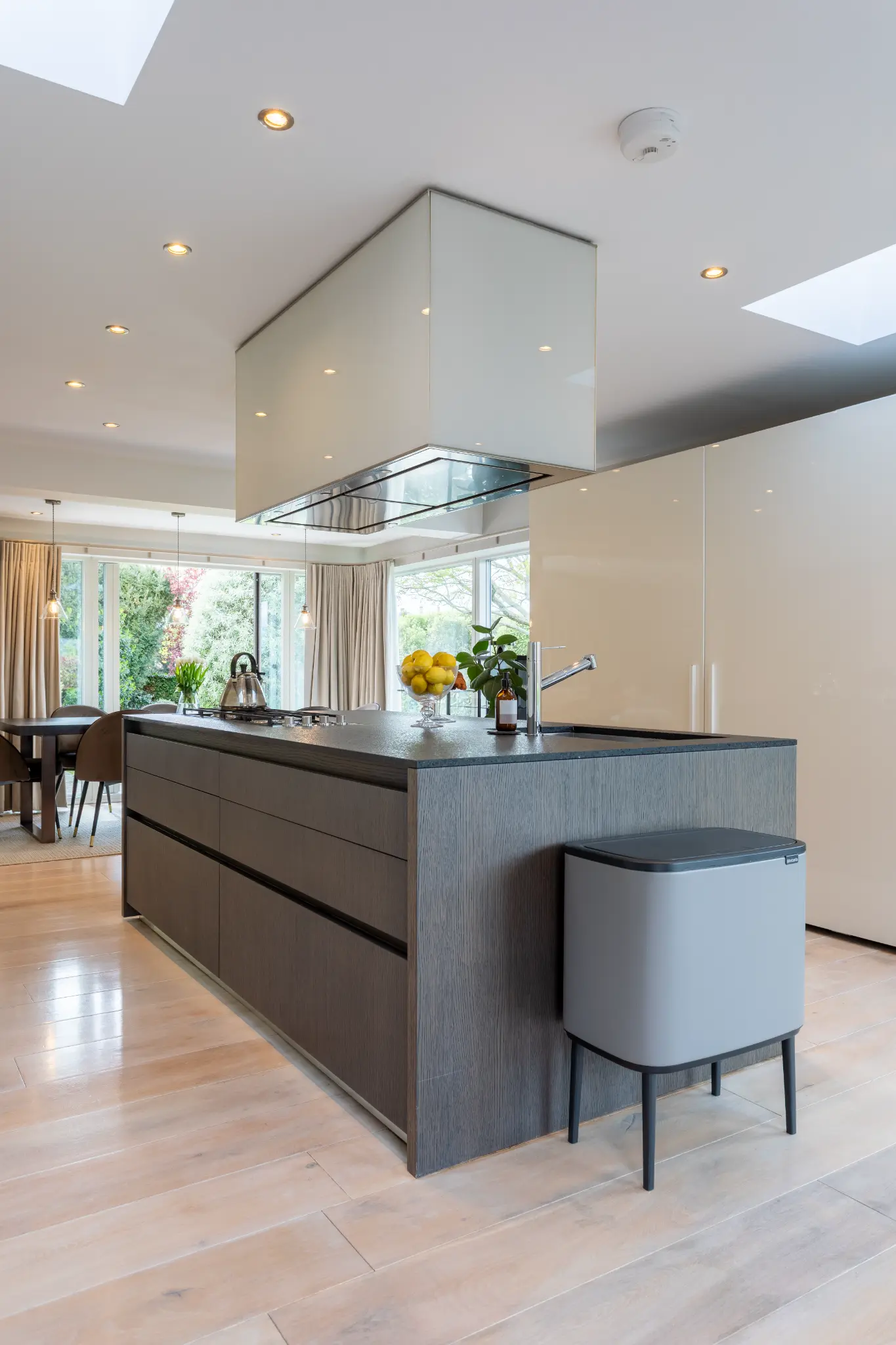
A contemporary kitchen island captured in portrait format, with a large suspended extractor hood, skylights above, and lemons styled on the dark worktop. The dining area and garden are visible beyond through floor-to-ceiling glazing. This is pure lifestyle editorial, it does not just show a kitchen, it shows a space designed for entertaining. For hosts targeting groups or celebration bookings, this kind of image is incredibly effective.
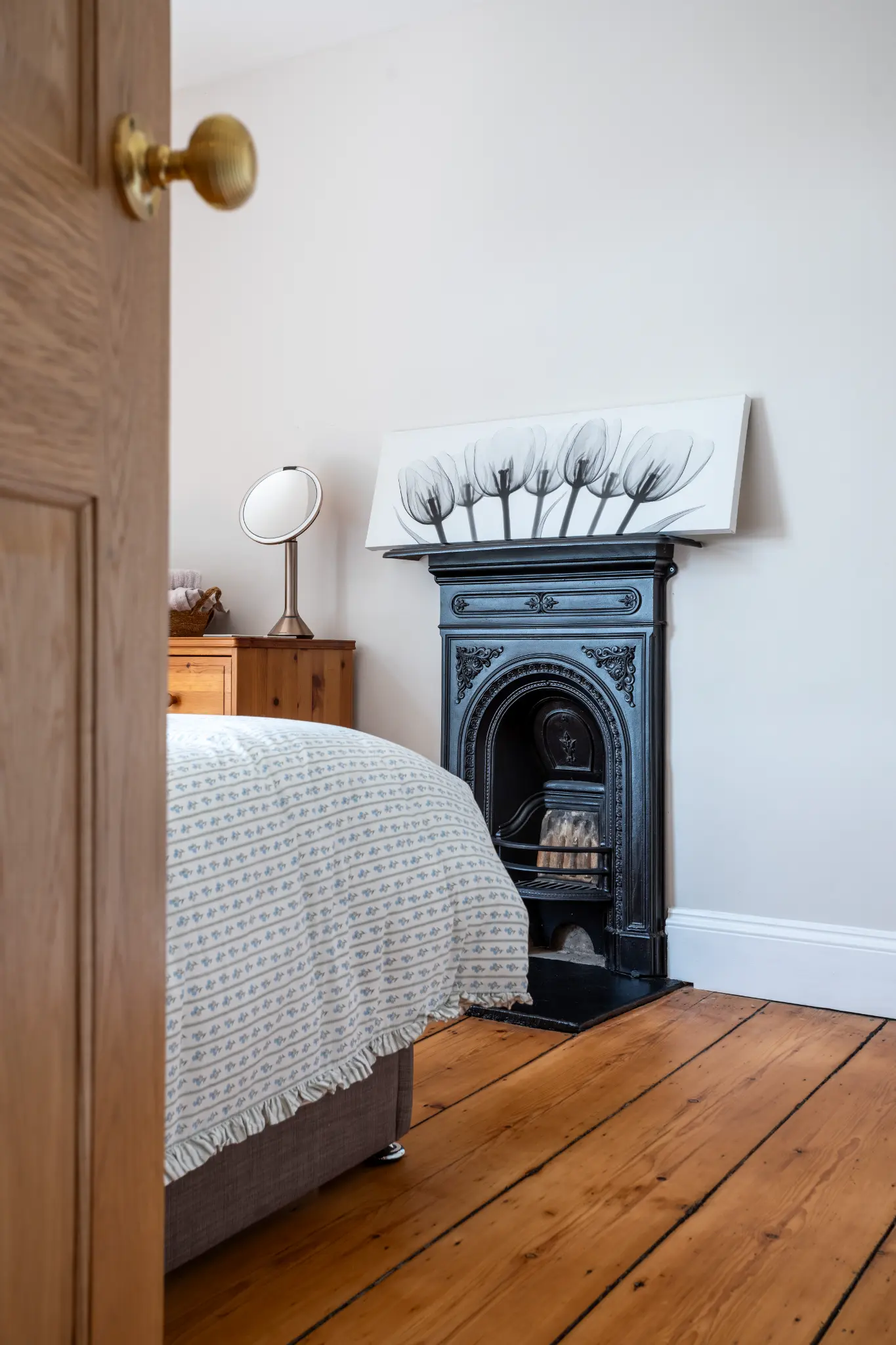
A bedroom shot through an open door in editorial style, with a cast-iron Victorian fireplace, x-ray tulip artwork on the mantelpiece, and original wooden floorboards. The brass door knob in the foreground adds depth. The portrait orientation captures the full height of the fireplace and creates a more intimate, layered composition than a standard landscape bedroom shot.
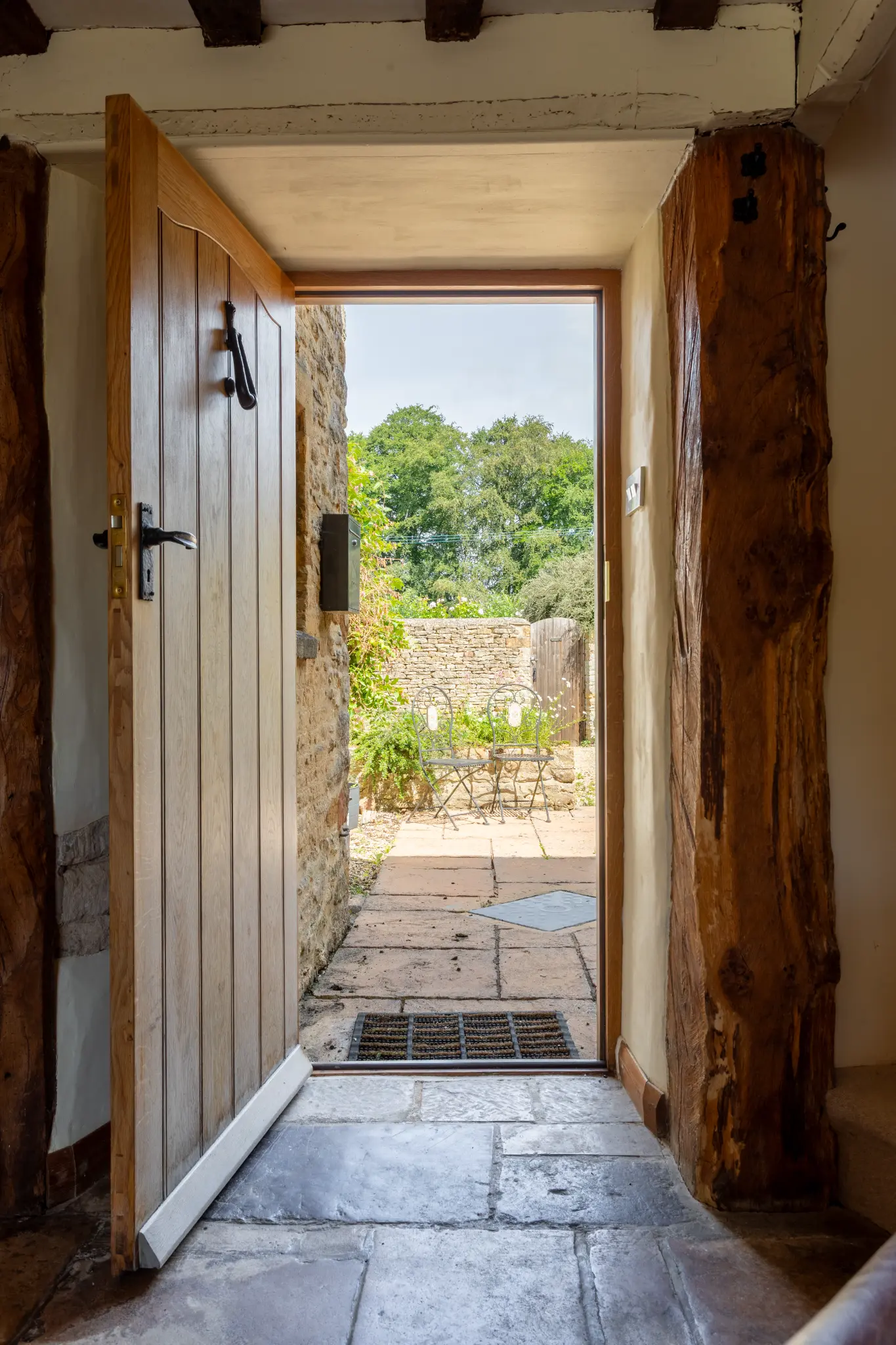
A cottage doorway captured in editorial portrait format, with an open oak door framing a view onto a stone courtyard, bistro chairs, and greenery beyond. The exposed beams and flagstone floor inside add character. The tight vertical composition draws the eye through the doorway and out into the sunshine. This is the kind of image that makes your listing feel like an escape, inviting guests to picture themselves stepping outside on a summer morning.
How to use editorial shots in your listing:
Do not replace your standard room photography with editorial shots — use them alongside. A good approach is to follow each establishing wide-angle room shot with one or two editorial details from the same space. This gives guests both the practical information they need (room size, layout) and the emotional pull that drives bookings (atmosphere, quality, experience).
For social media, your editorial shots become your content library. You can post them individually, use them in carousels, add them to Stories, or pin them on Pinterest — all without any cropping or reformatting. This dual-purpose value makes editorial-style photography one of the smartest investments a holiday let owner can make.
06Common Mistakes That Cost You Bookings
Leading with the Wrong Image
Your cover photo should never be a bathroom, a close-up detail, or a bedroom. It should be the single image that best represents the overall experience of staying at your property. For most listings, that means an exterior, a drone aerial, or your most impressive living space.
Too Many Similar Shots
If you have three photos of the same bedroom from slightly different angles, you are wasting gallery space. Each image should show something new, a different room, a different perspective, or a different detail.
Ignoring the Sequence
Putting all your bedroom photos together, then all your bathroom photos, then all your outdoor photos creates a disjointed experience. Instead, think of your gallery as a virtual tour. Lead the guest through the property in a logical order: arrive, enter, explore the main living spaces, discover the bedrooms, then step outside.
Phone Photos Mixed with Professional Shots
Nothing undermines a professional gallery faster than one or two phone photos mixed in. If you have had professional photography done, use those images exclusively. The quality difference is immediately obvious and makes the professional shots look less impressive by association.
Dark or Underexposed Images
There is a difference between a genuinely underexposed photo and a deliberately moody, editorial-style shot. Not every image needs to look like an estate agent listing blasted with flash. Each property has its own natural character, and the photography should reflect that. A cosy shepherd's hut lit by a single lamp, a snug with the log burner glowing at dusk, a candlelit dining table, these are meant to feel warm and intimate rather than bright and clinical.
The issue is when a room looks dark because the photography has failed rather than because the mood is intentional. If a space that should feel light and airy (a kitchen, a bathroom, a living room during the day) comes out underexposed, guests will assume it is dark in real life. Professional HDR photography balances interior and exterior light to keep things natural without losing detail in the shadows. But when you are selecting from a set of images, think about what the shot is trying to communicate. A bright, inviting wide-angle establishes the space. A darker, tighter editorial shot communicates atmosphere and mood. Both have their place in a strong listing gallery.
07Platform-Specific Considerations
Airbnb
Airbnb shows your cover photo prominently in search results and allows guests to scroll through your gallery without leaving the search page on mobile. This means your first five images are doing almost all the work. Front-load your strongest shots.
Airbnb also allows photo captions. Use them. A caption like "The living room, with wood-burning stove lit on a winter evening" places the guest psychologically in the image and adds context that the photo alone cannot provide.
Booking.com
Booking.com categorises photos by room type. Make sure you have clear, well-lit images of every room category (bedroom, bathroom, kitchen, living area, exterior). Their algorithm rewards listings with comprehensive photo coverage across all categories.
Vrbo and Direct Booking Sites
These platforms give you more control over gallery layout. Use it. Create a deliberate sequence that tells a story, and consider adding a floor plan image to help guests understand the layout.
08When to Reshoot
Your listing photos are not permanent. Consider reshooting when:
- You have made significant improvements or redecorated
- Your photos are more than two to three years old (styling and photography trends evolve)
- Your occupancy rate has dropped without an obvious reason
- You have added new features (hot tub, garden room, workspace)
- Your current photos were taken on a phone or by a non-specialist
Professional Airbnb photography is an investment that typically pays for itself within the first few additional bookings. For new listings without reviews, it is arguably the single most important thing you can spend money on.
09A Real Example: Building a Gallery from Scratch
When I photograph a new Airbnb with zero reviews, the owners need imagery that will compete against established properties with dozens of five-star reviews. Every photo has to work harder because there is no social proof to fall back on.
I build every gallery with a clear strategy:
- 1.Hero: Drone aerial showing the full property, garden, and setting
- 2.Living room: The log burner and comfortable seating, establishing warmth and character
- 3.Kitchen: Well-equipped, clean, reassuring for longer stays
- 4.Standout feature: The unique space that differentiates this property, whether that is a conservatory, a hot tub, or an outdoor kitchen
- 5.Master bedroom: Quality bedding, period features, natural light
- 6.Second bedroom: Bright, airy, with its own personality
- 7.Outdoor space: Patio furniture, dining areas, garden views
- 8.Detail shots: Log burner close-ups, lifestyle vignettes, styled surfaces
- 9.Exterior approaches: Front door, entrance path, kerb appeal
The result is a gallery that tells a complete story in under 30 seconds of scrolling. A guest knows exactly what they are booking, what the atmosphere will be like, and whether this is the right property for them.
10Summary: The Photo Selection Checklist
Before you publish or update your listing, run through this checklist:
- 1.Is your cover photo your single strongest, most eye-catching image?
- 2.Do your first five photos cover the hero, living room, kitchen, and at least one standout feature?
- 3.Have you included at least one detail or vignette shot that communicates quality?
- 4.Does your gallery include every sleeping space?
- 5.Have you shown the outdoor areas and the property's setting?
- 6.Is the sequence logical, leading the guest through the property as if they were walking through it?
- 7.Are all images consistent in quality (no phone photos mixed with professional shots)?
- 8.Have you removed any dark, blurry, or unflattering images?
- 9.Does your photo selection match the guests you want to attract?
- 10.Is your total image count in the 20 to 30 range for a standard property?
If you can answer yes to all ten, your listing gallery is working as hard as it can for you.
Ready to upgrade your listing photos? I offer specialist Airbnb and holiday let photography across Somerset, Bristol, Bath, the Cotswolds, and South Wales. Packages start from £250 with 48-hour delivery. Get in touch to discuss your property.