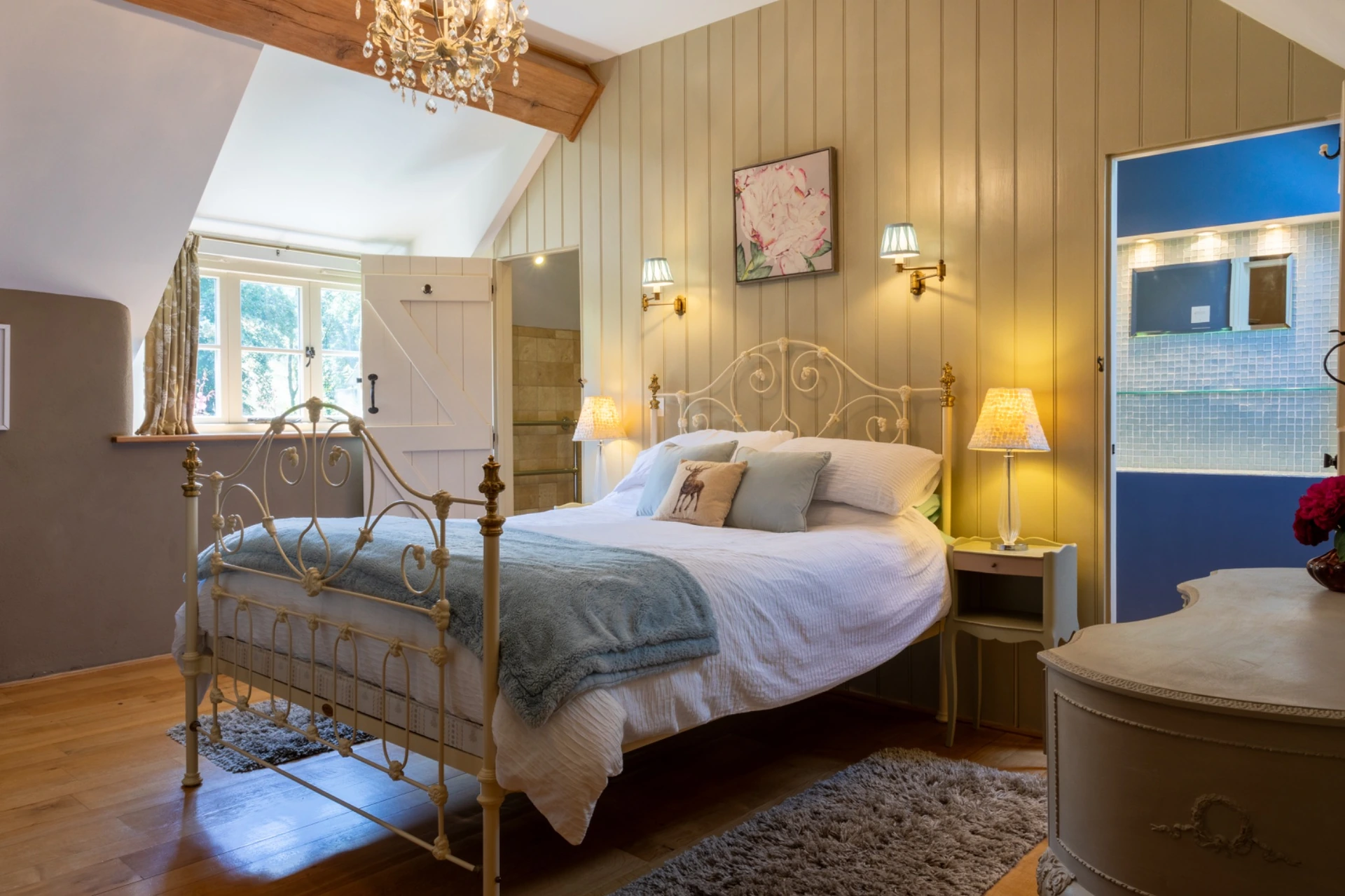

Reviews are the currency of the short-let market. A property with fifty 5-star reviews will always outperform an identical property with ten mixed reviews, regardless of price, location, or amenities. Airbnb's algorithm favours highly-rated listings, guests trust social proof above almost everything else, and your review score directly affects your ability to charge premium rates.
I photograph holiday lets every week, and the correlation between review quality and property presentation is impossible to ignore. The hosts who consistently earn 5-star reviews share common habits, and none of them involve luck. This guide covers what actually drives reviews, how to earn them consistently, and how to handle the inevitable bad one without losing sleep.
01What Guests Actually Rate
On Airbnb, guests rate you across six categories: overall experience, cleanliness, accuracy, check-in, communication, and location. Understanding what drives each score helps you focus your efforts where they matter most.
Cleanliness (most impactful): This is the category that tanks overall scores fastest. One hair in the shower, one dusty shelf, one stained mug, and you're looking at a 4-star cleanliness rating that drags everything else down. Professional cleaning after every guest is non-negotiable. I'd recommend a checklist your cleaner follows every time, with particular attention to bathrooms, kitchen surfaces, and bedding.
Accuracy (second most impactful): This is where your listing description and photos matter enormously. If your photos show a bright, spacious room and guests arrive to find it smaller and darker than expected, you'll lose stars here. Professional photography actually helps with accuracy because it represents the property honestly at its best, rather than misleadingly or poorly.
Communication: Respond to messages within an hour during waking hours. Use templates for common questions but personalise them. Proactive communication (sending check-in details 24 hours before arrival, a mid-stay check-in message) scores higher than reactive communication (only responding when guests ask).
Check-in: Self-check-in with a keypad or lockbox scores consistently higher than in-person check-in. Guests want flexibility, not obligation. Provide clear, photo-illustrated instructions sent the day before arrival.
Location: You can't change your location, but you can manage expectations. If your property is rural with limited phone signal, mention it in your listing. Guests who know what to expect rate location higher than guests who are surprised.
02The 5-Star Mindset
Hosts who consistently earn 5-star reviews think about the guest experience as a complete journey, not just the stay itself. That journey has five stages:
1. Pre-booking (listing impression): Professional photos, accurate description, quick responses to enquiries. The experience starts before they book.
2. Pre-arrival (anticipation building): Confirmation message, local recommendations, check-in instructions, "anything you need before you arrive?" message. Build excitement and remove anxiety.
3. Arrival (first impression): Clean, warm (or cool), well-lit property. A small welcome touch (local biscuits, fresh milk, a handwritten note). First impressions are disproportionately powerful.
4. During stay (invisible support): Everything works. Wi-Fi is fast. Hot water is reliable. If something goes wrong, you respond immediately with a solution, not an excuse.
5. Departure (lasting impression): Easy checkout process, a thank-you message, and a gentle review request. The last interaction colours the entire memory.
03Welcome Touches That Earn Reviews
Small gestures have outsized impact on reviews. Here's what I see in the properties that consistently earn 5 stars:
The basics (expected, not remarkable): - Fresh milk, tea, coffee, and sugar - Clean towels and fresh bedding - A working heating system and hot water - Reliable Wi-Fi with the password clearly displayed
The touches that earn mentions in reviews: - A handwritten welcome note (even a few sentences feels personal) - Local produce: biscuits from a nearby bakery, a small bottle of Somerset cider, local honey - A curated welcome book with genuine local recommendations (not generic tourist information) - Fresh flowers or a potted plant on the kitchen table - A "rainy day" box with board games, cards, and local guidebooks
The premium touches (for properties charging £150+ per night): - A bottle of wine or prosecco - Locally roasted coffee beans with a proper grinder - Luxury toiletries (not supermarket basics) - A hamper of local artisan products - Pre-arrival communication asking about dietary requirements or special occasions
The cost of these touches is typically £10-30 per stay. The return, in terms of reviews, repeat bookings, and the ability to charge higher rates, is many times that.
04Proactive Problem Prevention
Most bad reviews come from preventable problems. Here's a checklist of the issues I see most often when photographing properties:
Heating and hot water: Test before every guest arrives. A cold property on arrival is one of the fastest routes to a bad review, especially in winter.
Wi-Fi: Invest in a reliable connection with a backup (a 4G router as failover). Display the password prominently. Test speed regularly, guests expect enough bandwidth for streaming.
Cleanliness blind spots: Behind the toilet, inside the oven, under the bed, the top of the shower screen, window sills, light switches. These are the places guests notice and cleaners miss.
Maintenance: Fix small issues immediately. A dripping tap, a sticky door, a blown lightbulb, these signal neglect and accumulate into a "not well maintained" review.
Noise: If your property has noise issues (road, neighbours, early-morning farm activity), mention it in your listing. Managed expectations don't become complaints.
05How to Ask for Reviews
Most guests don't leave reviews unless prompted. Here's a approach that works without feeling pushy:
Timing: Send your review request 1-2 days after checkout. Not immediately (feels transactional) and not a week later (they've forgotten the details).
The message template:
"Hi [Name], I hope you had a wonderful stay at [property]. It was lovely having you. If you have a moment, I'd really appreciate a review on Airbnb. It makes a huge difference for small hosts like me, and I'd love to hear what you enjoyed (and anything I could improve). Thanks again, and I hope to welcome you back sometime. Matthew"
Key principles: - Personal, not automated-sounding - Acknowledges them specifically - Asks for honest feedback (not just positive) - Doesn't beg or incentivise - Mentions you're a small/independent host (triggers empathy)
06Responding to Reviews
Positive reviews: Always respond. Keep it brief, warm, and personal. Mention something specific about their stay if possible. "So glad you enjoyed the garden in the sunshine, it really is at its best in June. Hope to see you again!"
Neutral reviews (4 stars): Respond graciously. Acknowledge any feedback and mention what you've done to address it. "Thanks for the feedback about the shower pressure. I've had a plumber in this week and it's now sorted. Hope to welcome you back to try the improvement!"
Negative reviews: This is where most hosts go wrong. Here's the approach:
07Handling Bad Reviews: Templates and Tactics
A bad review feels personal, but your response is public and permanent. Every future guest will read it. Your response says more about you than the review says about your property.
The golden rules: 1. Never respond when angry. Wait 24 hours minimum. 2. Never argue or get defensive. Even if the guest is wrong. 3. Acknowledge their experience (you don't have to agree with their interpretation). 4. State facts briefly if the review is inaccurate. 5. Show what you've done to address the issue. 6. Keep it short. Long responses look defensive.
Template for a legitimate complaint:
"Thank you for your honest feedback, [Name]. I'm sorry the [specific issue] affected your stay. You're right that it wasn't up to the standard I aim for, and I've [specific action taken] to make sure future guests don't experience the same thing. I appreciate you letting me know."
Template for an unfair or inaccurate review:
"Thank you for taking the time to review, [Name]. I'm sorry your experience didn't meet expectations. Just to clarify for future guests, [brief factual correction without arguing]. I've [action taken] and I'm always working to improve. I hope you'll consider giving us another try in the future."
Template for a review that's clearly unreasonable:
"Thank you for your feedback. I'm sorry we weren't the right fit for your trip. [One brief factual clarification if needed]. I wish you well with your future travels."
The shorter your response to an unreasonable review, the better you look. Future guests can usually tell when a reviewer is being unfair, and a calm, brief response confirms it.
08The Photography Connection
Professional photos contribute to 5-star reviews in ways most hosts don't consider:
Accuracy scores improve: Professional photos represent your property honestly at its best. Guests arrive with accurate expectations, which means fewer "not as pictured" complaints.
Perceived value increases: When a property looks premium in photos, guests perceive higher value even at the same price point. Higher perceived value leads to higher satisfaction and better reviews.
The right guests self-select: Professional photos attract guests who appreciate quality and are willing to pay for it. These guests tend to be more respectful, less demanding, and more likely to leave positive reviews than bargain-hunters attracted by low prices and poor photos.
09Building a Review Velocity
Airbnb's algorithm favours listings with recent reviews. A property with 3 reviews in the last month ranks higher than one with 50 reviews but none in the last 3 months. Here's how to maintain review velocity:
Accept shorter stays in shoulder season: Even if the revenue per night is lower, more guests means more reviews. A 2-night stay generates the same review as a 7-night stay.
Respond to every review quickly: This encourages future guests to leave reviews because they can see you read and respond to them.
Make the review process easy: In your checkout message, include a direct link to the review page. Remove any friction between the guest wanting to review and actually doing it.
10FAQ
What's a good review response rate to aim for? Industry average is around 50% of guests leaving reviews. Top-performing hosts achieve 60-70% by sending personalised review requests and making the process easy. If you're below 40%, your request messaging needs work.
Should I leave reviews for guests? Yes, always. Airbnb shows both reviews simultaneously after 14 days (or when both are submitted). Leaving your review first doesn't reveal it to the guest, but it does prompt them to leave theirs. Write honest, brief guest reviews, future hosts appreciate the information.
How do I handle a guest who threatens a bad review? Document everything. If a guest threatens a bad review to extract a refund or concession, that's extortion and violates Airbnb's policies. Contact Airbnb support with screenshots before the review is posted. Don't give in to threats.
Can I get unfair reviews removed? Airbnb will remove reviews that violate their content policy (discriminatory language, threats, reviews from guests who didn't stay, or reviews that are clearly about the wrong property). They won't remove reviews simply because you disagree with them. Document your case clearly and contact support.
How many reviews do I need before my rating stabilises? Your overall rating becomes statistically meaningful after about 15-20 reviews. Before that, a single 3-star review can significantly impact your average. This is why the first few months of a new listing are critical, every review counts disproportionately.
*Related guides: Writing a Listing Title and Description That Converts · Guest Messaging Templates · The Welcome Book That Earns Money
*Back to The Host Academy for more free guides on running a successful holiday let.**
--- I photograph holiday lets and Airbnb properties across Somerset, Bristol and Bath. If you need professional photography for your rental, get in touch or call 07545 450543.