Your listing title is the first thing guests read after your cover photo catches their eye. Your description is what convinces them to book rather than keep scrolling. Together, they do the heavy lifting of converting browsers into bookers, yet most hosts treat them as an afterthought, writing something generic and never updating it.
I photograph holiday lets every week and I always read the listing before the shoot. The pattern is consistent: properties with thoughtful, specific titles and descriptions outperform generic ones, even when the properties themselves are similar. The words matter almost as much as the photos.
This guide covers how to write titles and descriptions that work on Airbnb, Booking.com, and your own website. It's practical, UK-specific, and based on what I've seen convert over hundreds of listings.
01Why Your Title Matters More Than You Think
On Airbnb's search results page, guests see three things: your cover photo, your title, and your price. That's it. The title has to do enormous work in a very small space, typically 50 characters before it gets truncated on mobile.
A good title tells the guest three things instantly: 1. What the property is (cottage, apartment, barn conversion) 2. What makes it special (a unique feature or location highlight) 3. Who it's for (implied through the language and features mentioned)
Examples of titles that work:
"Cosy Cottage with Log Burner, 5 Min Walk to Beach" — tells you it's a cottage, it's cosy (winter appeal), it has a log burner (specific amenity), and it's near the beach (location).
"Stylish Bath City Apartment, Parking, Walk to Centre" — urban property, modern feel, solves the parking problem, central location.
"Converted Barn on Working Farm, Hot Tub, Sleeps 6" — unique property type, key amenity, capacity.
Examples of titles that don't work:
"Beautiful Holiday Home" — says nothing specific. Every host thinks their property is beautiful.
"John's Place" — tells the guest nothing about what they're booking.
"3 Bed House in Somerset" — technically accurate but completely generic. Doesn't differentiate from hundreds of similar listings.
02The Anatomy of a High-Converting Description
Airbnb gives you 500 characters for the summary (shown before "Show more") and unlimited space for the full description. Most guests only read the summary, so those first 500 characters need to do the heavy lifting.
The summary formula:
Sentence 1: What the property is and its single best feature. Sentence 2: Location context (what's nearby, how far from key attractions). Sentence 3: Who it's perfect for (families, couples, remote workers). Sentence 4: One practical detail that removes friction (parking, check-in, Wi-Fi speed).
Example summary:
"A beautifully restored 18th-century cottage in the heart of Cheddar village, with original beams, a wood-burning stove, and a private walled garden. Two minutes' walk to the Gorge, local pubs, and independent shops. Perfect for couples wanting a quiet countryside escape with easy access to walking, cycling, and the Somerset coast. Private parking for one car, self-check-in with keypad."
That's specific, practical, and paints a picture. Compare it to: "Lovely cottage in a great location. Close to lots of attractions. Suitable for couples and families. Parking available." Same property, completely different impact.
03Writing for Airbnb's Search Algorithm
Airbnb's search algorithm considers your title and description when matching listings to guest searches. This means the words you use affect your visibility, not just your conversion rate.
Include location keywords naturally: If guests search "holiday cottage Cheddar Gorge," your listing needs those words somewhere in the title or description. Don't stuff keywords awkwardly, but do mention your specific location, nearby landmarks, and the type of property.
Mention amenities in the description: Guests filter by amenities (hot tub, parking, pet-friendly), but they also search for them in text. Mentioning "dog-friendly" or "hot tub" in your description helps you appear in relevant searches even if the guest doesn't use the filter.
Update seasonally: Airbnb's algorithm favours recently updated listings. Refreshing your description every quarter (mentioning seasonal activities, recent improvements, or local events) signals that you're an active host and can improve your search ranking.
04The Full Description: Structure That Works
For the full description (below the "Show more" fold), use a clear structure that guests can scan quickly:
Paragraph 1 — The story: Expand on what makes the property special. This is where you create emotional connection. Describe the feeling of being there, not just the features.
Paragraph 2 — The space: Room-by-room overview. Be specific about bed sizes, sofa types, kitchen equipment, and bathroom facilities. Guests want to know exactly what they're getting.
Paragraph 3 — The location: What's within walking distance, what's a short drive away, and what day trips are possible. Be specific with distances and times rather than vague ("close to" means nothing).
Paragraph 4 — Practical details: Check-in process, parking, Wi-Fi password location, heating, anything guests need to know before arrival. The more friction you remove in the description, the more confident guests feel about booking.
Paragraph 5 — Who it's for: Explicitly state who the property suits best. "Ideal for couples wanting a quiet retreat" or "Perfect for families with young children, with a fully enclosed garden and stair gates available." This helps the right guests self-select.
05Words That Convert (and Words That Don't)
Through photographing and reading hundreds of listings, I've noticed patterns in the language that high-performing listings use:
Words that work: - Specific adjectives: "stone-built," "south-facing," "king-size," "roll-top" (not just "nice" or "lovely") - Sensory language: "wake up to views of," "fall asleep to the sound of," "step out onto" - Practical specifics: "5-minute walk," "free parking for 2 cars," "Nespresso machine" - Social proof hints: "as featured in," "recently renovated," "award-winning"
Words to avoid: - Vague superlatives: "amazing," "stunning," "perfect" (overused and meaningless) - Clichés: "hidden gem," "home from home," "everything you need" (every listing says this) - Negative framing: "no noise," "not far from" (reframe positively: "peaceful," "close to") - Excessive exclamation marks: one is fine occasionally, three in a row looks desperate
06Platform-Specific Differences
Your description should be slightly different on each platform:
Airbnb: More personality allowed. Guests expect a personal voice and story. First person ("I" not "we") works well. Mention the host experience briefly.
Booking.com: More factual and structured. Guests on Booking.com tend to be more transactional. Lead with practical details (location, amenities, parking) rather than story. Use their structured fields fully.
Your own website: You have complete freedom. Use longer descriptions, more photos inline, and include information about the local area that platforms don't have space for. This is where you can really sell the experience.
Vrbo: Similar to Airbnb but with a slightly more family-oriented audience. Emphasise family-friendly features, space, and safety.
07Common Description Mistakes
The feature list with no context: "2 bedrooms, 1 bathroom, kitchen, living room, garden." This tells guests nothing they can't see from the photos. Instead, describe how the space feels and functions.
The essay with no structure: A single block of text that guests won't read. Use short paragraphs, line breaks, and clear sections.
The copy-paste from a letting agent: Estate agent language ("benefits from," "comprises of") sounds cold and impersonal. Write like a human talking to another human.
Never updating: If you renovated the bathroom last year, your description should mention it. If you added a hot tub, it should be in your title. Outdated descriptions suggest an inattentive host.
Overselling: If your cottage is "rustic," don't describe it as "luxury." Guests who arrive expecting luxury and find rustic will leave bad reviews. Honest, accurate descriptions attract the right guests and lead to better reviews.
Free Tool
AI Listing Generator
Generate optimised titles and descriptions for your property in seconds. Enter your property details and get platform-ready copy.
Try It Free08How Photos and Words Work Together
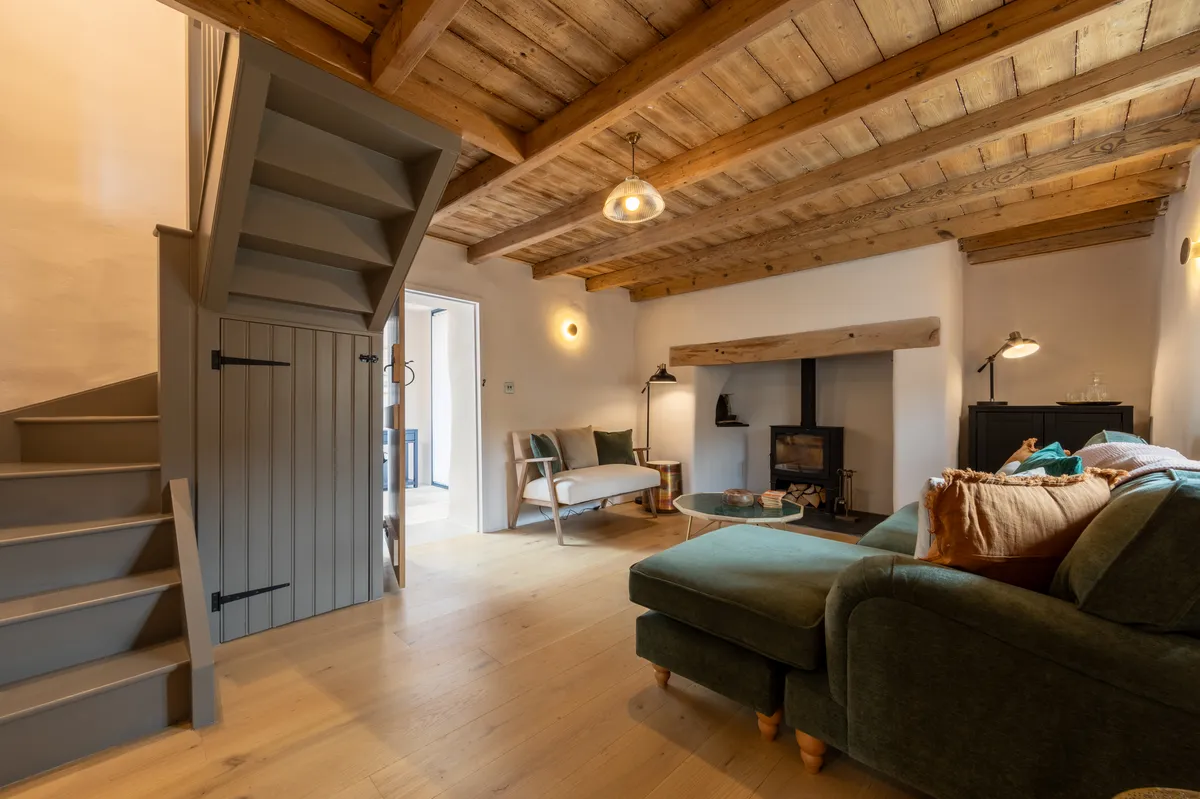
Your photos show what the property looks like. Your description tells guests what it feels like to stay there. The best listings use both in harmony.
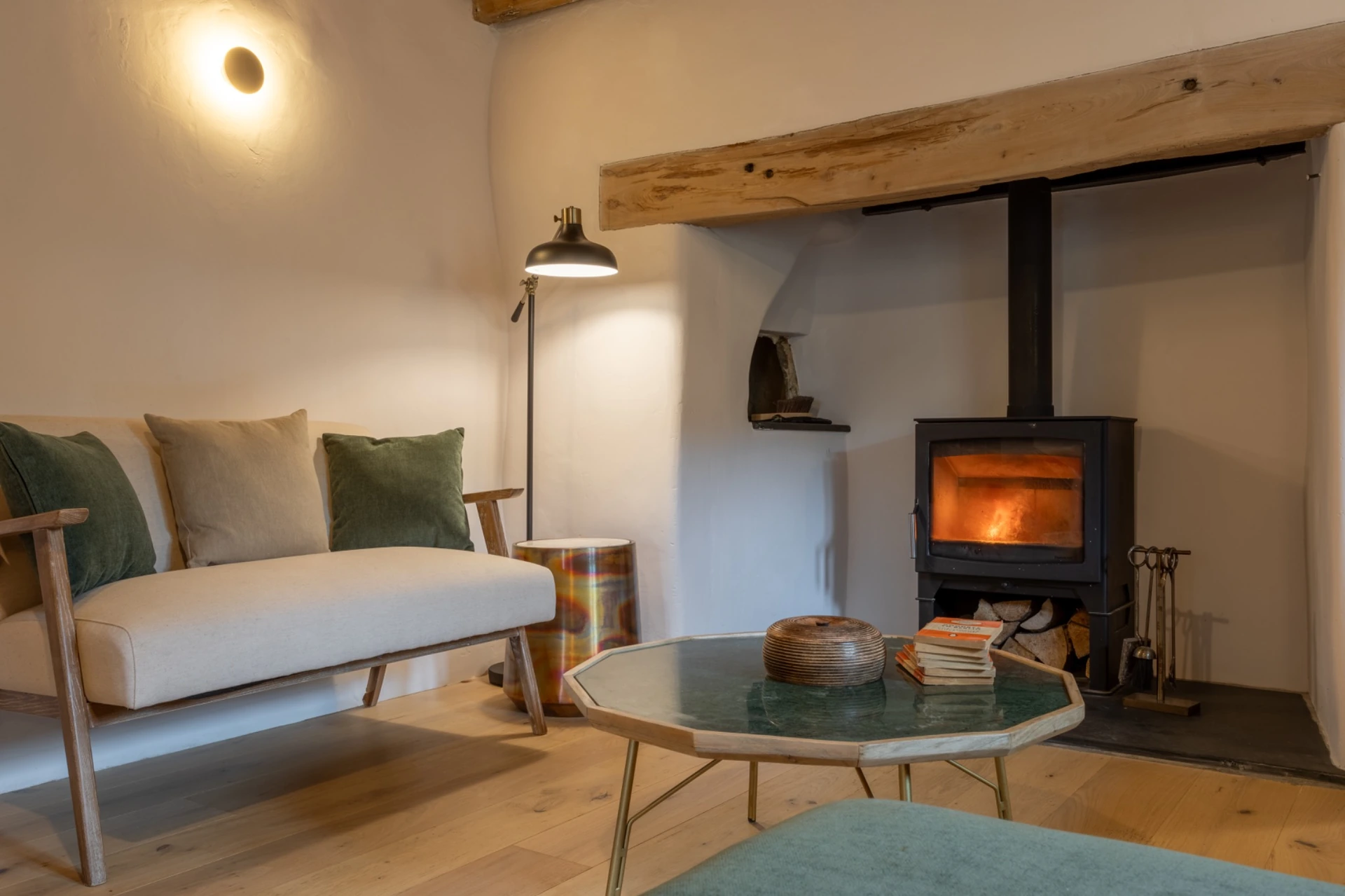
If your photos show a cosy living room with a log burner, your description should mention "curling up by the fire with a glass of wine after a day walking the coastal path." The words add context and emotion that photos alone can't convey.
This is why I always recommend writing (or rewriting) your description after a professional photo shoot. The photos give you new angles and details to describe. They remind you of features you might have forgotten to mention. And they set the visual tone that your words should match.
09Testing and Improving
Your listing description isn't a "set and forget" piece of writing. The best hosts treat it as a living document:
Check your conversion rate: If you're getting lots of views but few bookings, your description might be the problem. Airbnb shows you views vs. bookings in your host dashboard.
Read your reviews: If guests consistently mention something positive that isn't in your description, add it. If they mention something negative that your description implied, fix the mismatch.
A/B test titles: Change your title for a month and compare booking rates. Small changes (adding "Hot Tub" or "Dog Friendly" to the title) can have significant effects.
Ask a friend: Have someone who hasn't visited your property read your description. Ask them what they picture. If their mental image doesn't match reality, your description needs work.
10FAQ
How long should my Airbnb description be? The summary (shown before "Show more") should use most of the 500-character limit. The full description should be 800-1,200 words, well-structured with clear paragraphs. Long enough to answer all questions, short enough that guests actually read it.
Should I write differently for Airbnb vs Booking.com? Yes. Airbnb guests respond to personality and story. Booking.com guests tend to be more practical and comparison-focused. Tailor your tone and emphasis accordingly, even if the core information is the same.
How often should I update my listing description? At minimum, quarterly. Update for seasonal activities, recent improvements, and any changes to the property or local area. More frequent updates signal to the algorithm that you're an active, engaged host.
Is it worth paying someone to write my listing? If writing isn't your strength, yes. A well-written listing can increase bookings by 10-20% compared to a poorly written one. The investment pays for itself quickly. Alternatively, use the AI listing generator tool to create a strong starting point, then personalise it with your own details and voice.
What's the single most important sentence in my listing? The first sentence of your summary. It appears in search results on mobile, it's what guests read first, and it determines whether they keep reading or move on. Make it specific, compelling, and unique to your property.
*Related guides: Getting 5-Star Reviews Consistently · Guest Messaging Templates · The Welcome Book That Earns Money
*Back to The Host Academy for more free guides on running a successful holiday let.**
--- I photograph holiday lets and Airbnb properties across Somerset, Bristol and Bath. If you need professional photography for your rental, get in touch or call 07545 450543.